

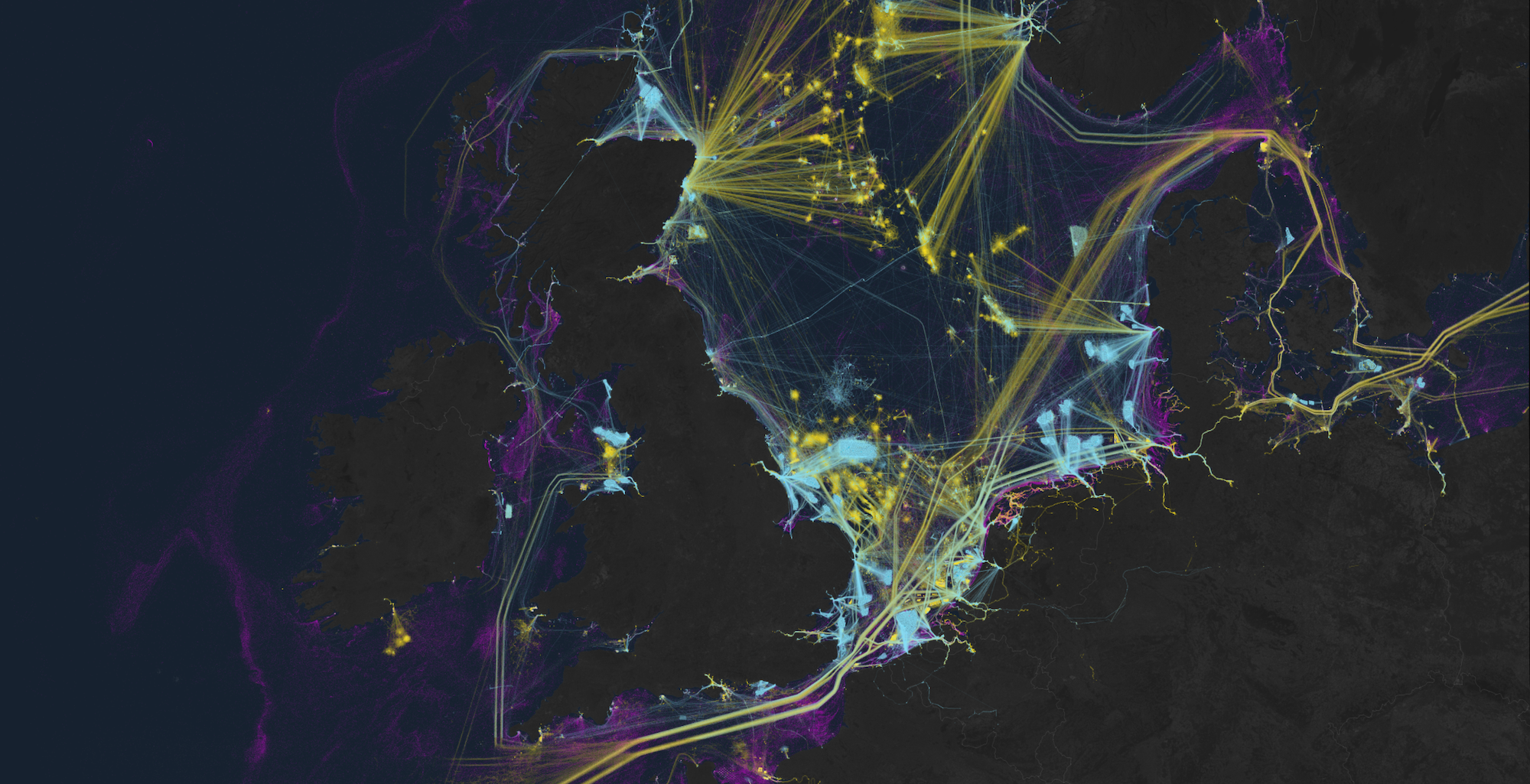

Find Out What’s Hiding Under the Surface of Our Oceans
Researchers can now access artificial intelligence analysis of global satellite imagery archives for an unprecedented look at humanity’s impact and relationship to our oceans. Led by Global Fishing Watch, a Google-backed nonprofit focused on monitoring maritime industries, the open source project is detailed in a study published January 3 in Nature. It showcases never-before-mapped industrial effects on aquatic ecosystems thanks to recent advancements in machine learning technology.
Unveiling the Mysterious “Dark Fleets”
The new research shines a light on “dark fleets,” a term often referring to the large segment of maritime vessels that do not broadcast their locations. According to Global Fishing Watch’s Wednesday announcement, as much as 75 percent of all industrial fishing vessels “are hidden from public view.”
Detection and Mapping of Hidden Fishing Vessels
As The Verge explains, maritime watchdogs have long relied on the Automatic Identification System (AIS) to track vessels’ radio activity across the globe—all the while knowing the tool was far from perfect. AIS requirements differ between countries and vessels, and it’s easy to simply turn off a ship’s transponder when a crew wants to stay off the grid. Hence the (previously murky) realm of dark fleets.
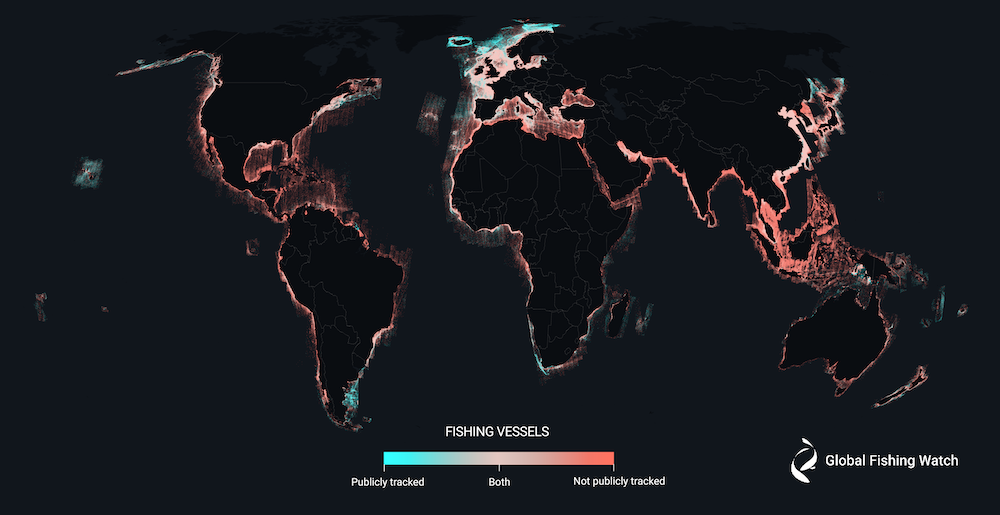 Data analysis reveals that about 75 percent of the world’s industrial fishing vessels are not publicly tracked, with much of that fishing taking place around Africa and south Asia. Credit: Global Fishing Watch
Harnessing AI and Satellite Imagery to Illuminate Human Activity at Sea
“On land, we have detailed maps of almost every road and building on the planet. In contrast, growth in our ocean has been largely hidden from public view,” David Kroodsma, the nonprofit’s director of research and innovation, said in an official statement on January 3. “This study helps eliminate the blindspots and shed light on the breadth and intensity of human activity at sea.”
[Related: How to build offshore wind farms in harmony with nature.]
To solve this data void, researchers first collected 2 million gigabytes of global imaging data taken by the European Space Agency’s Sentinel-1 satellite constellation between 2017 and 2021. Unlike AIS limitations, the ESA satellite array’s sensitive radar technology allows it to detect surface activity or movement, regardless of cloud coverage or time of day.
From there, the team combined this information with GPS data to highlight otherwise undetected or overlooked ships. A machine learning program then analyzed the massive information sets to pinpoint previously undocumented fishing vessels.
Find the Surprising Impact of Hidden Fishing Vessels
The newest findings upend previous industry assumptions, and showcase the troublingly larger impact of dark fleets around the world.
“Publicly available data wrongly suggests that Asia and Europe have similar amounts of fishing within their borders, but our mapping reveals that Asia dominates—for every 10 fishing vessels we found on the water, seven were in Asia while only one was in Europe,” Jennifer Raynor, a study co-author and University of Wisconsin-Madison assistant professor of natural resource economics, said in the announcement.