


Get ready, because regulators are taking aim at overdraft fees. The Consumer Financial Protection Bureau just put forth a proposal that would force financial institutions to give customers more information about overdraft fees and could potentially cap the charges at just $3.
Right now, the average overdraft fee is a whopping $26.61, according to a Bankrate study. But get this: most debit-card overdrafts are actually for less than $26 and are paid back within three days. That turns those overdraft fees into high-cost loans for consumers, according to the CFPB.
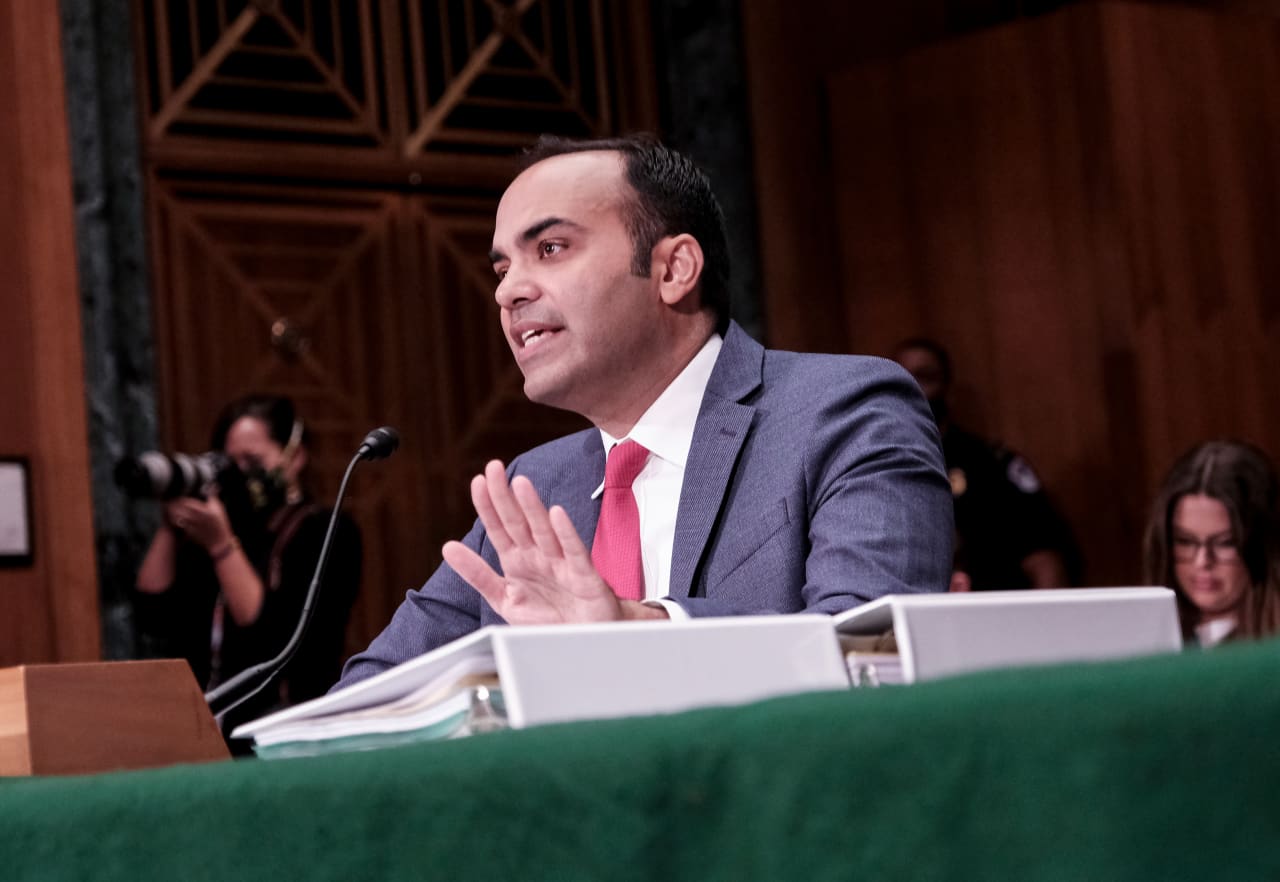
“We’re proposing a rule that would establish clear, bright lines and ensure customers know what they are getting when it comes to overdraft loans,” CFPB Director Rohit Chopra said in a call with reporters Tuesday.
If this rule goes through, it would save bank customers a whopping $3.5 billion per year, the CFPB claims. It’s all part of a bigger effort by the CFPB and the Biden Administration to tackle so-called junk fees, which they say inflate prices without adding value and unnecessarily harm consumers.
And get this: the CFPB said that when they launched their campaign against junk fees and asked for public comment, the “overwhelming majority” of the responses were about overdraft fees.
“Banks may call this a service, but it amounts to squeezing the hardest-hit families to benefit the bottom line,” Lael Brainard, the head of President Biden’s National Economic Council, said on the call.
So how exactly would the CFPB rule change overdraft fees?
The new rule proposed by the CFPB would require financial institutions with more than $10 billion in assets — roughly 175 of them — to limit the fees they bill customers who overdraft their accounts and be more transparent about the charges.
Banks would have to treat overdraft loans more like other forms of lending, by offering disclosures such as those required when you open a credit card.
Under the proposed rule, banks could charge an overdraft fee “in line with their costs” — doing their own math to come up with a breakeven number — or charge a benchmark amount set by the CFPB, according to the agency’s statement. The CFPB has proposed potential benchmarks of $3, $6, $7 or $14, and is seeking comment on the appropriate amount, it said.
But why exactly are regulators going after overdraft fees?
Overdraft services began as a convenience offered to customers who lacked the funds in their account to cover a check, the CFPB outlined in a statement — back when many consumers banked with paper checks sent through the mail, and it took much longer to settle a discrepancy on an account.
But in the age of digital banking, the CFPB argued, overdrafts have evolved into a “routine, expensive loan product.”
The fees have been criticized for years for boosting banks’ profits at the expense of those who can afford it the least, said Teresa Murray, who directs the consumer-watchdog office for U.S.