



Image: Willis Lai/Foundry
Asus has taken over the reins of Intel’s tiny NUC (Next Unit of Computing) designs after the departure of the former owner from the market last year. While Asus is still interested in selling small, powerful desktops to wealthy gamers, the NUC Extreme is no longer available, leaving fans who want to pair the tiny hardware with full desktop-powered GPUs out of luck.
The ROG NUC revealed at CES is Asus’ NUC offering for gamers, combining high-powered laptop components up to a Core Ultra 9 CPU and an RTX 4060 or 4070 mobile GPU into a small barebones desktop. However, that the company had no intention of reviving the NUC Extreme line.
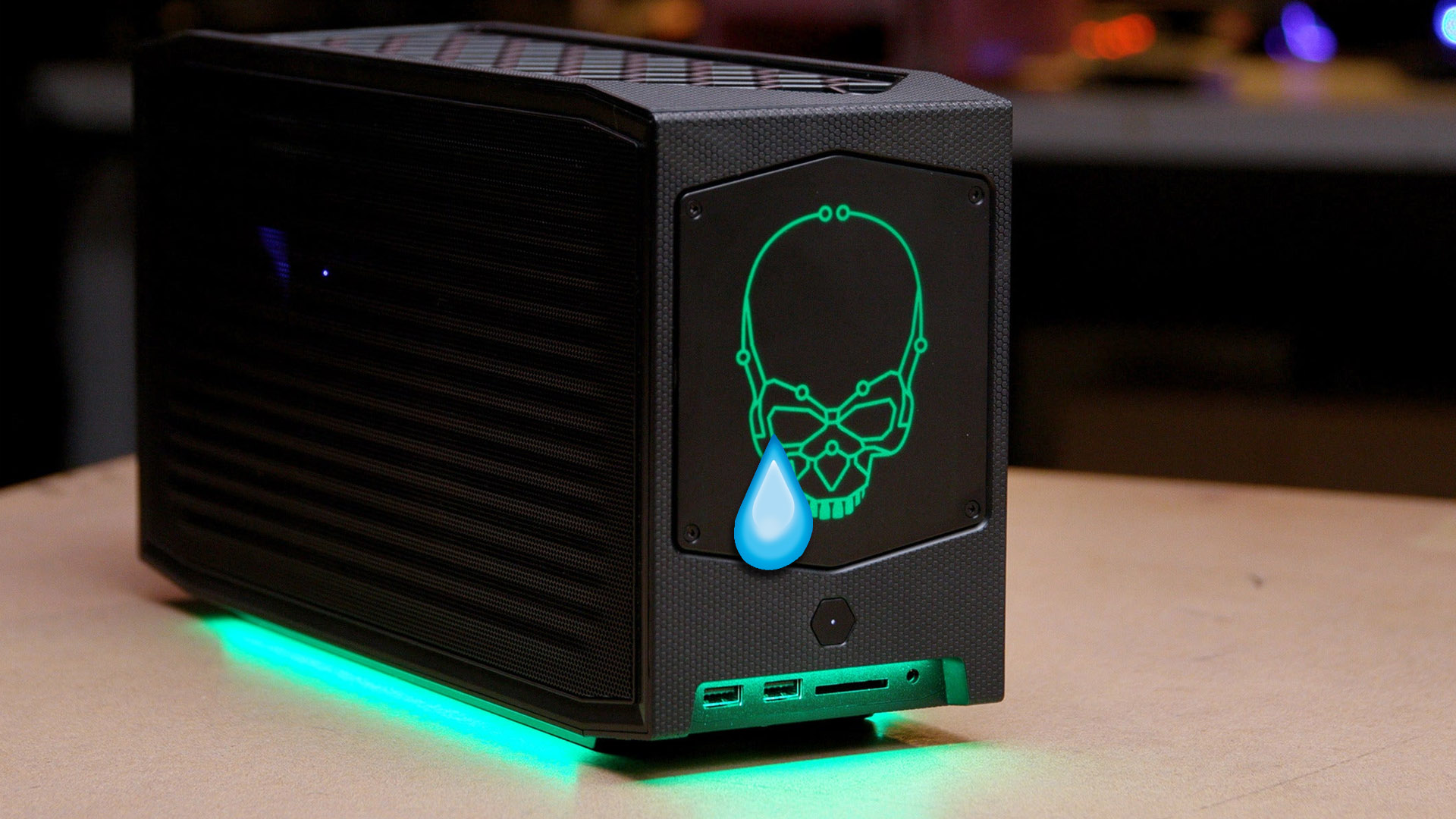
As of the ninth generation based on Coffee Lake, the Extreme variants of the NUC design combined a removable, upgradable NUC Compute Element (housing the processor, I/O panel, and empty RAM and M.2 storage slots) with PCIe slots for a full-sized desktop GPU. This allowed gamers to build a super-tiny machine without losing access to high-power discrete graphics cards. This was particularly true on the 11th and 12th-gen NUC Extreme, which expanded the case and allowed for the same full-length cards as an ATX desktop.
Unfortunately, this appears to have been the downfall of the NUC Extreme. With the larger 7.5-liter body, the NUC Extreme 12 is only slightly smaller than the smallest Mini-ITX case, which also allows for full-sized graphics cards. The Fractal Design Terra, for example, is only 10.4 liters in volume. The NUC Extreme 13 announced in 2022 is 13.9 liters, barely smaller than the popular Cooler Master NR200P Mini-ITX case. Without Intel putting in the engineering to create a new 14th-gen NUC Computing Element, it’s not surprising that Asus decided to stick with laptop parts for its ultra-small designs.
If you’re looking to pack the maximum PC gaming power into a tiny footprint and you don’t want to lose access to CPU and GPU upgrade options, it seems that an ITX build is currently your best option. Pour one out for the NUC Extreme, a very cool series of little computers that seems to have outlived its relevance.

Michael is a former graphic designer who’s been building and tweaking desktop computers for longer than he cares to admit. His interests include folk music, football, science fiction, and salsa verde, in no particular order.