


Gorodenkoff/Shutterstock
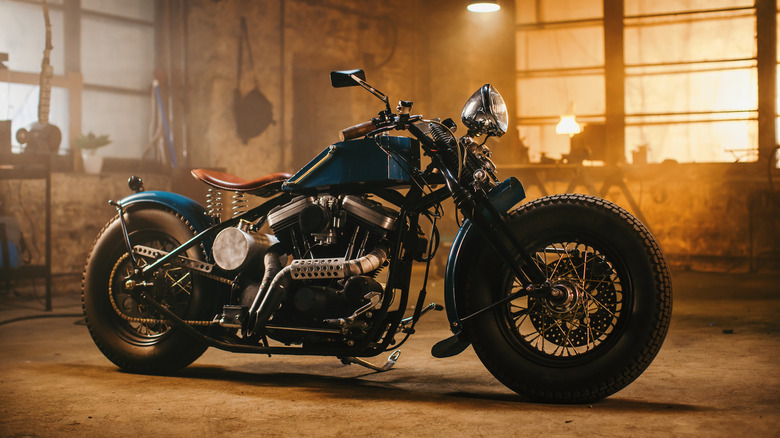
For many motorcycle enthusiasts, a bike is more than just a mode of transport — it’s a symbol of their individuality. And what better way to express this than by customizing a stock bike? Modifying a motorcycle, whether it’s through subtle enhancements that improve riding comfort or substantial aesthetic or performance upgrades, is a great way for bikers to make their ride their own.
Regardless of the type of customization you want to do, the key to getting it right is to understand your needs and then make changes that you’re sure will enhance your riding or vehicle ownership experience. One way to come to terms with what you need out of your bike is by diving into the history of motorcycle customization styles through the decades. From the stripped-back Bobber to the adventure-oriented Scrambler, each style was designed to suit a particular riding style and visual aesthetic. Exploring these styles from the past — many of which have made a comeback — can provide you with all the inspiration you need and help you determine which styling elements best resonate with your preferences.
Ljupco Smokovski/Shutterstock
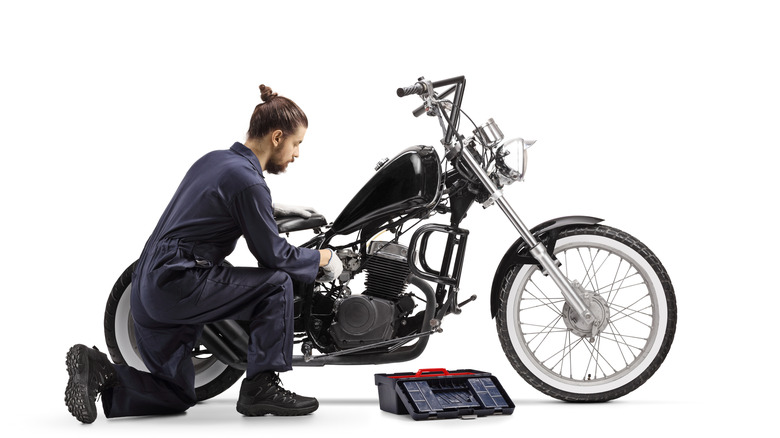
If you’re a fan of the hit Discovery Channel show, Orange County Choppers or O.C.C., you already know that Choppers are a classic and easily recognizable style when it comes to modified motorcycles. But did you know these have a rich history that dates back to the post-World War II era in the U.S.? The style came about after veterans who returned home from Europe stripped their motorcycles to just the essentials to create something reminiscent of the lighter models they used overseas.
Two of the most notable features of the Chopper are its elongated front fork and high handlebar. This was designed to create a more stretched-out look and laid-back riding stance, allowing the rider to have a relaxed cruising experience. These motorcycles also have a low seat and a tall backrest, giving them an aggressive look. Choppers are usually built by modifying existing cruiser motorcycles where unnecessary parts are removed or “chopped” off the frame — hence the name. They can also be put together totally from scratch, but you’ll need a fully-kitted workshop, so it’s not a cheap or easy hobby to get into.
The benefit of using an already assembled and working cruiser is that you aren’t building it from the frame up, and only need the tools to do a minor teardown. Finding an old bike where you’re just a fairing strip, grind, and paint job away from a new bike frees you up to test it out as you lose extraneous parts.
Marc Pfitzenreuter/Getty Images
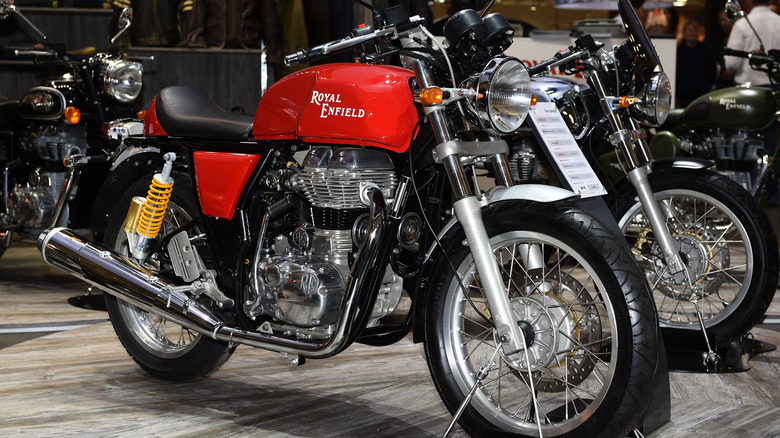
Now, let’s talk about Café Racer-style motorcycles. These vehicles started making an appearance around the 1950s and ’60s in the UK, inspired by the race bikes of the time. While it’s not clear where the term “Café Racer” comes from, some believe it originated as a result of motorcyclists racing around a circuit,