


A Breakthrough Mission to the Moon is Progressing Smoothly
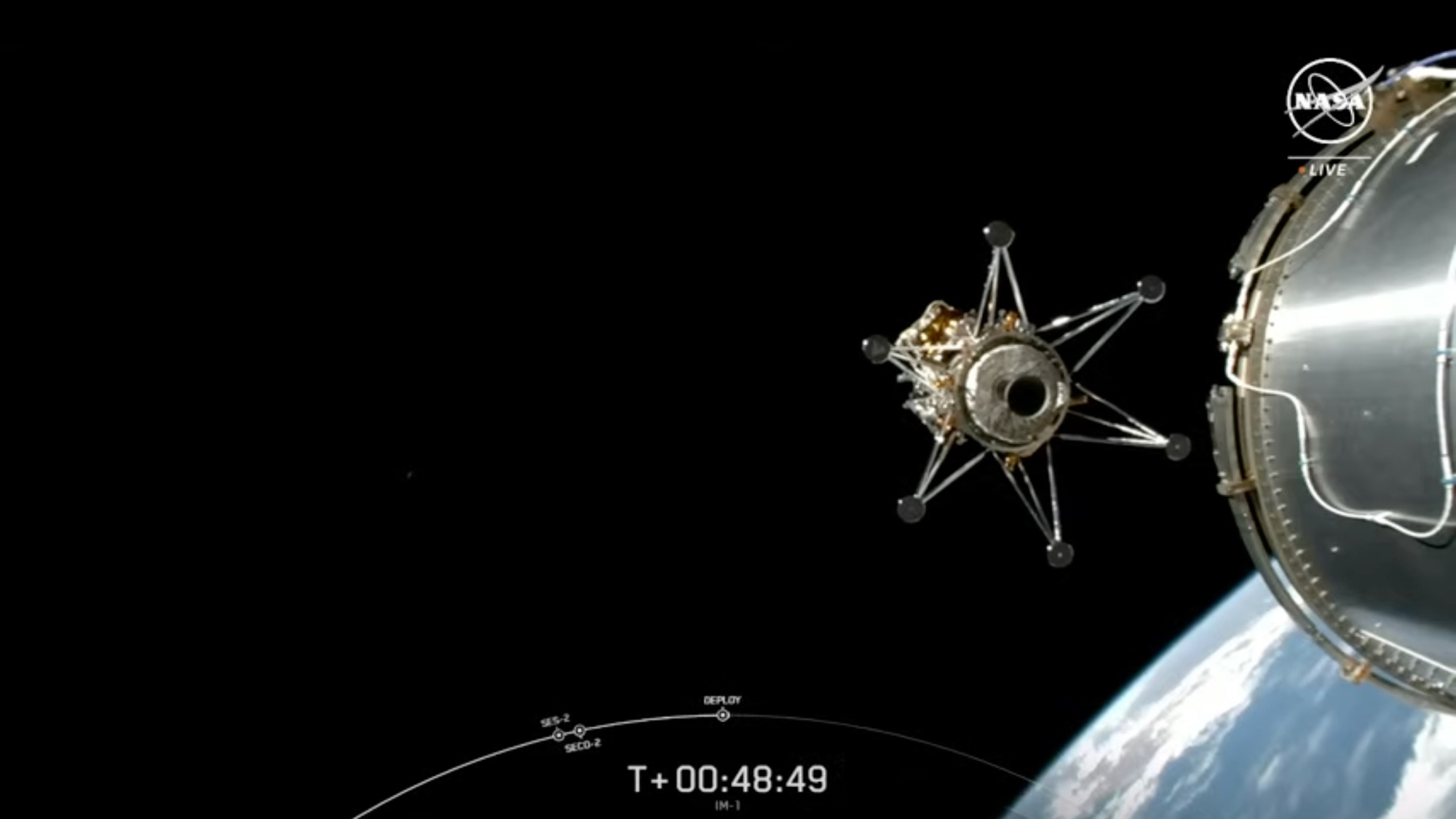
A cutting-edge private mission to the moon is off to a successful start. The Odysseus moon lander, developed by the Houston-based company Intuitive Machines, was launched on a SpaceX Falcon 9 rocket early this morning (Feb. 15) from NASA’s Kennedy Space Center in Florida.
The launch proceeded without a hitch, and Odysseus was activated as planned. The lander has been declared “fully operational in space” after establishing stable attitude, solar charging, and radio communications with the company’s mission operations center in Houston, according to a recent update from Intuitive Machines.
Odysseus’ Journey to the Moon
Odysseus, comparable in size to an English telephone booth, is expected to reach the moon in six days if everything goes according to plan. Its initial objective is to enter into orbit around Earth’s satellite before preparing for a landing attempt on the floor of a small crater approximately 190 miles (300 kilometers) from the lunar south pole on February 22.
This ambitious endeavor is unprecedented as no private spacecraft has ever landed softly on the moon, and the United States has not ventured to the lunar surface since the Apollo 17 mission in December 1972.
The Moon’s Exploration with Odysseus
Intuitive Machines’ CEO, Steve Altemus, emphasized the significant challenges that lie ahead while also underscoring the extraordinary opportunity at hand – to facilitate the return of the United States to the moon’s surface, nearly five decades later.
Additionally, Odysseus is transporting 12 payloads, including six NASA instruments through the agency’s Commercial Lunar Payload Services program. These instruments will facilitate various tasks such as experimenting with novel navigation and precision landing technologies and analyzing the interaction between Odysseus’ exhaust plume and the lunar surface during descent.
The information gathered from these experiments could contribute to establishing a crewed base in the south polar region in the future, aligning with NASA’s Artemis program objectives. Odysseus also carries payloads from private customers like Columbia Sportswear, showcasing a diverse range of interests and contributions to lunar exploration.
Odysseus’ mission, referred to as IM-1, marks the second CLPS-supported moon lander mission following the Peregrine launch by Pittsburgh-based Astrobotic. Although Peregrine encountered issues post-launch and was guided for a controlled destruction in Earth’s atmosphere, the strides taken by these missions highlight the continued advancement and expanding horizons of lunar exploration.
In conclusion, the successful progress of Odysseus underscores the innovation and collaboration driving the next era of lunar exploration. The journey to space, supported by cutting-edge technology and ambitious goals, represents a significant step towards expanding humanity’s presence and understanding of our celestial neighbor, the moon.