

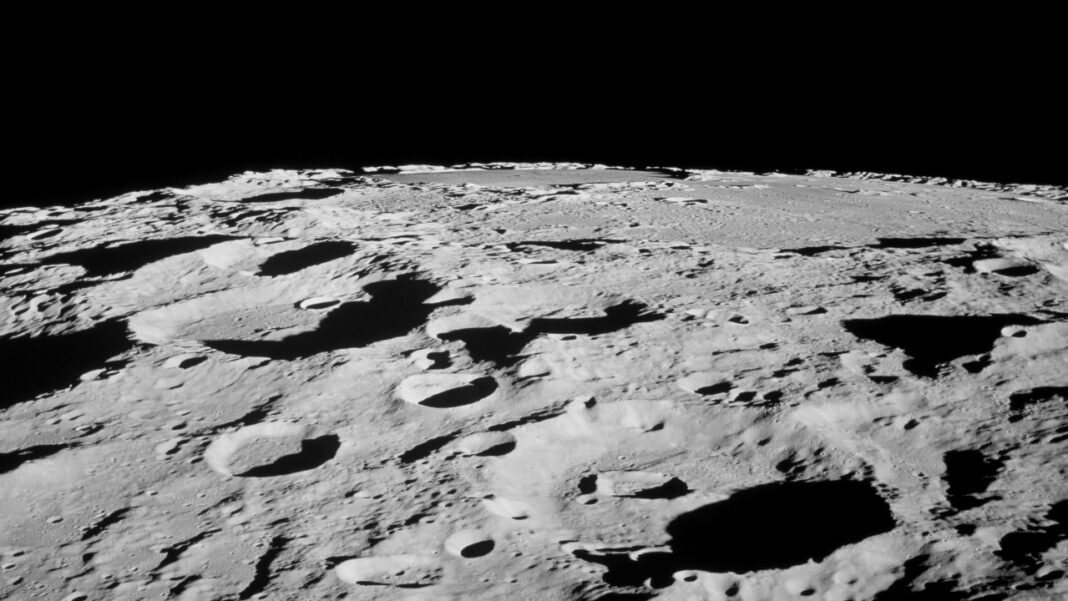
A photo of the moon’s landscape.
(Image credit: NASA)
When selecting sites for crewed lunar landings — ranging from the forthcoming Artemis missions to eventual lasting moon settlements — mission planners must account for tons of lunar parameters. For instance, the shape of the terrain could make or break a mission and a possible high volume of buried water could make one spot much more tantalizing than its drier counterpart. But now, geologists suggest it’s also important to keep moonquakes and lunar landslides in mind.
As the scientists emphasize, this is no longer an academic question. Researchers examining the moon’s south polar region — which sits near the planned landing side of Artemis 3, set to touch down in 2026 — have identified fault lines whose slips triggered a major moonquake about 50 years ago.
Certain Apollo missions carried seismometers along with them. On March 13, 1973, a particularly strong moonquake rattled those seismometers from the general direction of the moon’s south pole. Decades later, the Lunar Reconnaissance Orbiter flew over the south pole and discerned a webwork of fault lines. With new models, researchers have connected those faults with that moonquake.
Related: Moonquakes Rattle the Moon as It Shrinks Like a Raisin
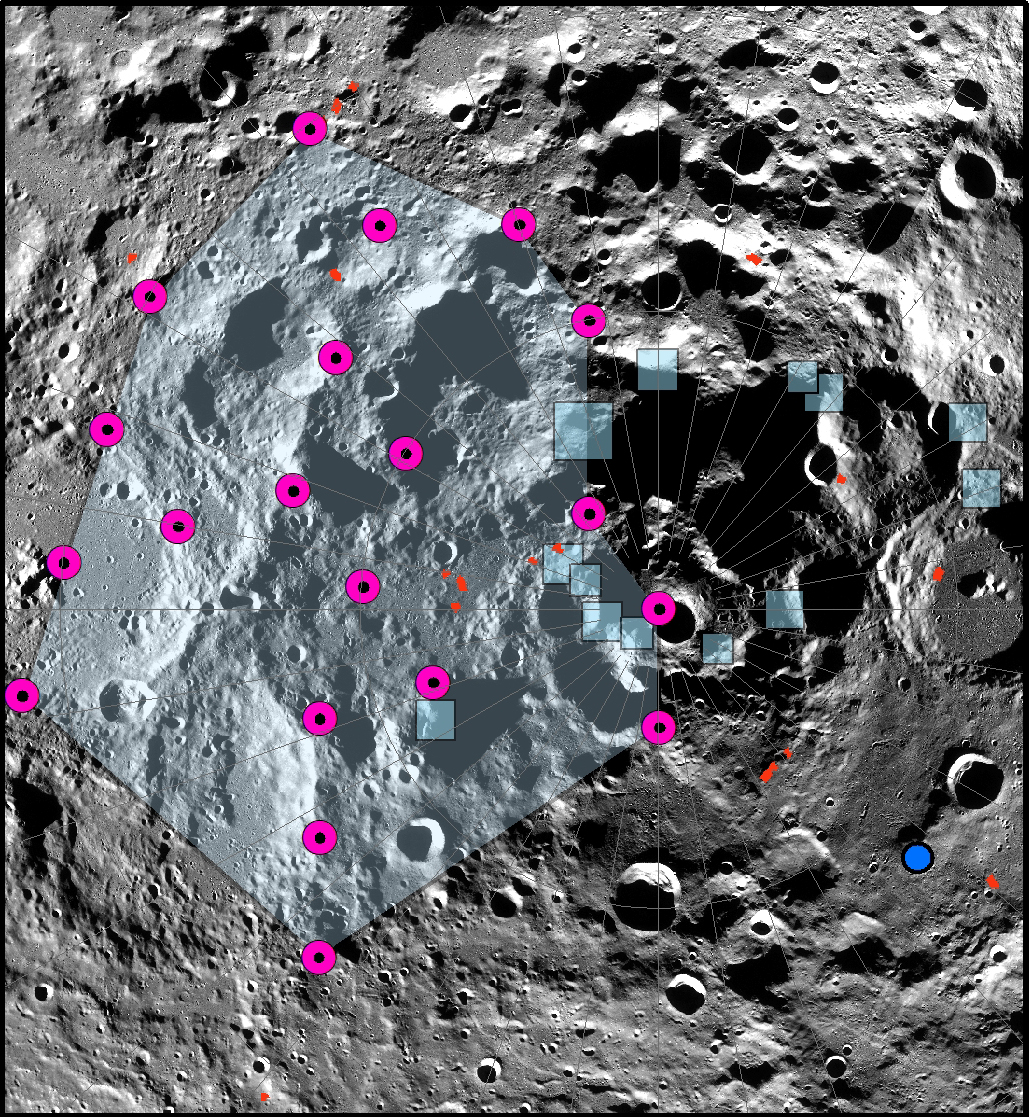
The epicenter of one of the strongest moonquakes recorded by the Apollo Passive Seismic Experiment was located in the lunar south polar region. However, the exact location of the epicenter could not be accurately determined. A cloud of possible locations (magenta dots and light blue polygon) of the strong shallow moonquake using a relocation algorithm specifically adapted for very sparse seismic networks are distributed near the pole. Blue boxes show locations of proposed Artemis III landing regions. Lobate thrust fault scarps are shown by small red lines. The cloud of epicenter locations encompasses a number of lobate scarps and many of the Artemis III landing regions. (Image credit: NASA/LROC/ASU/Smithsonian Institution)
The research further adds to our picture of what moonquakes are like in general. In principle, moonquakes are like earthquakes. Both are caused by shifting faults; in the moon’s case, they’re caused by creases that form on the moon’s surface as it shrinks. If you’re asking yourself why in the world the moon would be shrinking, well, it’s basically because the lunar interior has cooled over the last few hundred million years. It’s sort of like a raisin shriveling up, scientists say, which also helps us visualize the creation of those creases.
Further, the moon’s surface is much less tightly packed than Earth’s, often consisting of loose particles that can be thrown up and strewn about by impacts. As a result, moonquakes are even more likely to trigger landslides than earthquakes are.
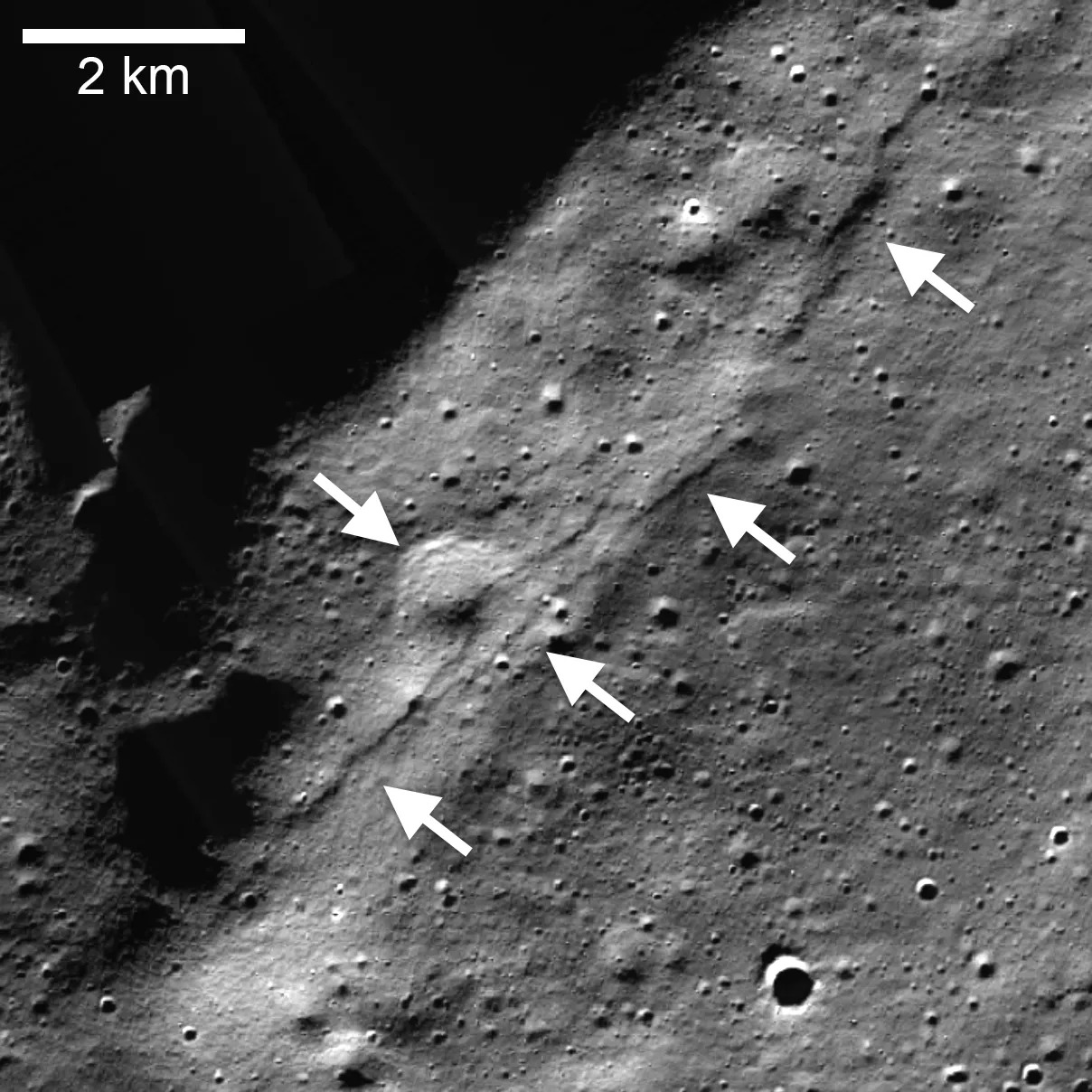
A Lunar Reconnaissance Orbiter Camera, Narrow Angle Camera (NAC) mosaic of the Wiechert cluster of lobate scarps (left pointing arrows) near the lunar south pole. A thrust fault scarp cut across an approximately 1-kilometer (0.6-mile) diameter degraded crater (right pointing arrow). » …
Read More