


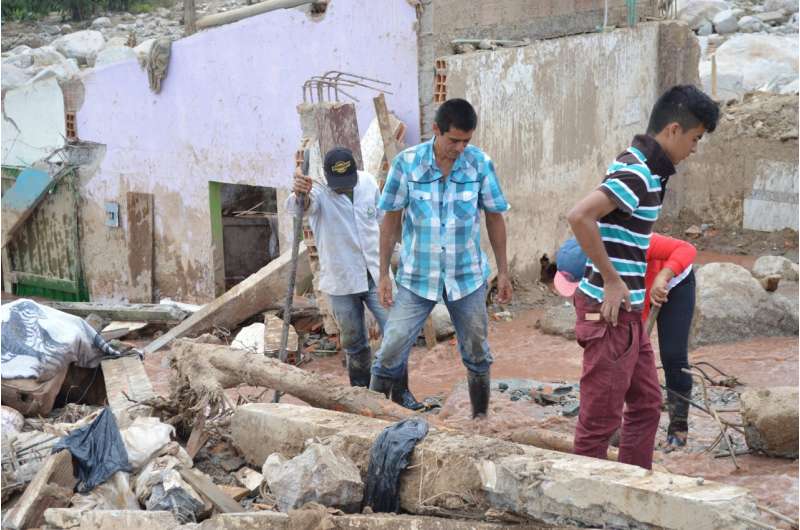
Credit: Franklin Peña Gutierrez from Pexels
An innovative way of assessing the impact of earthquake-related fatalities in relation to a country’s population size has identified Ecuador, Lebanon, Haiti, Turkmenistan, Iran, and Portugal as the countries most affected by fatalities over the past five centuries.
Introducing EQFL
A recent technique introduced in the Bulletin of the Seismological Society of America (BSSA) by Max Wyss and his team at the International Center for Earth Simulation Foundation is known as the earthquake fatality load, or EQFL. This measure calculates the ratio of earthquake fatalities to the estimated population of a country during the year of the earthquake.
Research Findings
Wyss, Michel Speiser, and Stavros Tolis conducted a study where they determined the earthquake fatality load for 35 countries and regions. By adding up the EQFL for earthquakes within the past 500 years and establishing a measure of EQFL per year for each country, they were able to rank the countries by the impact of earthquake fatalities.
These countries accounted for 97% of all earthquake-related fatalities from 1500 to March 2022. It’s important to note that the EQFL measurement excludes deaths caused by earthquake-induced tsunamis.
While seismic events in regions like California, Japan, and China often receive significant media coverage due to their magnitude or property damage, the focus of EQFL is to highlight how the loss of life is the most crucial impact of an earthquake, impacting some countries more profoundly than others.
“We aimed to understand the severity of absorbing these losses for a country,” explained Wyss. “When we quantify this, the order of countries of concern shifts significantly.”
Key Insights
The researchers discovered that smaller countries are disproportionately affected by earthquake fatalities compared to larger countries, even if they experience fewer fatal earthquakes, as the losses represent a higher percentage of their population.
Countries without major tectonic plate boundaries and those with slow fault deformation rates rank high in EQFL. The recent devastating earthquakes in Morocco and Afghanistan in 2023 occurred along faults that deform slowly.
Additionally, the study indicates that EQFL as a function of earthquake magnitude has decreased over time in all analyzed countries. This trend may be attributed to the improved resilience of buildings against shaking and the enhanced ability of countries to provide rapid aid and rescue operations in earthquake-stricken areas.
Global urbanization trends, where more people are moving from rural areas to cities, could also contribute to lowering EQFL. Urban buildings are typically constructed with materials and designs that can withstand ground shaking, and emergency responses are usually faster in cities than in remote villages.
California and a group of countries including Colombia, Ecuador, and Mexico have shown the most significant decrease in EQFL over the past five centuries.