


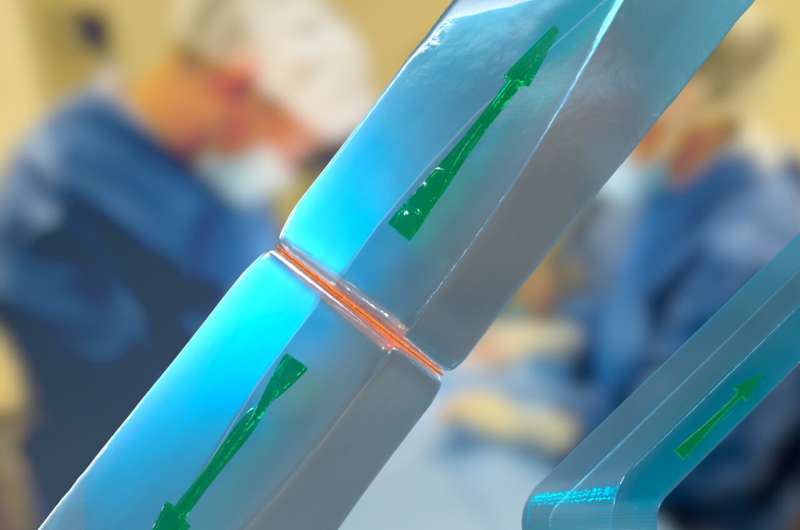
Hydrogels have become crucial biomaterials with diverse applications in various medical fields. These materials, characterized by water-swollen molecular networks that can be customized to mimic the mechanical and chemical properties of different organs and tissues, have proven to be biocompatible and adaptable for interfacing with the human body.
Currently, hydrogels are widely utilized in clinical settings for delivering therapeutic drugs, manufacturing intraocular and contact lenses, developing corneal prostheses, producing bone cement, creating wound dressings, forming blood-coagulating bandages, and constructing 3D scaffolds for tissue engineering and regeneration.
One of the existing challenges with hydrogels is the rapid and strong bonding of polymer layers, as conventional methods often lead to weakened adhesion over time and involve complex procedures.
Enhancing the adhesion of polymers could open up new possibilities in various fields, such as creating customizable hydrogels for specific tissue applications, encapsulating flexible electronics for medical diagnostics, and developing self-adhesive materials for challenging wound locations.
A groundbreaking solution has been developed by researchers at the Wyss Institute for Biologically Inspired Engineering at Harvard University and Harvard John A. Paulson School of Engineering and Applied Sciences (SEAS). Their innovative method involves bonding layers of hydrogels and other polymeric materials using a chitosan film, derived from shellfish shells.
Through this new approach, the scientists have addressed critical medical needs, including local tissue cooling, vascular injury sealing, and preventing surgical adhesions. Their findings have been documented in the Proceedings of the National Academy of Science.
Lead researcher David Mooney highlighted the versatility of chitosan films in assembling, adjusting, and safeguarding hydrogels in biomedical applications. These films offer rapid application, making them invaluable for in vivo procedures during surgeries and the fabrication of complex biomaterial structures.
Engineering Enhanced Connections
In recent years, Mooney’s team has developed “Tough Adhesives,” a series of regenerative medicine strategies that utilize stretchable hydrogels to promote tissue healing and regeneration by adhering strongly to wet tissue surfaces and adapting to tissue mechanics.
» …
Learn More rnrn