


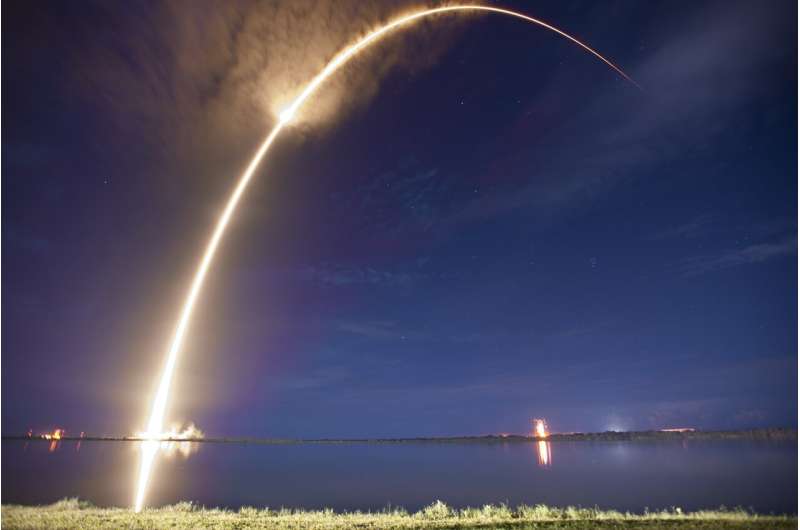
Credit: Pixabay/CC0 Public Domain
SpaceX is preparing for the third flight of its Starship and Super Heavy from Texas, with the Federal Aviation Administration concluding its investigation into the second flight, which ended in explosions last November.
Following the incident, the FAA identified 17 action items that SpaceX must address before obtaining future launch licenses from its Boca Chica launch site Starbase.
Starship Launch System
Starship serves as SpaceX’s replacement launch system for the Falcon 9 and Falcon Heavy rockets, featuring full reusability. The company aims to conduct a third test flight in the coming month pending approval.
The first Starship and Super Heavy launch in April 2023 also resulted in an explosion, but with the booster remaining connected to the upper stage. It took over six months to complete the investigation and implement 63 corrective actions.
Despite experiencing double explosions during the second flight, SpaceX provided an update on the incident, highlighting the successful aspects of the test.
Improvements and Successes
Several changes, including a water-cooled flame deflector, were made to the launch pad between flights to minimize post-launch work and prepare for future tests. SpaceX’s modifications were of interest to NASA, especially for potential launches from Kennedy Space Center’s Launch Pad 39-A.
The second flight demonstrated improved performance, with the Super Heavy booster’s Raptor engines generating significant thrust. The successful stage separation utilized the hot-fire staging system, enabling the upper stage to ignite its engines while connected to the booster.
However, a booster engine failure led to an unplanned disassembly during the return flight landing attempt, resulting in a massive explosion captured during the live stream.
According to SpaceX’s investigation, the root cause of the booster’s failure was determined to be filter blockage in the liquid oxygen supply to the engines.