

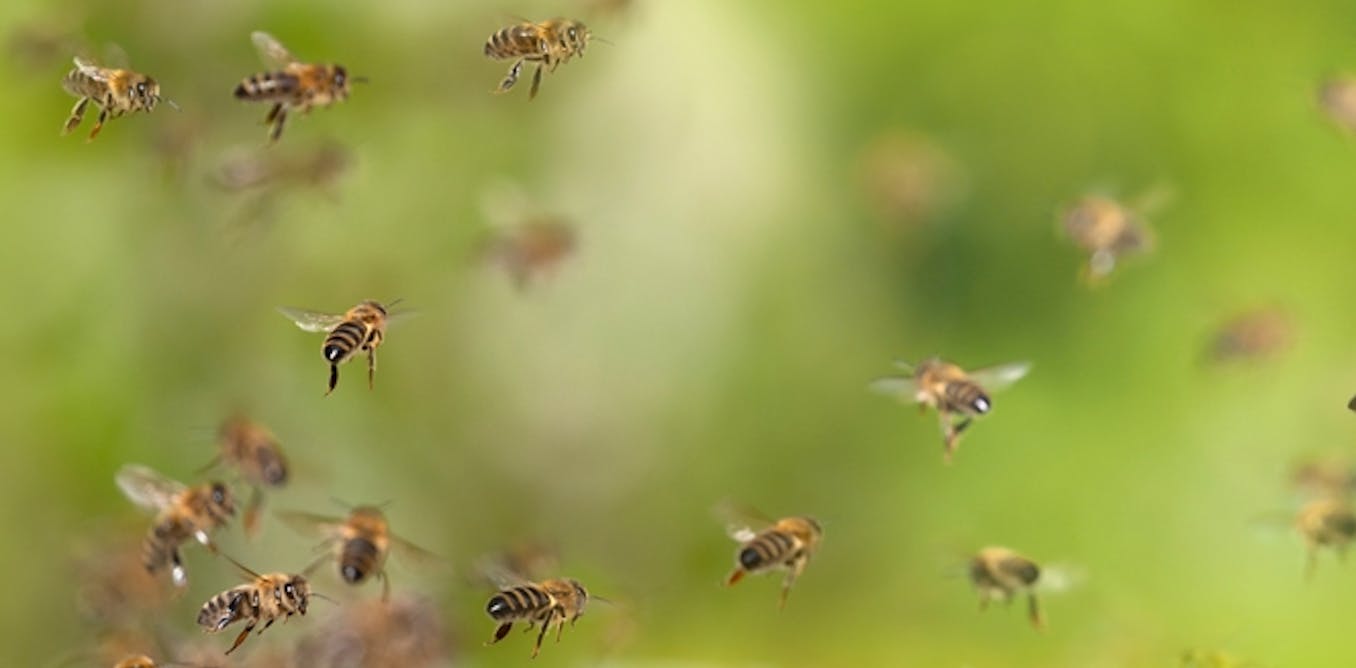

The importance of bees for pollinating wild plants and crops is well known. If we lose the bees, we lose our food. But this is only part of the picture. Bees also support a hidden network of other species, sometimes as mutual partners, sometimes as prey, sometimes as other unwilling victims.
Many organisms depend on bees for survival, and many of these interactions are not mutually supportive. Some predators focus on bees, for example bee wolves (Philanthus triangulum), capture bees to feed their young in their underground nests.
Crab spiders, also known as the white death spider, are often found camouflaged on the top of flowers. They wait for bees to sip on some nectar and then the spider consumes the bee, and afterwards vomits the corpse back up.
It’s not just insects, vertebrates depend on bees too. Birds such as bee‑eaters and great tits, as well as some species of bat consume bees as part of their diet, while badgers and foxes often raid nests for larvae and honey. And, of course, humans have been eating honey from before there were written records.
Playing host to unwelcome guests
Around 40% of animals are actually parasites and bees support a wide range of these species. The wingless fly Braula coeca, sometimes referred to as the bee louse, lives on honey bees, feeding on their secretions. Though small, these parasites are a constant presence in some colonies.
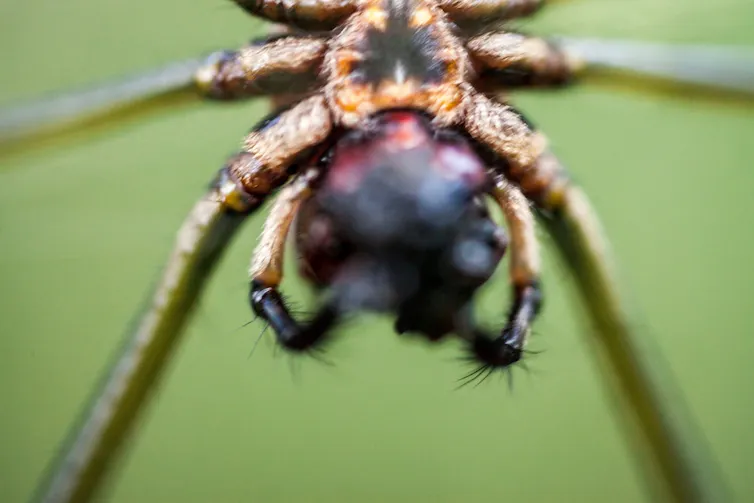
A spider preparing to eat a bee.
EUIP/Shutterstock
Another parasite, Sphaerularia bombi, the nematode (a type of worm-like creature), enters bumblebee queens during hibernation. Once inside they inflate, filling much of the queen’s body. When she emerges in the spring, this queen has been neutered by the parasite and is no longer able to find a new family. She instead just acts as a vehicle to spread the parasite to new sites.
Some bees need other bees to help them survive. Cuckoo bees infiltrate the nests of bumblebees. After they gain access they suppress the bumble bee queen and force her workers to raise their young.
Invading the lives of bees
Sometimes parasitic interactions go one step further and ultimately kill the bee by spending part of their lifecycle within their host. Strepsiptera are an unusual insect, which most people may not have heard of. Stylops are one genus of Strepsiptera which live in the abdomens of bees, visible only by a small protrusion in the abdomen. But when it is time for Stylops to mate they explode from the abdomen of their bee host, killing it.
Bee flies definitely deserves a mention, as they bear a striking resemblance to bees. In the UK, species such as Bombylius major dance around flowers with their fuzzy, bee‑like bodies. While the adults are harmless and actually serve a role as pollinators themselves,