

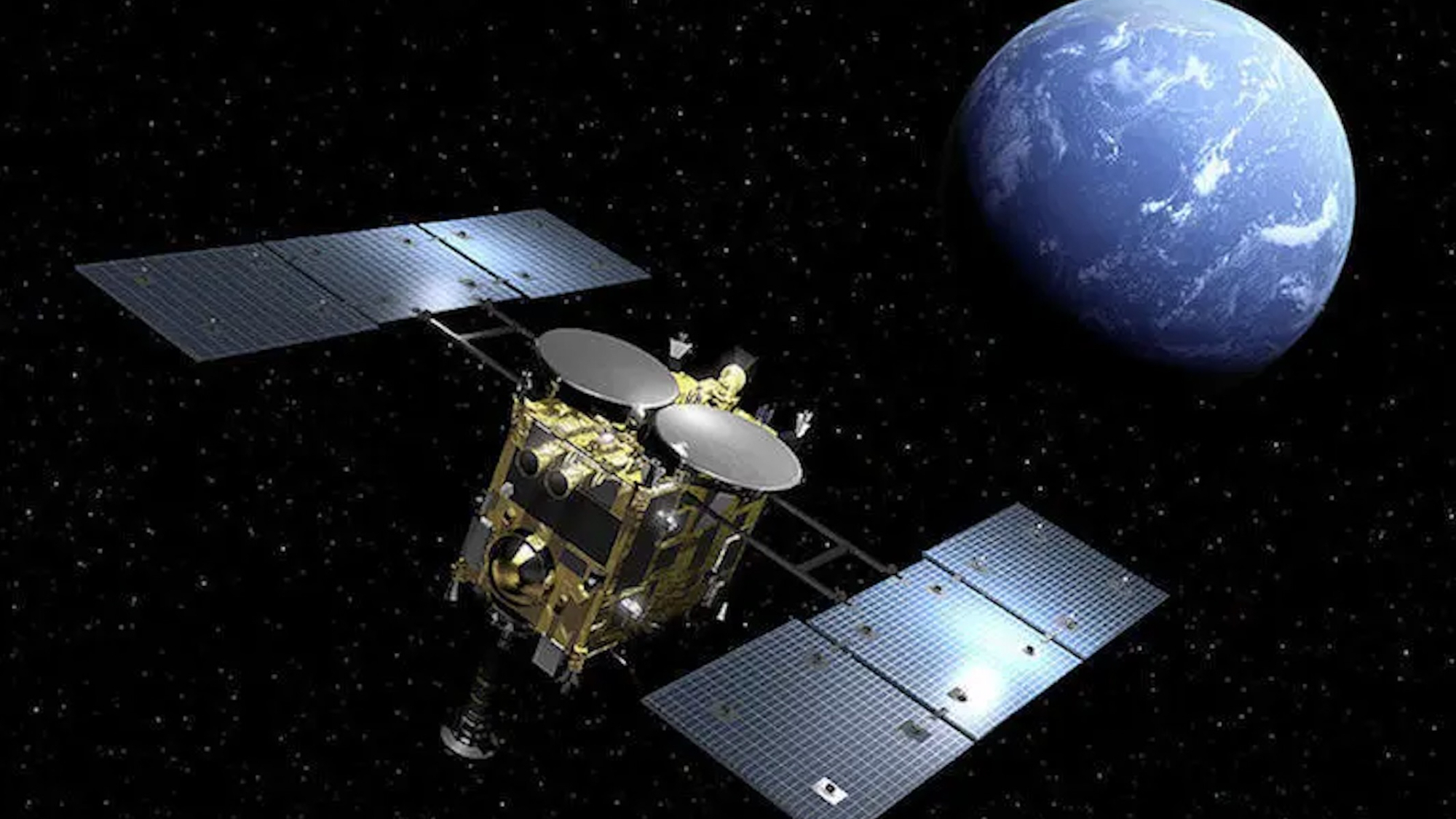

Japan’s Hayabusa2 Spacecraft Seeks Public Help to Name Near-Earth Asteroid
Japan’s Hayabusa2 spacecraft is embarking on a new mission to explore a small near-Earth asteroid, and you have the chance to contribute by naming the space rock. This asteroid, known as 2001 CC21 or 98943, measures approximately 2,300 feet (700 meters) in width. Scheduled for a high-speed flyby in July 2026, the spacecraft is on a mission to obtain valuable data from this cosmic object. But before the encounter, the asteroid needs a more appealing moniker.
The Japanese space agency, JAXA, has launched a public campaign to solicit suggestions for the official name of the asteroid. If you have a creative idea in mind, you can submit your proposal online until May 9. However, please note that only one submission per applicant will be considered.
The naming guidelines set by the International Astronomical Union specify that the name must be inoffensive, preferably a single word, and no longer than 16 alphabetical characters. For detailed rules on naming asteroids, you can refer to the guidelines outlined in JAXA’s official statement. The selection process will prioritize names with the highest number of suggestions, followed by a collaboration with young students nominated by youth space associations to finalize the name.
JAXA aims to choose the asteroid’s name by summer 2024 and submit the proposal to the International Astronomical Union in partnership with the US LINEAR team. The discovery of 2001 CC21 was credited to the US LINEAR team, and the collaboration aims to provide a unique name for the asteroid. Participants involved in the final name selection will receive a special gift from the Hayabusa2 Extended Mission team as a token of appreciation.
With a discovery date of February 3, 2001, the unnamed asteroid orbits the sun every 383 Earth days. Similar to the elongated shape of asteroid Itokawa, 2001 CC21 presents a non-spherical form, contrasting the shape of Ryugu. While the asteroid’s orbit intersects with Earth’s path, it poses no threat to our planet.
During the anticipated flyby in 2026, Hayabusa2 will approach the asteroid at a velocity of 5 km/s (approximately 18,000 kph or 11,200 mph). The spacecraft aims to capture detailed observations of the asteroid while maintaining a safe distance to avoid any collisions. Join the Space Forums to engage in discussions on the latest space missions and discoveries.