


New York Attorney General Files $1.4 Billion Lawsuit Against Yellowstone for Predatory Lending Practices
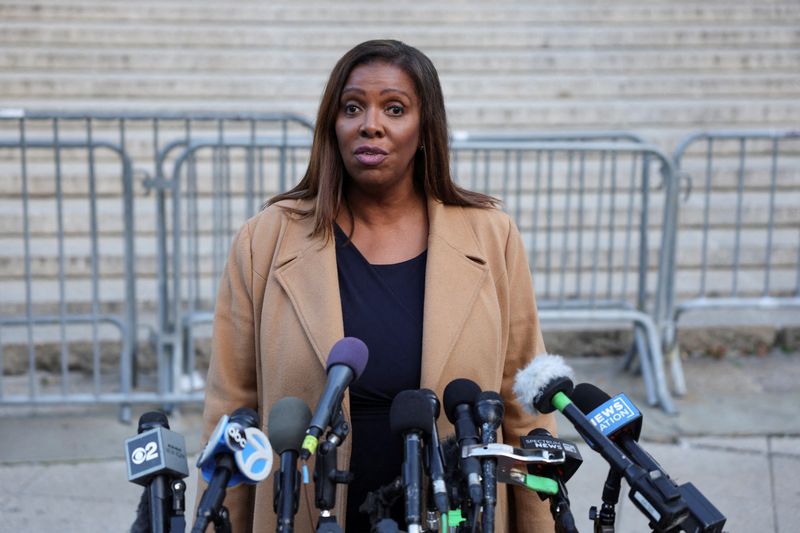
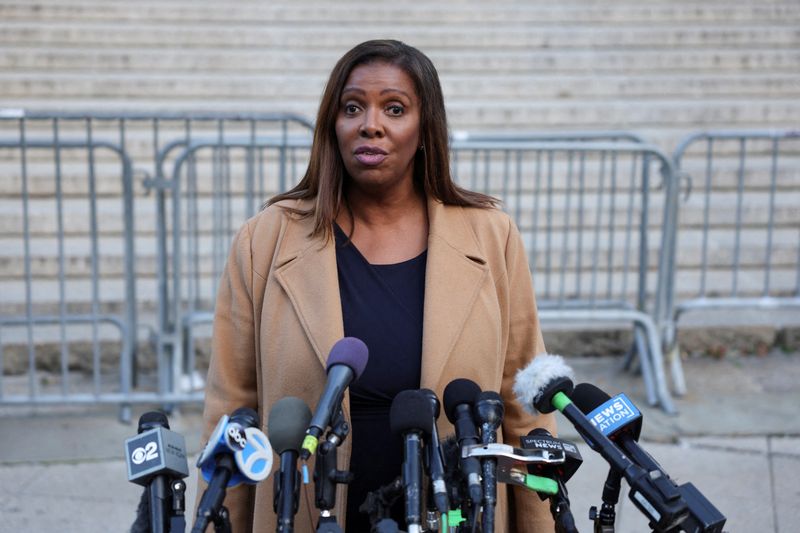 © Reuters. FILE PHOTO: New York Attorney General Letitia James speaks to the press outside New York State Supreme Court in the Manhattan borough of New York City, U.S., October 25, 2023. REUTERS/Mike Segar/File Photo
Jonathan Stempel
On Tuesday, New York Attorney General Letitia James took legal action against the cash advance provider Yellowstone Capital, now known as Delta Bridge Funding or Cloudfund, filing a lawsuit for $1.4 billion. The lawsuit alleges that Yellowstone engaged in predatory lending practices, charging exorbitant interest rates on fraudulent loans.
Uncovering Deceptive Practices
The complaint accuses Yellowstone of deceiving merchants by promising to purchase specific percentages of their future receivables, with the flexibility for merchants to repay advances over extended periods during slower business periods. However, the reality was quite different. Yellowstone debited fixed amounts from merchants’ bank accounts over short durations, typically 60 to 90 business days, resulting in outrageously high effective interest rates reaching up to 820%, far exceeding New York’s legal interest rate limit of 16%.
Impact on Small Businesses
One of the striking examples of Yellowstone’s harmful practices was the case of City Bakery, a former customer located near Union Square in Manhattan. The bakery, in business for 29 years, closed its doors in 2019 due to overwhelming debts owed to Yellowstone and unexpected repayment demands.
Despite being confronted with the allegations, lawyers representing the 37 defendants named in James’ extensive 281-page complaint have not issued any statements.
Lawsuit Demands
The lawsuit seeks to recover illegal interest and fees, levy a $5,000 civil penalty for each fraudulent cash advance, and bar Yellowstone co-founder David Glass from further involvement in the industry. Additionally, five individual defendants have already settled for $3.37 million and accepted industry bans.
As per Attorney General James, the core of the issue lies in predatory lenders exploiting small businesses, which are the backbone of the economy, exacerbating their already challenging circumstances.
Historical Pattern of Misconduct
Yellowstone’s history is marred by legal troubles. In 2021, the company reached a settlement with the U.S. Federal Trade Commission, agreeing to pay $9.8 million for unauthorized bank withdrawals and deceptive financing practices. Subsequently, in December of the same year, Yellowstone agreed to pay $5.6 million and forgive $21.8 million in debt after New Jersey’s attorney general accused the company of misleading businesses.