


Politics
As NATO celebrates its 75th anniversary, the U.S. should tell Europe it is on its own if it provokes a war with Russia.

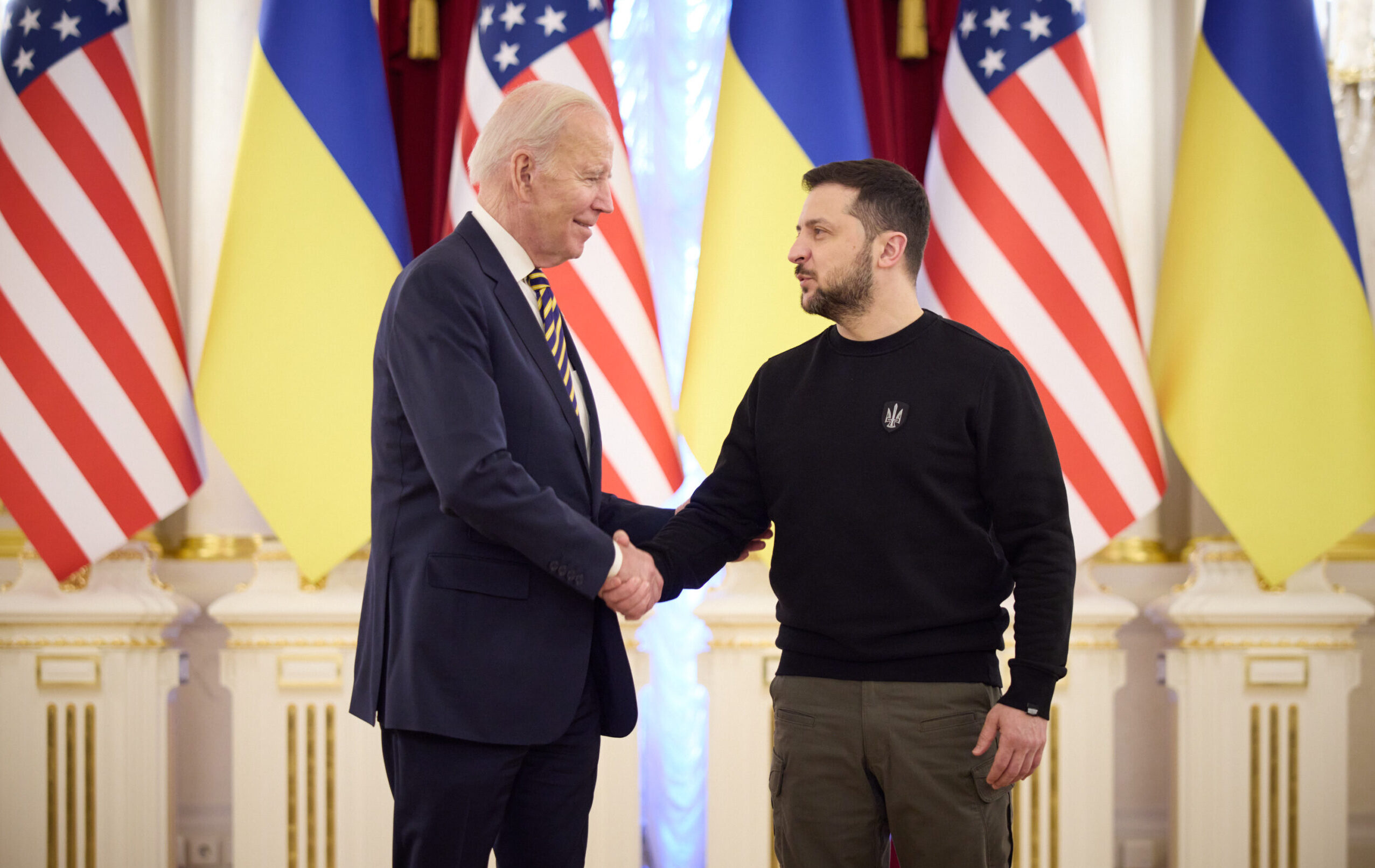
(Photo by Ukrainian Presidential Press Office via Getty Images)
NATO is celebrating its 75th year as its members fight a brutal proxy war with Russia over Ukraine. The alliance marked its anniversary in Brussels last week and will hold a formal summit in July in Washington.
That session could be contentious. Fears of a Ukrainian collapse are increasing, and an increasing number of policymakers on both sides of the Atlantic believe the alliance should go all in for Kiev, assuming away the risks of a broader conventional and potential nuclear war.
France’s President Emmanuel Macron played the Napoleon card, suggesting that allies deploy troops to Ukraine. While meeting with his European counterparts, he opined, “There’s no consensus today to send in an official, endorsed manner troops on the ground. But in terms of dynamics, nothing can be ruled out.” When criticized, he doubled down: “For us to decide today to be weak, to decide today that we would not respond, is being defeated already.”
Macron imagines that putting allied troops in Ukrainian cities would immunize the latter from attack, deterring Moscow without war. He drew support from officials in Estonia, Lithuania, and Poland. More serious governments, including the Biden administration, rejected the idea. After all, Americans would bear the principal burden and pay the greatest cost of a broader war.
Nevertheless, as Warsaw pointed out, some members already have deployed troops to Ukraine. Others are threatening to act on their own. Reported the Wall Street Journal: “Slovakian Prime Minister Robert Fico told a televised briefing that preparatory materials he had received for the summit sent shivers down his spine. The documents, he said, suggested that a number of NATO and EU countries were considering sending troops to Ukraine. Fico added: ‘I cannot say for what purpose and what they should be doing there’.” The author Edward Luttwak helpfully offered detailed military missions for the transatlantic alliance:
NATO countries will soon have to send soldiers to Ukraine, or else accept catastrophic defeat. The British and French, along with the Nordic countries, are already quietly preparing to send troops—both small elite units and logistics and support personnel—who can remain far from the front. The latter could play an essential role by releasing their Ukrainians counterparts for retraining in combat roles. NATO units could also relieve Ukrainians currently tied up in the recovery and repair of damaged equipment, and could take over the technical parts of existing training programs for new recruits. These NATO soldiers might never see combat—but they don’t have to in order to help Ukraine make the most of its own scarce manpower.
Whether or not such personnel went mano-a-mano with Moscow’s troops, they would be actively involved in the war and thus valid targets.