


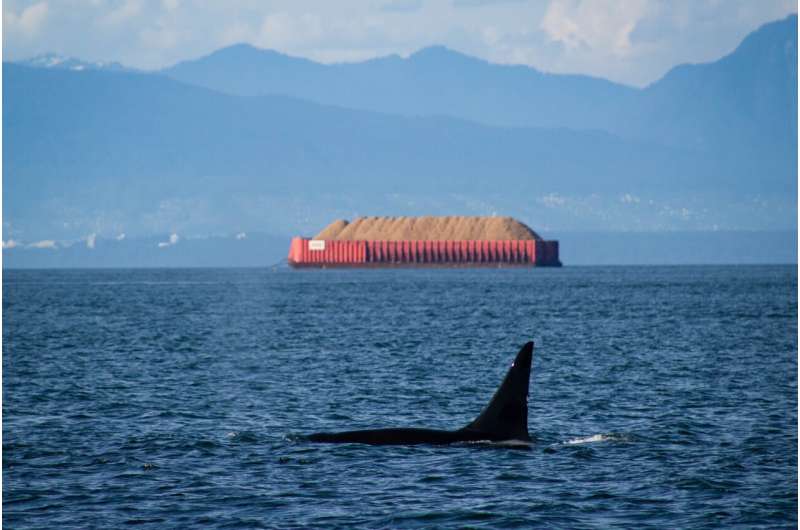
Credit: Unsplash/CC0 Public Domain
Did you know that almost half of marine mammals around the UK are being poisoned by banned chemicals?
These dangerous compounds, once widely used in pesticides, flame retardants, and coolants, are causing significant impacts on the health and reproduction of these animals.
Recent research has revealed that the UK’s whales and dolphins are full of toxins, and the situation may only get worse.
Despite being banned almost 20 years ago, levels of persistent organic pollutants (POPs) remain alarmingly high in the oceans. In fact, these chemicals may exceed safe limits in as many as half of all marine mammals living around the UK, based on a new study of stranded animals.
While researchers found that levels of six key POPs are declining, there is concern that the chemicals contained in coastal landfill sites could increasingly leak out as flooding, extreme weather, and coastal erosion are enhanced by climate change.
Dr. Rosie Williams, the lead author of the study at the Zoological Society of London, stated, ”This is a huge wake-up call. It’s been over 20 years since several of these chemicals were banned globally, yet we still see concerningly high concentrations in wildlife.”
“We need to act now, learn from our past mistakes, and employ stronger, science-backed measures to curb pollution. Ambitious and urgent action is required, and by beginning today we can start mitigating the profound impact that chemical pollution continues to have on marine life.”
The findings of the research were published in the journal Environmental Science & Technology.
Many persistent organic pollutants (POPs) were first developed in the twentieth century as part of a new wave of synthetic chemicals. At the time, they were seen as groundbreaking new compounds that could be used in stronger pesticides, longer-lasting paint, and more fire-resistant furniture.
However, the same properties that made these chemicals so useful came at a cost: they are highly toxic and do not easily break down in nature. Over time, these chemicals leached into our soil, air, and rivers, eventually making their way into the ocean.
“These toxins are initially taken up by plankton at the bottom of the food chain,” Rosie explains. “Unable to be broken down or excreted, these persistent chemicals increase in concentration the further up the food chain they go in a process known as biomagnification.”
“As apex predators, many marine mammal species consume large amounts of toxins every time they feed, making them some of the most contaminated wildlife species.”
While the effects of these chemicals vary, they are unfailingly harmful. As they build up in the body’s fats, they can damage the reproductive system, the immune system, and hormonal cycles.
When this was recognized in the 1970s, countries began to introduce rules on their use. However, it wasn’t until 2004 that the Stockholm convention came into force, which bans or restricts the production and use of the most damaging compounds.