



Updated [hour]:[minute] [AMPM] [timezone], [monthFull] [day], [year]
BOSTON (AP) — Plaintiffs in a lawsuit challenging the Trump administration campaign of arresting and deporting faculty and students who participated in pro-Palestinian demonstrations argued Monday it was an orchestrated effort that has stifled free speech at universities around the country.
The lawsuit, filed by several university associations against President Donald Trump and members of his administration, is one of the first to go to trial. Plaintiffs want U.S. District Judge William Young to rule the policy violates the First Amendment and the Administrative Procedure Act, a law that governs the process by which federal agencies develop and issue regulations.
“Not since the McCarthy era have immigrants been the target of such intense repression for lawful political speech,” Ramya Krishnan, senior staff attorney at the Knight First Amendment Institute, told the court. “The policy creates a cloud of fear over university communities, and it is at war with the First Amendment. The First Amendment forecloses viewpoint discrimination; it forecloses retaliation; and it forecloses government threats meant to coerce silence.”
In response, lawyers for the government argued that no such policy exists and that the government is enforcing immigration laws legally and is doing so to protect national security.
“There is no policy to revoke visas on the basis of protected speech,” Victoria Santora told the court. “The evidence presented at this trial will show that plaintiffs are challenging nothing more than government enforcement of immigration laws.”
Since Trump took office, the U.S. government has used its immigration enforcement powers to crack down on international students and scholars at several American universities.
Trump and other officials have accused protesters and others of being “pro-Hamas,” referring to the Palestinian militant group that attacked Israel on Oct. 7, 2023. Many protesters have said they were speaking out against Israel’s actions in the war.
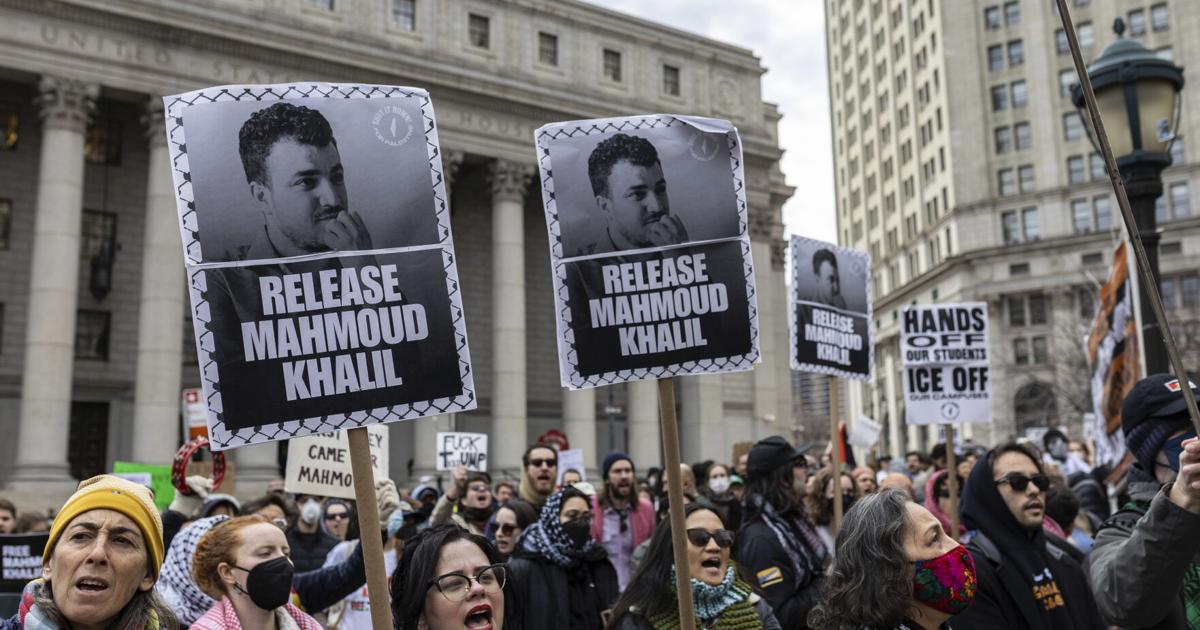
Plaintiffs single out several activists by name, including Palestinian activist and Columbia University graduate Mahmoud Khalil, who was released last month after spending 104 days in federal immigration detention. Khalil has become a symbol of Trump ’s clampdown on campus protests.
federal judge. (AP Photo/Rodrique Ngowi, File)” width=”599″ height=”399″ src=”https://dims.apnews.com/dims4/default/5eee44b/2147483647/strip/true/crop/2830×1886+0+0/resize/599×399!/quality/90/?url=https%3A%2F%2Fassets.apnews.com%2F5d%2F73%2F8cb81f07071ffd2af65c7031f523%2F0bacda81525841508172eb729077ed10″ loading=”lazy”/>
Tufts University student from Turkey, Rumeysa Ozturk, who was arrested by immigration agents while walking along a street in a Boston suburb, talks to reporters on arriving back in Boston, May 10, 2025, a day after she was released from a Louisiana immigration detention center on the orders of a federal judge. (AP Photo/Rodrique Ngowi, File)
Tufts University student from Turkey, Rumeysa Ozturk, who was arrested by immigration agents while walking along a street in a Boston suburb, talks to reporters on arriving back in Boston, May 10, 2025, a day after she was released from a Louisiana immigration detention center on the orders of a federal judge. (AP Photo/Rodrique Ngowi, File)
The lawsuit also references Tufts University student Rumeysa Ozturk, who was released in May from Louisiana immigration detention.