

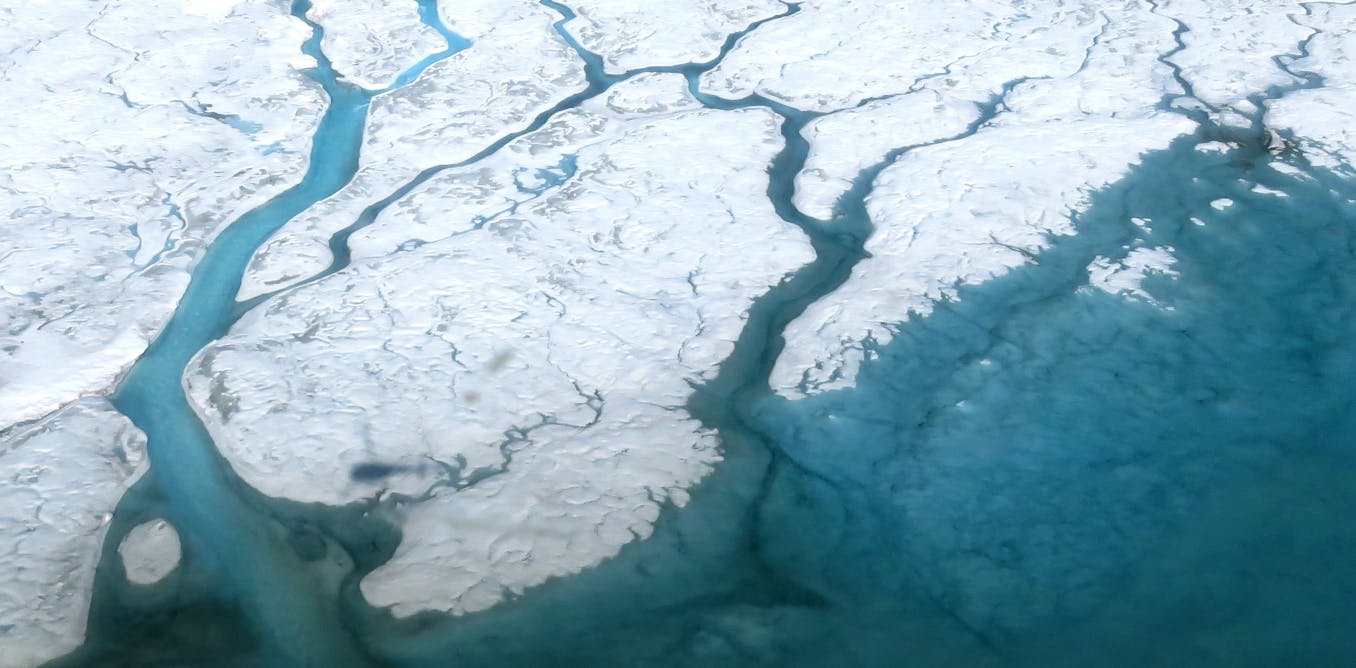

As the planet warms, it risks crossing catastrophic tipping points: thresholds where Earth systems, such as ice sheets and rain forests, change irreversibly over human lifetimes.
Scientists have long warned that if global temperatures warmed more than 1.5 degrees Celsius (2.7 Fahrenheit) compared with before the Industrial Revolution, and stayed high, they would increase the risk of passing multiple tipping points. For each of these elements, like the Amazon rain forest or the Greenland ice sheet, hotter temperatures lead to melting ice or drier forests that leave the system more vulnerable to further changes.
Worse, these systems can interact. Freshwater melting from the Greenland ice sheet can weaken ocean currents in the North Atlantic, disrupting air and ocean temperature patterns and marine food chains.
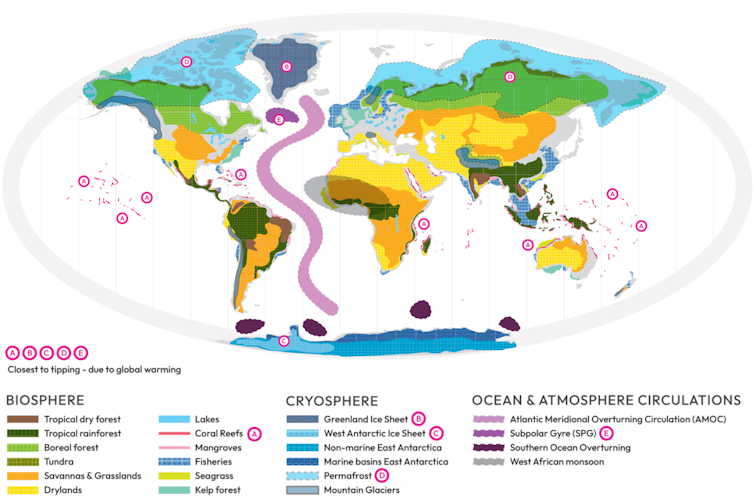
Pink circles show the systems closest to tipping points. Some would have regional effects, such as loss of coral reefs. Others are global, such as the beginning of the collapse of the Greenland ice sheet.
Global Tipping Points Report, CC BY-ND
With these warnings in mind, 194 countries a decade ago set 1.5 C as a goal they would try not to cross. Yet in 2024, the planet temporarily breached that threshold.
The term “tipping point” is often used to illustrate these problems, but apocalyptic messages can leave people feeling helpless, wondering if it’s pointless to slam the brakes. As a geoscientist who has studied the ocean and climate for over a decade and recently spent a year on Capitol Hill working on bipartisan climate policy, I still see room for optimism.
It helps to understand what a tipping point is – and what’s known about when each might be reached.
Tipping points are not precise
A tipping point is a metaphor for runaway change. Small changes can push a system out of balance. Once past a threshold, the changes reinforce themselves, amplifying until the system transforms into something new.
Almost as soon as “tipping points” entered the climate science lexicon — following Malcolm Gladwell’s 2000 book, “The Tipping Point: How Little Things Can Make a Big Difference” — scientists warned the public not to confuse global warming policy benchmarks with precise thresholds.
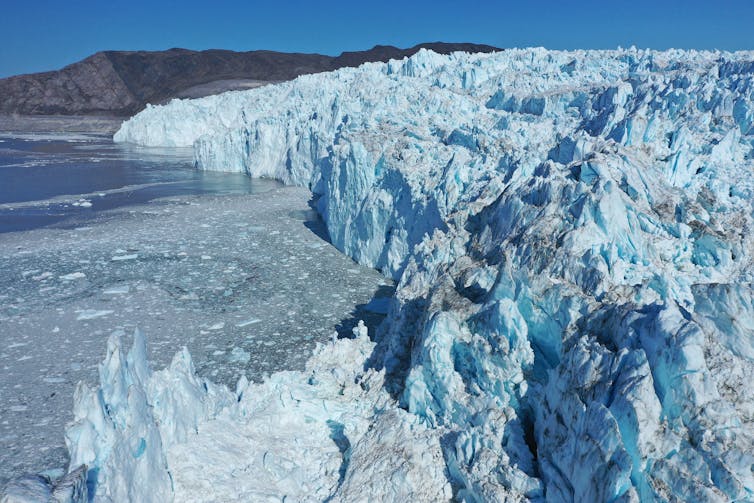
The Greenland ice sheet, which is 1.9 miles (3 kilometers) thick at its thickest point, has been losing mass for several years as temperatures rise and more of its ice is lost to the ocean. A tipping point would mean runaway ice loss, with the potential to eventually raise sea level 24 feet (7.4 meters) and shut down a crucial ocean circulation.
Sean Gallup/Getty Images
The scientific reality of tipping points is more complicated than crossing a temperature line. Instead, different elements in the climate system have risks of tipping that increase with each fraction of a degree of warming.
For example, the beginning of a slow collapse of the Greenland ice sheet, which could raise global sea level by about 24 feet (7.4 meters),