


Nearly three decades after the first UN climate conference, emissions are still rising. The global system for tackling climate change is broken – it’s slow, cumbersome and undemocratic.
Even Donald Trump may not be totally wrong when he blames the UN for producing “empty words and then never [following] those words up”. If we assess the progress since the first UN Cop climate summit in 1995, the numbers on emissions confirm that not very much did, indeed, follow years of words.
We urgently need not just to redesign climate policies but also a new method for drafting those polices. Climate change could even be the right issue in which to experiment with an approach that might inspire a wider reform of multinational institutions.
A conference I have helped organise beginning October 16 in Venice on the global governance of climate change will discuss three ideas.
First, we need to gradually redesign the decision-making process to solve a deficit of both efficiency and democracy. Decisions today are slow and weak because they de facto seek unanimity.
The Paris agreement, for instance, only required 55 countries producing at least 55% of global emissions to enter into force. And yet diplomats worked so that it could be agreed by all 195 UN member states – including those that later dropped out – by adopting words that tend to be “empty” to avoid displeasing anybody.
At the same time, the process does not even include all the parties that really matter: technically, the microstate of San Marino is one of the signatories of the agreements; the megacity of Los Angeles is not. Current mechanisms also miss the opportunity to experiment with direct representation of groups for whom climate change matters more, such as young people, indigenous people or farmers.
One idea would be to leverage the relative concentration of the world economy. China, the US and India represent almost half of the world population (and much of the population living below the global poverty line), more than half of the GDP and emissions; and most of the private investment in artificial intelligence that may enable some of the most interesting solutions.
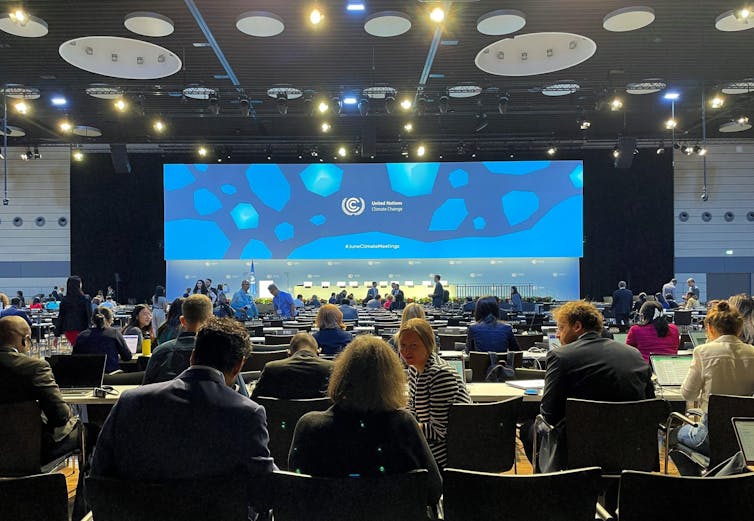
Climate diplomats gathered in Bonn, Germany, in June this year, for a preparatory meeting ahead of the Cop30 climate summit in Brazil in November 2025.
dpa / Alamy
Reforms that go beyond current blanket consensus are necessary. For instance, some experts have proposed a qualified majority voting system, in which changes might require a supermajority of countries or perhaps a majority of both developed and developing countries.
But we must be even more ambitious than this: voting rights should instead reflect size.
This would create incentives for states to move towards pooling their votes into regional representations. Trade-based regional agreements, like South American Mercosur, the African Continental Free Trade area or the Association of South East Asian Nations could evolve into climate-related alliances.