


We Need You in Our Corner! All gifts matched 3X now!
The story you’re about to read is available to you for free. No paywall, no subscription fee, no ads. But it wasn’t free to produce.
Our nonprofit newsroom delivers the most comprehensive, eye-opening and influential climate coverage in the nation, and more of it than anyone else. We call power holders to account for their actions, put facts front and center and stand up to disinformation. We need your help right now to keep our work and momentum going in 2026.
All gifts to Inside Climate News will be matched 3X for a limited time.
If you don’t already, please support our work with a donation now. Thank you for being in our corner.
BOISE, Idaho—Ping.
The sound that wrenched Lucian Davis awake was a phone notification from the wildfire-tracking app Watch Duty. There was a fire just a few miles downslope from the tent where he had been sleeping.
Davis was the lead bander at the Lucky Peak station, a research site run by Boise State University’s Intermountain Bird Observatory (IBO) near the school’s namesake city. It sits within a small patch of mountaintop scrub and Douglas fir forest, surrounded on nearly all sides by sagebrush steppe. Each fall, the station hosts seasonal field technicians who study the songbirds, raptors and owls that stop at the island of habitat in a sea of open country.
But on October 4, 2024, that open country was burning. At 6:15 that morning, when the alert awakened Davis, the fire was climbing toward the research station, where eight technicians and a class of 6th graders on an overnight school trip were camping.
The teachers woke their kids and got them onto the bus, but as they were driving down the mountain, the fire jumped the main road. Flames licked the sides of the bus, but the students and teachers made it out unharmed.
Meanwhile, the station’s crew grabbed their data sheets and piled into their cars, leaving their tents and gear behind. With fire surrounding the main road, they bounced down an unmaintained back route and made it to safety by 8:30 a.m.
From Boise, the crew watched the blaze creep up the mountain as ash speckled their cars.
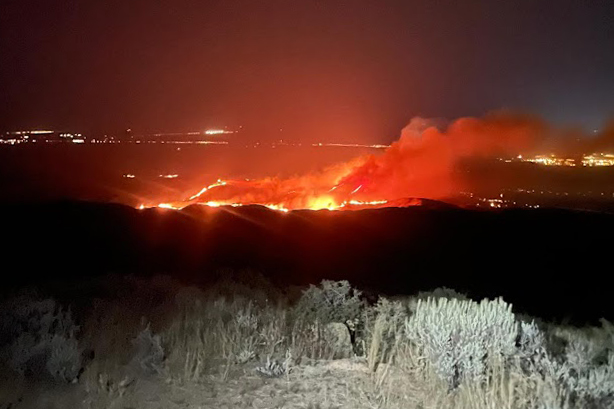 The Valley Fire, as seen looking down from the top of Lucky Peak, burns in the early morning before dawn. Credit: Heather Hayes
“For like an hour or two, we couldn’t see the top at all from in town. It was just totally obscured by all the smoke,” Davis said. “Then, when we could actually see it, I was like, ‘Oh shit.’”
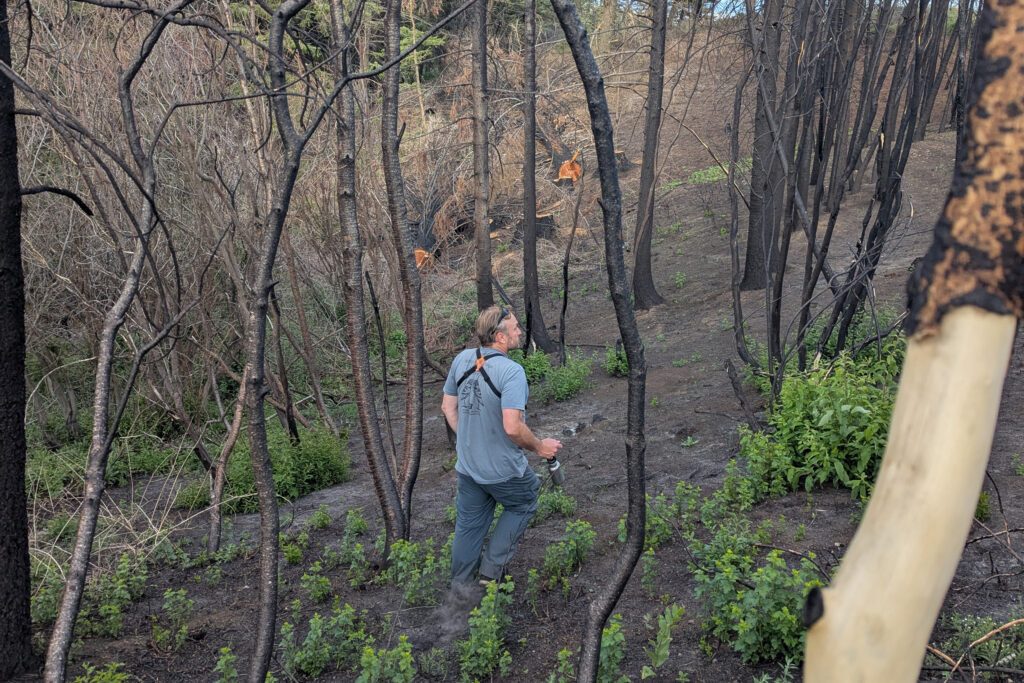
Even from the base of the mountain, the crew could see that the peak’s trees were bare and blackened. It was clear the fire had reached the station.
The Valley Fire lasted for three weeks and burned more than 10,000 acres,