

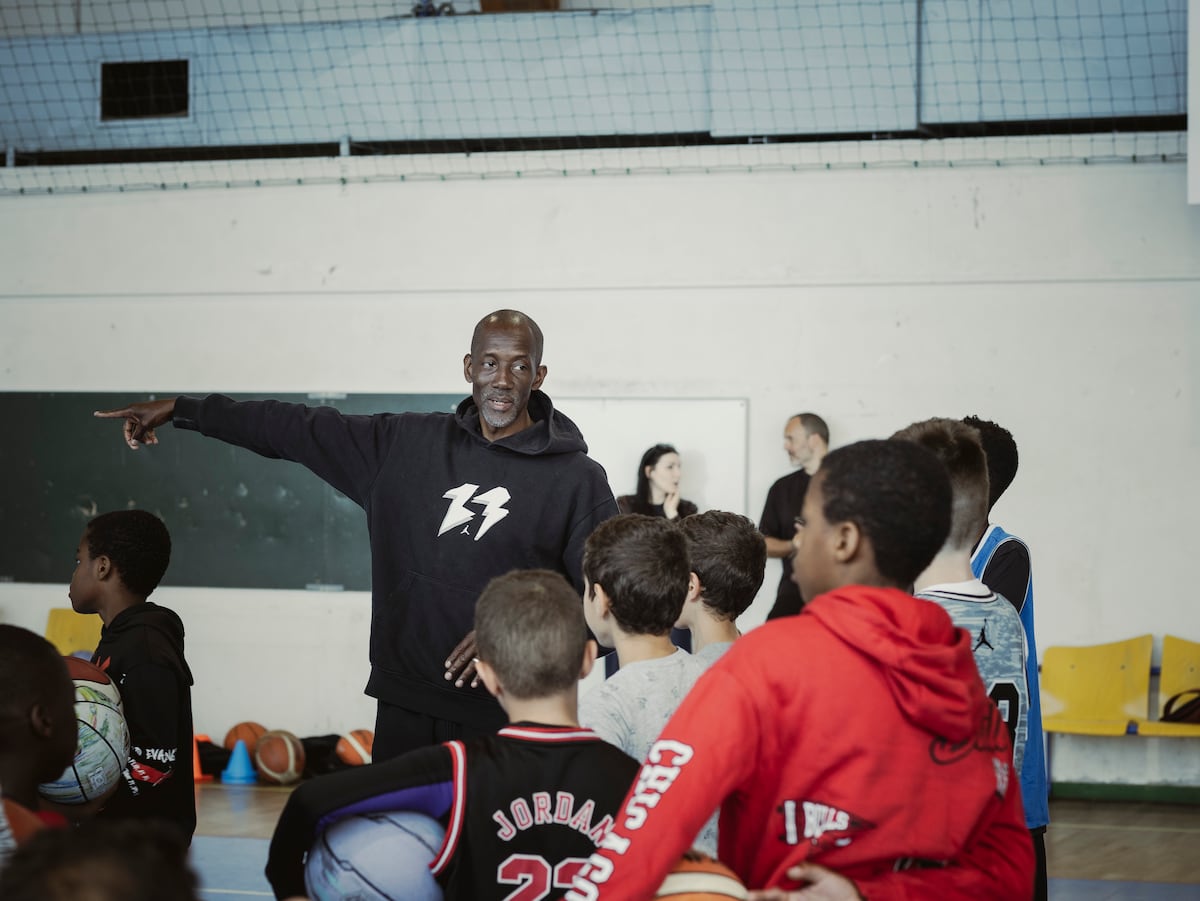

A portrait of Emmanuel Macron, president of the French Republic, leans against the wall on the floor. Two meters away, a handwritten sign proclaims a symbolic victory: “Here begins the new France.” From the window of the new mayor’s office, painted electric blue, one can see the basilica where the remains of the monarchs of France rest. But also the narrow streets of Saint-Denis (population 115,000), where the air is thick with the aroma of halal shops, and women in headscarves walk among mosques. In short, the multicultural landscape of the second-largest city in Île-de-France, the Paris region, located in the country’s poorest department and the one with the highest proportion of immigrants — one-third of the population. His arrival here has shaken France. He remains completely calm. “The portrait? It was already like that when I arrived. I didn’t take it down; I simply didn’t put it back on the wall,” explains Bally Bagayoko, the newly elected mayor of Saint-Denis.
Bagayoko, 52, the son of a family of Malian origin, won the municipal elections in March in the first round with 50.77% of the vote. It was historic. The first Black and Muslim mayor of a city with over 100,000 inhabitants. A turning point that also sparked a wave of racism from the most conservative media outlets, which went so far as to call him a “monkey” and spread lies such as Bagayoko having said that Saint-Denis was “a city of Black people” instead of kings (in French, the sounds noirs and rois can be confused). “We expected it. We knew there would be attacks. The first accusation came from the outgoing mayor, who said that we were a candidacy supported by drug traffickers. But the racist offensive continued with emails, with threats. Also with music…” he says.
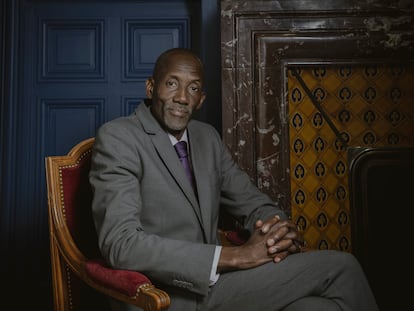
The mayor’s office receives hate messages daily, including anonymous calls that leave the phone off the hook and sometimes play the melody Beaux Dimanches, (Beautiful Sundays), from the album Dimanche à Bamako (Sunday in Bamako) by the Malian duo Amadou & Mariam. Bagayoko laughs. “We share a last name, maybe that’s why… They think I offend the Republic. I represent everything they detest. I don’t fit into their model of power representation, into that white idea of the Republic. But this is a reality and today France, in its diversity, has brought forth people who a few years ago had no right to hold these positions. And that’s something that has escaped the control of those people, who believed they had the right to decide who could occupy them. That’s why they say I’m a monkey, or that the drug traffickers chose me… It’s a neocolonial approach. Obviously, if I were white and had a different name, there wouldn’t be a problem.”
The postal code for the Seine-Saint-Denis department, the province with the most immigrants and also demographically the youngest in the country, is 93. This is the epitome of the banlieue,