

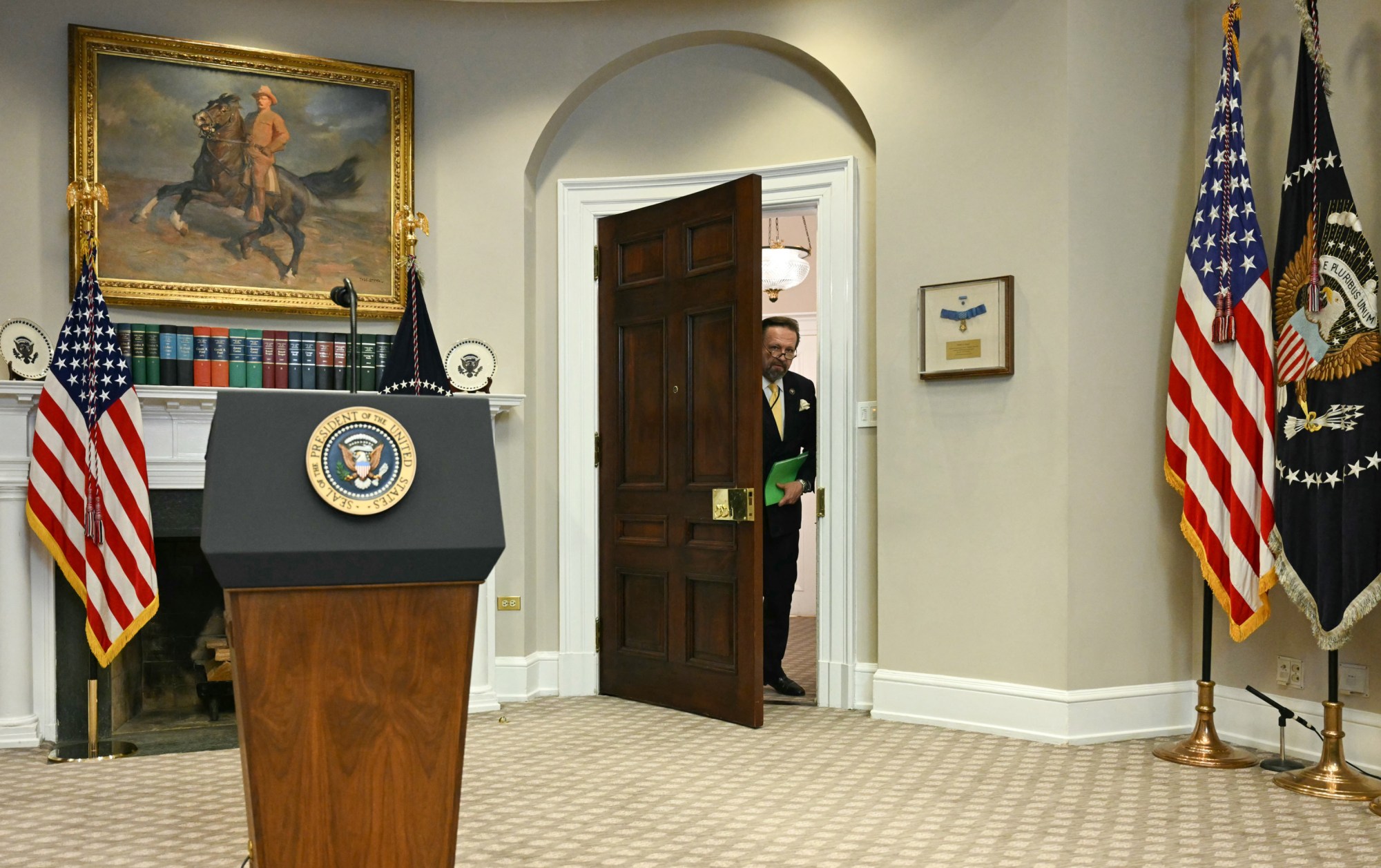

For a year, White House counterterrorism czar Sebastian Gorka promoted the national strategy he was drafting, saying he was pouring his “life’s work” into a “massive” blueprint that would overhaul the U.S. approach to combating terrorist threats.
The finished product, released May 6 after months of delays, is a 16-page, typo-sprinkled document that ranks threats based on politics rather than intelligence assessments, according to several current and former counterterrorism officials and threat analysts.
Islamist militant groups, the perennial top concern, now come second to Latin American drug cartels. The violent far right, which the FBI has repeatedly called the leading domestic threat, doesn’t merit a mention. Meanwhile, militant leftists, a small subset of extremist violence in the United States, are portrayed as a threat on par with global terrorist networks such as al-Qaida.
“A new type of domestic terrorism has emerged,” the document says, “driven by violent extremists who have adopted ideologies antithetical to freedom and the American way of life.”
Gorka’s strategy — the subject of a recent ProPublica report — lavishes praise on President Donald Trump’s national security agenda but offers few details about plans to tackle the administration’s top priorities: Latin American “narcoterrorists,” Islamist militant groups, and violent leftist antifascists and anarchists.
Gorka, who coordinates White House counterterrorism policy at the National Security Council, has called the document a “return to common sense” after a 2021 strategy by President Joe Biden centered on mostly far-right domestic threats. The new strategy mentions Biden seven times.
“What it tells me is that this administration is not paying attention to the data, to what our allies are seeing globally, or to where the biggest threats of violence come from or how they might be prevented,” said Cynthia Miller-Idriss, founding director of the Polarization and Extremism Research and Innovation Lab at American University.
Republican leaders often portrayed Biden’s focus on the violent far right as the Democrats cracking down on conservative organizing. That idea fueled Trump’s blanket pardon of more than 1,500 defendants, including those who attacked police, in the Jan. 6, 2021, storming of the U.S. Capitol.
Gorka did not reply to a request for comment. The White House, asked about criticisms of the plan, referred to a number of Gorka’s public statements touting it. Olivia Wales, a White House spokesperson, added in an email, “President Trump is crushing terrorist threats to the United States and will never let cartels, Jihadists, or the governments who support them plot against our citizens with impunity.”
Here are five notable aspects of the plan, compiled from interviews with counterterrorism personnel and researchers’ published critiques:
1. It’s about Trump, not terrorism.
The counterterrorism strategy begins with a signed foreword by Trump, who sets the tone by claiming credit for ending “four years of weakness, failure, surrender, and humiliation under the last administration.”
Analysts say the rest of the strategy often reads like a valentine rather than a sober national security communique.