

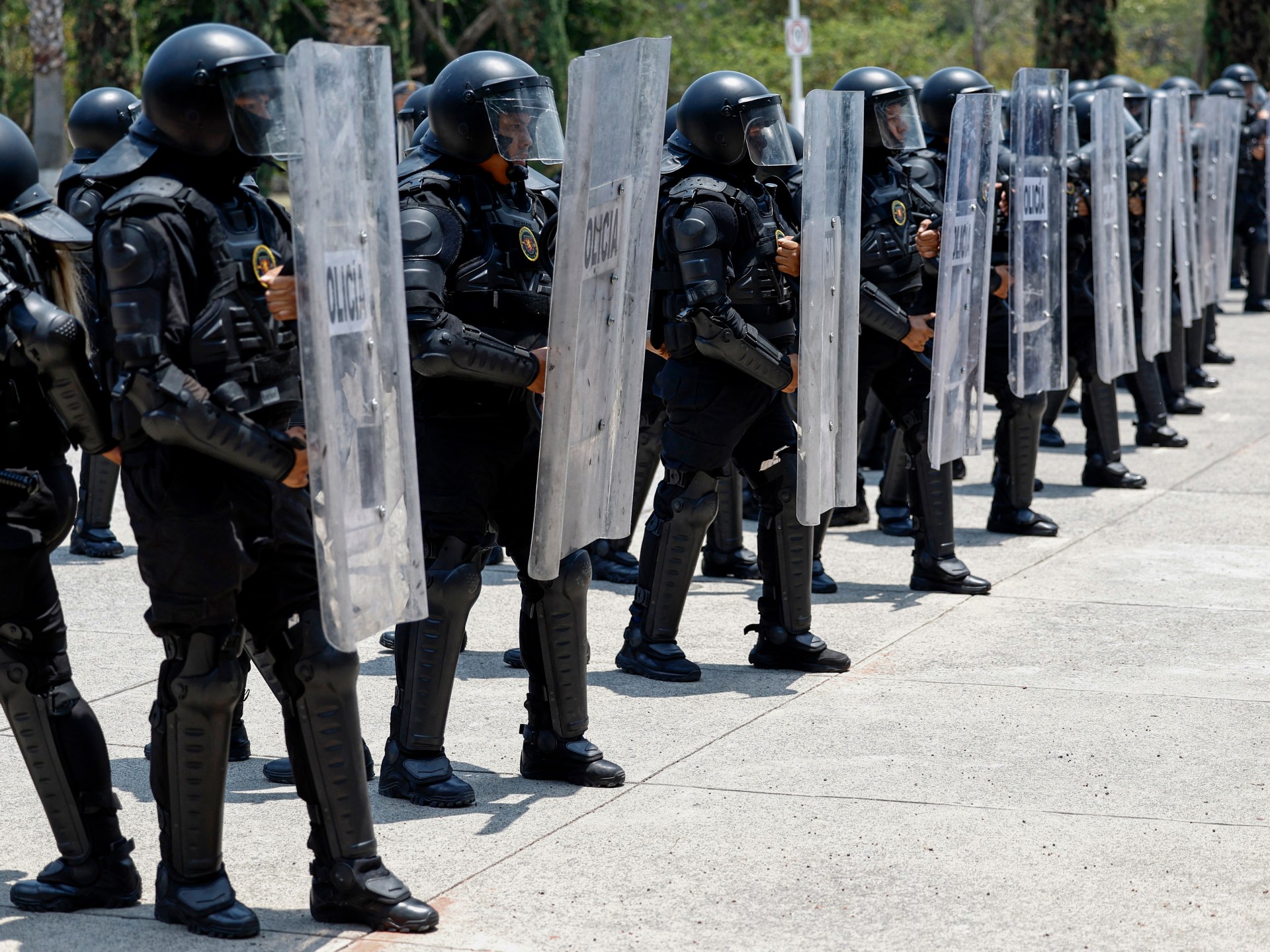

The ongoing scrutiny of the United States as World Cup cohost, and FIFA’s role as tournament organiser, has overshadowed the growing list of security concerns and protests in Mexico where the tournament opener kicks off next month.
The World Cup 2026 opens in Mexico City on June 11, with the home team taking on South Africa at the Estadio Azteca. But football fans are wary of recent incidents of violence and frequent protests in tournament host cities across Mexico.
Recommended Stories list of 4 items
- list 1 of 4World Cup train and shuttle bus fares slashed in New York, New Jersey
- list 2 of 4Israeli minister blasts Barcelona’s Lamine Yamal for Palestinian flag wave
- list 3 of 4Sardar Azmoun left out as Iran announce World Cup 2026 squad
- list 4 of 4All to know about Neymar’s angry outburst and World Cup selection
end of list
A mass shooting that killed 10 people in the Mexican state of Puebla on Sunday has exacerbated security fears previously raised by human rights bodies and international fans travelling to North America for the tournament.
Here’s what’s happened in Mexico in the months leading up to the World Cup:
Shootings, cartel violence raise security fears
Six men, three women and a minor were victims of an armed attack at a residence in Tehuitzingo, 200 kilometres from Mexico City, where the tournament opener is scheduled in just over three weeks.
The state Attorney General’s Office announced it had opened an investigation into the shooting. Prior to the attack, Mexican President Claudia Sheinbaum pledged to bolster security, including the deployment of 100,000 security personnel involving National Guard troops, police officers and employees of private security firms.
The shooting comes less than a month after a gunman killed a Canadian tourist and injured 13 others at Teotihuacan, a popular tourist and archaeological site outside Mexico City.
The US Department of Homeland Security Secretary, Markwayne Mullin, is due to visit Mexico this week, President Sheinbaum said on Monday but did not specify why.
In April, Human Rights Watch emphasised ahead of the World Cup that Mexico remains one of the most dangerous countries in the world for the media. It also highlighted that FIFA had not addressed direct risks to journalists working in Mexico’s World Cup host cities.
Amnesty International also called upon FIFA and World Cup hosts to take urgent action to protect fans, players, journalists, workers and local communities as the tournament is being staged at a time of “acute human rights crisis”.
Mexico saw a wave of violence in February, after security forces killed cartel leader Nemesio “El Mencho” Oseguera, a member of the Jalisco New Generation Cartel (CJNG).
FIFA President Gianni Infantino has said he’s “very reassured” about Mexico hosting the tournament, following the violence triggered by the killing of the drug cartel leader.