

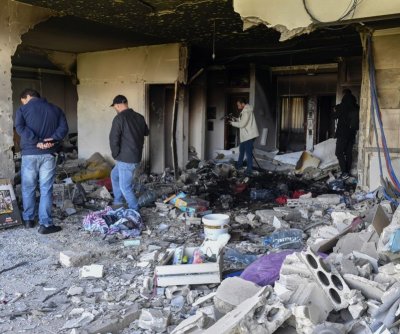

A damaged apartment following an overnight Israeli airstrike targeted a building in Bshamoun, southeast of Beirut, Lebanon, on Tuesday. The Lebanese Ministry of Public Health said more than 1,030 people have been killed and 2,800 others injured in Israeli airstrikes in Lebanon since the start of renewed hostilities. Photo by Wael Hamzeh/EPA
BEIRUT, Lebanon, March 24 (UPI) — The mass forced displacement of more than 1 million Lebanese, triggered by Israeli evacuation orders in southern Lebanon and other Hezbollah-controlled areas, has left the country facing a humanitarian disaster, fueled tensions among its communities and raised concerns about lasting demographic change.
Israel has pledged to apply the “Gaza model” in southern Lebanon, directing its army to accelerate the destruction of villages along the border and demolish all bridges over the Litani River to prevent Hezbollah fighters from moving south and threatening northern Israel.
Hezbollah remained inactive for 15 months since the Nov. 27, 2024, cease-fire agreement, but decided to engage in the U.S.-led war on Iran by firing missiles and drones into northern Israel on March 2, less than two days after the assassination of Iran’s Supreme Leader Ayatollah Ali Khamenei.
The Iran-backed Shiite group said the strikes were in response both to Israeli aggression and to Khamenei’s killing.
The missile firing prompted the Lebanese government to ban Hezbollah from all military activities. However, that failed to prevent a new round of fighting, as Israel responded with a massive air campaign and issued evacuation orders for residents of Beirut’s densely populated southern suburbs and dozens of villages in southern and eastern Lebanon.
Inhabitants of these areas fled their homes in haste, leaving everything behind as they sought safety. Beirut and the southern port city of Sidon became makeshift shelters, with displaced residents crowding streets and sidewalks, many spending the night in their cars or in open spaces.
Fida Karout, a 47-year-old mother of five, spent 14 hours on the road to reach Beirut after fleeing her hometown, the southern border village of Mais al Jabal — a journey that normally takes just two hours by car.
This was her fourth displacement since Hezbollah opened a support front for Gaza on Oct. 8, 2023, a period during which the group suffered significant losses as Israel killed its top leaders, military commanders and an estimated 4,000 fighters.
A cease-fire brokered by the United States and France was intended to end the war on Nov. 27, 2024. However, Israel continued to operate freely and without restraint against Hezbollah beyond Feb. 18, 2025, when it withdrew the bulk of its troops after widespread destruction of villages in southern Lebanon and the killing of some 400 Hezbollah fighters and civilians — while retaining five strategic positions.
When residents of southern Lebanon returned to their villages in February last year, they were appalled by the extent of the destruction inflicted by Israel. Nevertheless, they remained, unwilling to abandon their land.