


Skip to Main Content
Books
The scientist, public health official and unlikely political lightning rod writes candidly about Donald Trump, the AIDS crisis and other subjects.
Viking
By Becca Rothfeld, Washington Post
June 25, 2024 | 4:35 PM
The old cliché has it that bureaucracies are “faceless” institutions, insensitive to the demands of the people they serve. Anthony S. Fauci, who led the National Institute of Allergy and Infectious Diseases from 1984 to 2022, is a career bureaucrat, but he also has one of the country’s most recognizable faces.
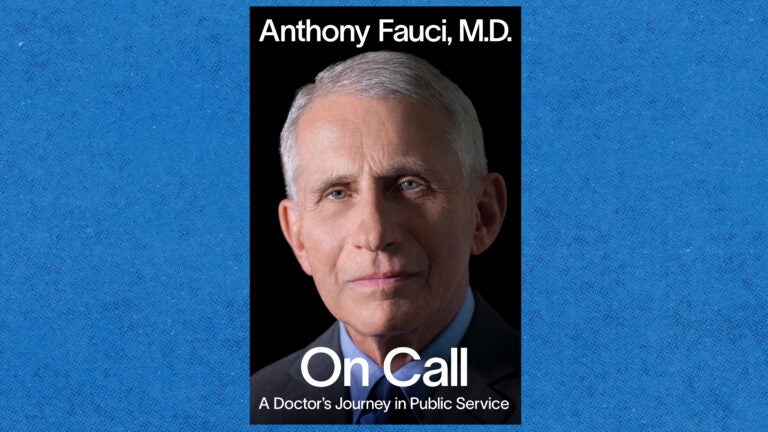
Fauci never set out to become a familiar presence on talk shows and at news conferences, but his career as a public figure is not exactly an accident. As he explains in his new memoir, “On Call: A Doctor’s Journey in Public Service,” he has always made a point of communicating with his patients – even when they make up the entire population of the United States.
Fauci had already spent more time in the spotlight than most health officials before disaster struck in 2020, but the onset of the covid pandemic – and his role as “the de facto public face of the country’s battle with the disease” – launched him to newfound celebrity. Tussles with President Donald Trump, both on and off camera, made him a political lightning rod and, to many, a hero.
Fauci’s struggles with the Trump administration feature in “On Call,” but it contains no bombshells and not much in the way of juicy new information. Fauci permits himself sharper words about the 45th president than he did during the thick of the pandemic – “he shocked me on day one of his presidency with his disregard of facts,” “he seemed to conflate COVID with influenza,” he displayed “overt hostility to much of the press,” and so on – but the doctor’s frustrations were always manifest.
Few will be shocked to learn that he was annoyed by the fecklessness of the bungler-in-chief, dismayed by Vice President Mike Pence’s sycophantic adherence to the party line and alarmed by the administration’s ignorance of the basic workings of government. Nor is it startling that Trump was a volatile boss who alternately cursed at Fauci and professed to love him, all while undercutting his scientifically sound advice in inflammatory interviews.
Perhaps slightly more unexpected and revealing is Fauci’s contention that America’s disastrous covid response was not solely the fault of the petulant man in the Oval Office: Aging infrastructure and pervasive inequalities were also to blame, as were Fauci’s colleagues at the Centers for Disease Control and Prevention.
Fauci allows himself several respectful but cutting criticisms of the CDC, an agency that he alleges was slow to track cases and develop effective testing technologies.
Still, the covid pandemic was only one of many crises that Fauci confronted during his many years at the National Institutes of Health, and it takes up less than a fourth of his eventful autobiography.