

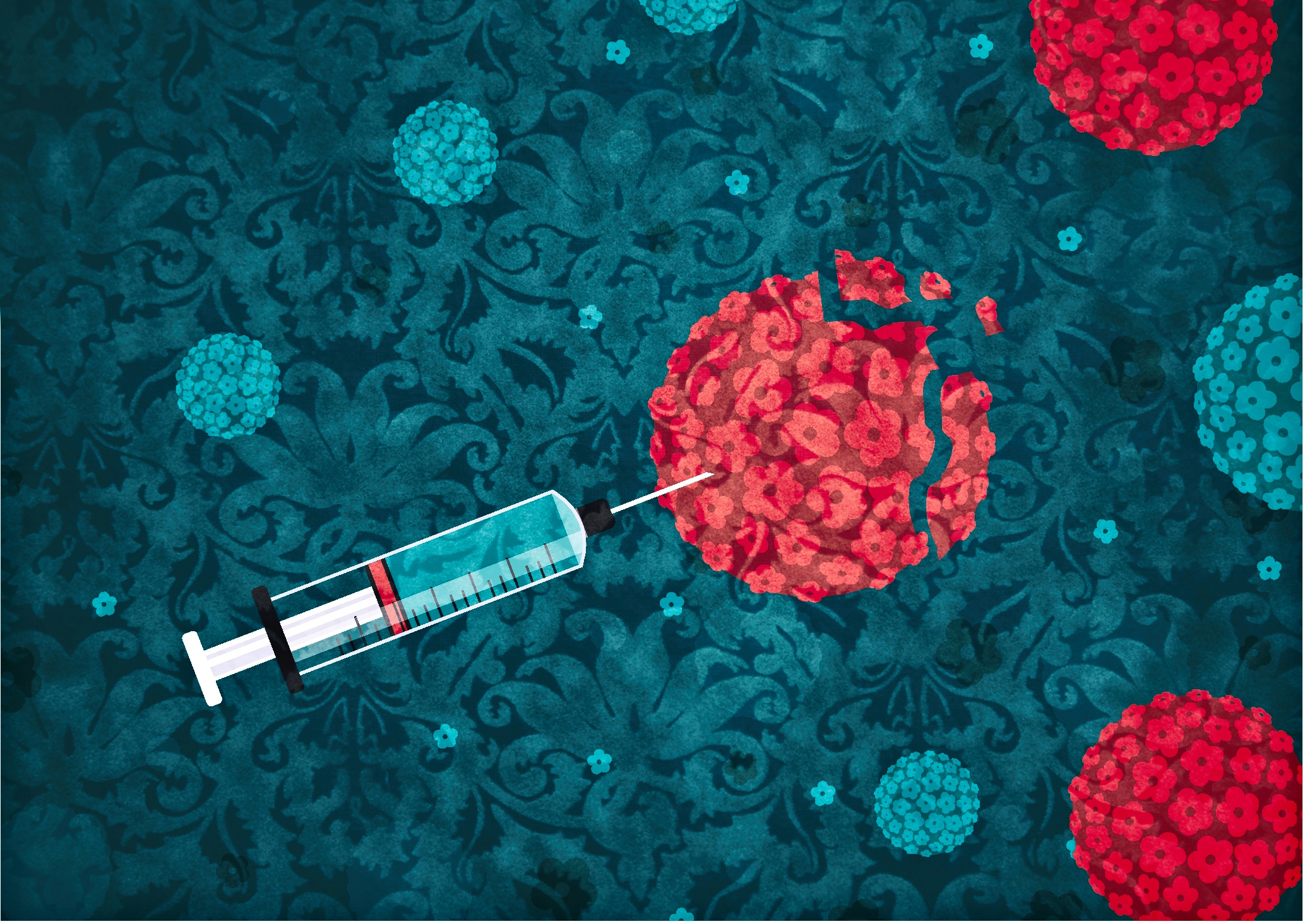

Exciting Advancements in Cancer Vaccines
For decades, cancer vaccines have been touted as a technology with transformative potential — a promise that always seemed to lie beyond some distant horizon. In 2023, however, the results of two clinical trials hinted that the transformation may be near.
The first report came in April, at the annual meeting of the American Association for Cancer Research (ASCO). It concerned melanoma, the deadliest form of skin cancer. In patients whose tumors had been surgically removed, researchers announced, an experimental therapeutic vaccine cut the risk of recurrence by 44 percent compared with the immunotherapy drug pembrolizumab alone — the standard therapy in such cases.
These findings have “absolutely breathed new life into the cancer vaccine field,” declared lead author Jeffrey Weber, deputy director of NYU Langone’s Laura and Isaac Perlmutter Cancer Center, at the ASCO conference. “I say that as a bona fide skeptic who has put hundreds of patients on prior trials and seen no benefit until now.”
(Credit: Andreypopov/iStock via Getty Images)
What are the Advancements in Cancer Vaccines?
The jab that changed Weber’s mind belongs to a new generation of cancer vaccines. Previous approaches attempted to train the immune system to recognize a protein typically overexpressed by a given type of cancer, though that antigen might also be present in ordinary cells. The experimental shot, developed by the pharma companies Moderna and Merck, targets neoantigens — proteins expressed by an individual’s unique cancer, but not by normal cells. This personalized inoculation, based on the same mRNA platform as Moderna’s COVID-19 vaccine, can target up to 34 neoantigens at once.
In the phase 2 trial, 107 subjects who’d had surgery to remove melanoma from lymph nodes or other organs received both the vaccine and pembrolizumab, which protects T cells — the immune system’s foot soldiers — from being deactivated by cancer cells. Another 50 received only pembrolizumab. Among the vaccinated group, melanoma returned in just 22 percent of patients within two years, compared to 40 percent in the control group. Most side effects were mild, and immune-related adverse effects (such as endocrine problems) were similar in both groups, suggesting that most came from the drug, not the shot.
More research will be needed to confirm the vaccine’s efficacy, and a larger phase 3 trial is now underway. “I’m getting flooded by patients saying, ‘How can I get this?’ ” says M.D. Anderson Cancer Center oncologist Rodabe Amaria. “It’s not ready for prime time, but the initial data looks very encouraging.”
A close-up look at pancreatic cancer cells, which often first spread within the abdomen and to the liver. (Credit: ; Anne Weston, Francis Crick Institute/Science Photo Library)
What are Other Breakthroughs for Cancer Treatment?
That wasn’t the only success story for new cancer vaccines this year. In May, researchers at the Memorial Sloan Kettering Cancer Center in New York reported a similar breakthrough with pancreatic ductal adenocarcinoma, the most common pancreatic cancer,