


The U.S. government’s announcement that it will seek to withdraw from more than 60 international organizations, many linked to the United Nations, will inflict lasting geopolitical self-harm and suggests the current administration is deeply insecure in the face of a rapidly changing world, political scientists said this week.
The new directive from the White House seems to undermine America’s own influence in global systems, said Federica Genovese, a political scientist at the University of Oxford.
“We are seeing a superpower confronted with the fact that its position may be threatened, and how superpowers react when they need to change,” she said. More fundamentally, she added, “the return of Trump is a symptom of Americans themselves being unsure how they want to position themselves in the world.”
Genovese said the global consequences of U.S. policy shifts are already taking shape. As the U.S. disengages, for example by pulling out of the Paris Agreement, climate cooperation is mutating.
“We are moving into a much more fragmented world,” she said, where cooperation becomes “more cynical, more hierarchical and more forceful,” increasingly driven by power and self-interest rather than shared responsibility.
In that world, she said, the European Union is becoming an institutional anchor for climate governance and data sharing, not because it is perfect, but because it continues to treat scientific coordination and rule-based cooperation as public goods, she added.
In a statement reacting to the new withdrawal decree, German Environment Minister Carsten Schneider said the U.S. exit from the United Nations climate framework was expected, but disappointing nonetheless.
“During the climate conference at the end of last year it became apparent the U.S. is alone with its stance on climate change,” he said. “A number of new alliances were forged in Belém to address international carbon markets, accelerate the phase-out of fossil fuels and, most notably, combat fake news on climate issues.”
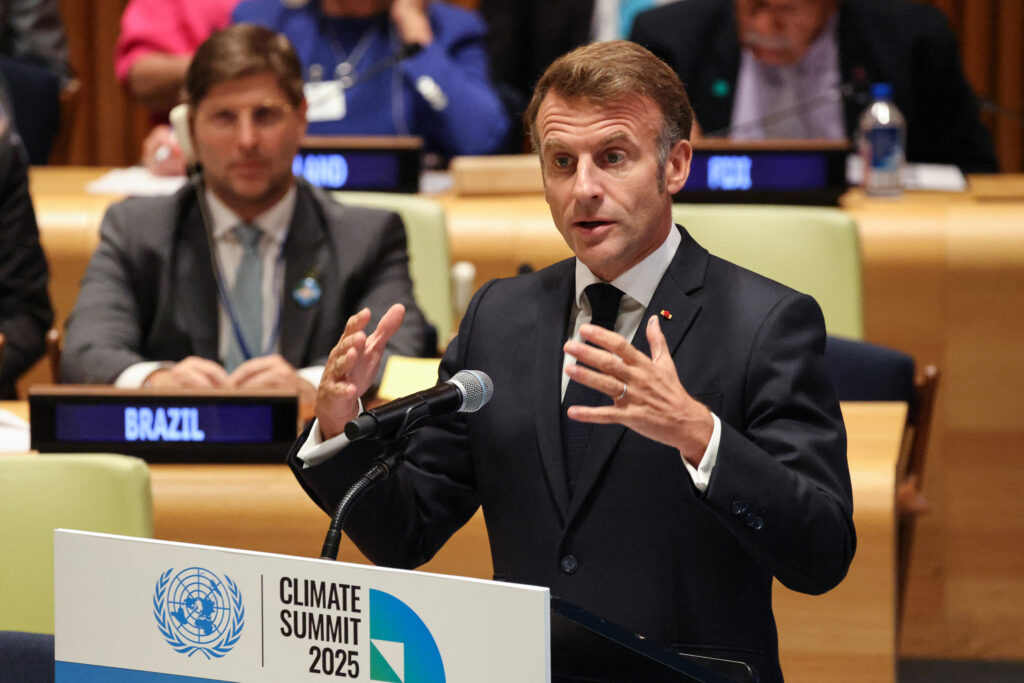
Some European leaders increasingly see the United States as a threat to global stability. In separate statements this week, French President Emmanuel Macron and German President Frank-Walter Steinmeier both warned that U.S. actions and statements are hastening the disintegration of post-WWII rule-based governance.
As reported by The Guardian, Macron said multilateral institutions are becoming less effective in a world with great powers tempted to try dividing up the world.
Speaking in Berlin Wednesday, Steinmeier said global democracy is at risk, and that smaller states and entire regions could be “treated as the property of a few great powers.”
No Simple Answers to Complex Issues
By leaving the United Nations Framework Convention on Climate Change, the U.S. forfeits having seats on any of the organization’s climate finance boards, losing any influence over how U.S. dollars already in the fund will be spent, which appears to be a “dereliction of the administration’s duty to American taxpayers,” according to a statement from Joe Thwaites, director of the Natural Resources Defense Council’s international climate finance program.