

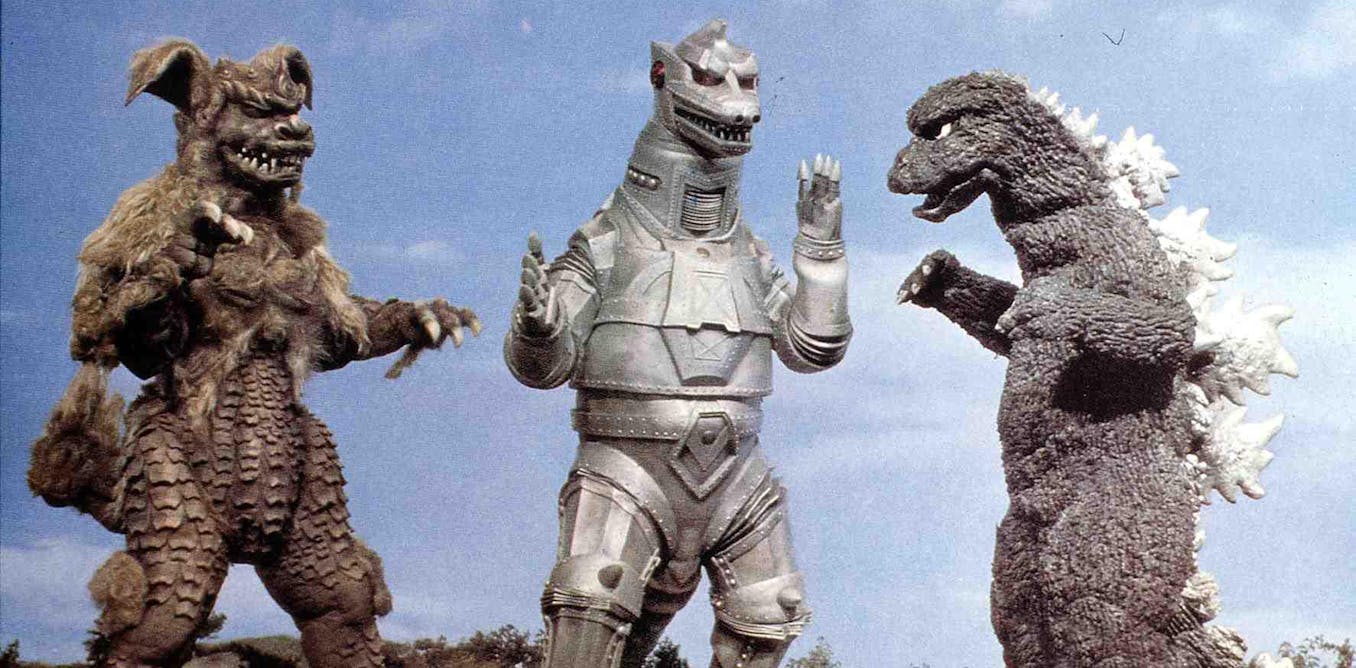

Many column inches have been dedicated to dissecting the “great power rivalry” currently playing out between China and the U.S.
But what makes a power “great” in the realm of international relations?
Unlike other states, great powers possess a capacity to shape not only their immediate surroundings but the global order itself – defining the rules, norms and structures that govern international politics. Historically, they have been seen as the architects of world systems, exercising influence far beyond their neighborhoods.
The notion of great powers came about to distinguish between the most and least powerful states. The concept gained currency after the 1648 Peace of Westphalia and the Congress of Vienna in 1815 – events in Europe that helped establish the notion of sovereign states and the international laws governing them.
Whereas the great powers of the previous eras – for example, the Roman Empire – sought to expand their territory at almost every turn and relied on military power to do so, the modern great power utilizes a complex tapestry of diplomatic pressure, economic leverage and the assertions of international law. The order emerging out of Westphalia enshrined the principles of national sovereignty and territorial integrity, which allowed these powers to pursue a balance of power as codified by the Congress of Vienna based on negotiation as opposed to domination.
This transformation represented a momentous development in world politics: At least some portion of the legitimacy of a state’s control was now realized through its relationships and capacity to keep the peace, rather than resting solely on its ability to use force.
From great to ‘super’
Using their material capabilities – economic strength, military might and political influence – great powers have been able to project power across multiple regions and dictate the terms of international order.
In the 19th-century Concert of Europe, the great powers – Britain, France, Austria, Prussia and Russia – collectively managed European politics, balancing power to maintain stability. Their influence extended globally through imperial expansion, trade and the establishment of norms that reflected their priorities.
During the 20th century, the Cold War brought a stark distinction between great powers and other states. The U.S. and the Soviet Union, as the era’s two “superpowers,” dominated the international system, shaping it through a rivalry that encompassed military alliances, ideological competition and economic systems. Great powers in this context were not merely powerful states but the central actors defining the structure of global politics.
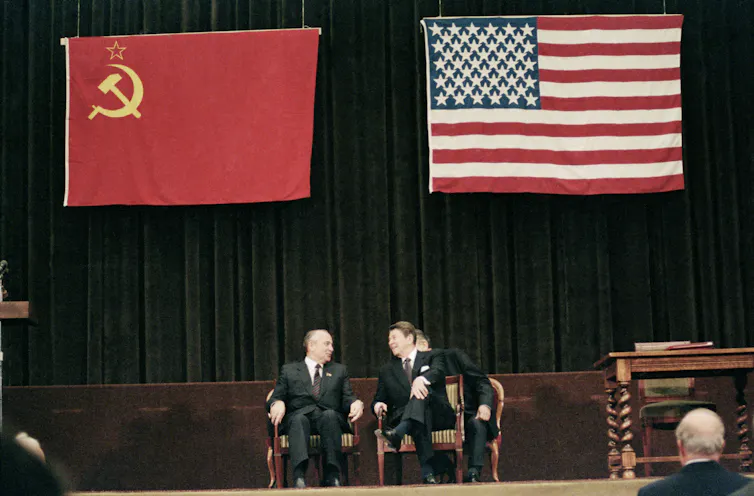
Soviet leader Mikhail Gorbachev and U.S. President Ronald Reagan as leaders of the two ‘superpowers.’
Bettmann/Getty Images
Toward a multipolar world
The post-Cold War period briefly ushered in a unipolar moment, with the U.S. as the sole great power capable of shaping the international system on a global scale.
This era was marked by the expansion of liberal internationalism, economic globalization and U.S.-led-and-constructed multilateralism.
However, the emergence of new centers of power,