

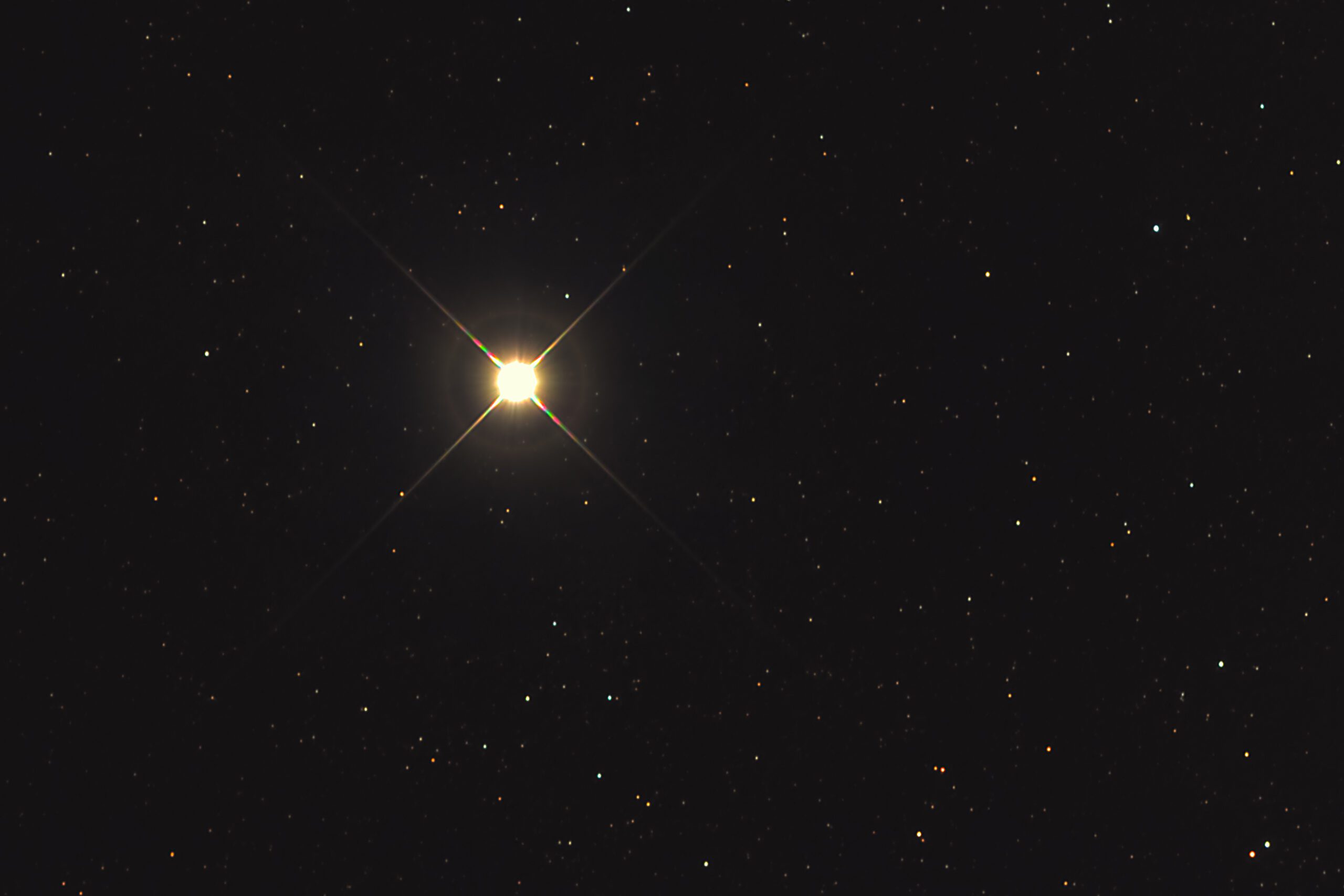

When you gaze up at the night sky, it can inspire a sense of wonder as you observe the countless points of light scattered across the darkness. The luminosity of stars varies based on their proximity to Earth, with the closest stars appearing the brightest.
In the field of astronomy, brightness is quantified using negative values. In this system, a higher number indicates a dimmer object. For instance, Earth’s moon has a magnitude of -12.6, while our Sun has a magnitude of -26.7. Stars that are too distant to be visible to the naked eye have magnitudes exceeding 30, requiring tools like the Hubble Space Telescope for observation.
Various types of magnitudes exist, with apparent magnitude being a key measurement that describes how bright a star or celestial object appears to an observer on Earth. This form of brightness is also referred to as visual magnitude.
The Brightest Stars Visible to the Naked Eye
Here, we explore some of the brightest and closest stars that can be seen without the aid of telescopic instruments, along with their respective measurements.
Sirius
Sirius, the most radiant star in our night sky, is located in the constellation Canis Major, commonly known as the “Greater Dog.” Its name, derived from Greek, translates to “sparkling,” emphasizing its brilliance.
Historically, the ancient Egyptians regarded Sirius, also known as “Sothis,” as a significant celestial entity believed to influence the annual flooding of the Nile River. In Roman culture, Sirius symbolized the peak of the summer season.
With a visual magnitude of -1.46, Sirius shines 25.4 times brighter than the sun. Additionally, it has a companion star called Sirius B, which significantly impacts its overall luminosity.
Canopus
Located in the constellation Carina, Canopus is a star situated approximately 310 light-years away from Earth. This celestial body played a pivotal role in aiding the Syrian philosopher Poseidonius in estimating the Earth’s size.
As the second brightest star in the sky with a visual magnitude of -0.74, Canopus remains invisible from northern latitudes of the United States. Consequently, enthusiasts often travel to the Southern Hemisphere for a chance to witness this dazzling star.
Alpha Centauri
The Alpha Centauri system consists of three stars positioned around 25 trillion miles away from Earth. Among these stars, Alpha Centauri A, comparable in size and luminosity to our Sun, serves as the brightest member. The other two stars are Alpha Centauri B and the red dwarf Proxima Centauri.