


Uncovering the Oldest Fossilized Forest
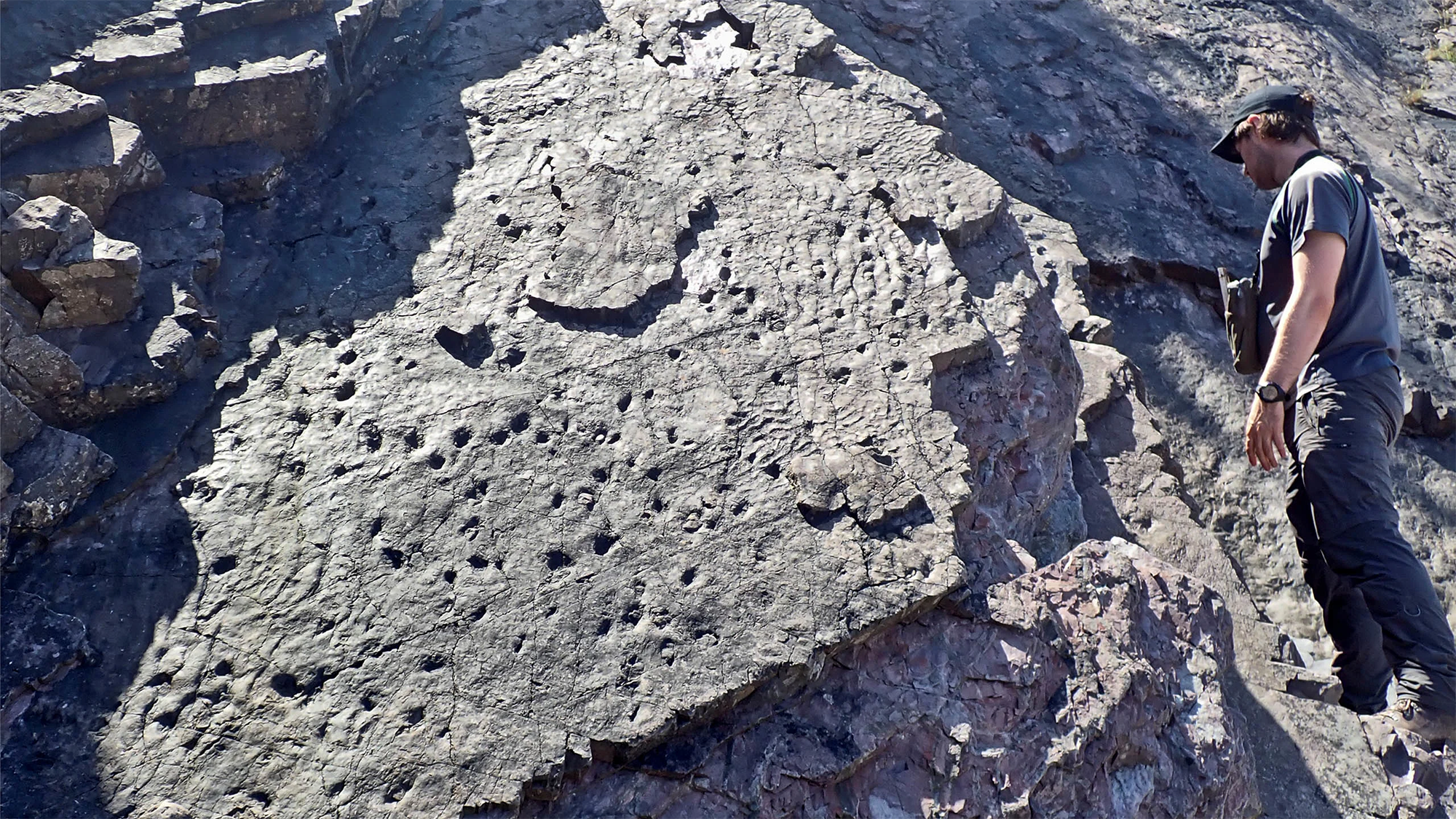
Discovering plant fossils is essential for gaining insights into ancient ecosystems, even though dinosaur fossils often steal the spotlight. Recently, a team of researchers made a significant find by uncovering the oldest known fossilized forest. Located along the coast of southwest England, this ancient forest is encased in sandstone and dates back approximately 390 million years. Surpassing the previous record holder, the Gilboa fossil forest in New York, by about four million years, these findings were documented in a study published on February 23 in the Journal of the Geological Society.
Details of the fossilized trees reveal that they were preserved in rock from the Hangman Sandstone Formation of Somerset and Devon, with an age range of 393 million to 383 million years. These preserved trees bear a resemblance to palm trees but are actually identified as Calamophyton trees—a prototype of modern tropical trees. Unlike their contemporary counterparts, these early trees had thin, hollow trunks and branches covered in twig-like structures instead of broad, shady leaves.
Despite their stature of only reaching heights between 6.5 and 13 feet, these Calamophyton trees played a vital role in supporting the ecosystem millions of years ago. As they shed their branches while growing, these trees provided vegetation that likely sustained the invertebrates inhabiting the forest floor during that era.
Origins and Impact of the Forest
Dating back between 419 and 358 million years during the Devonian Period, this forest was instrumental in the transition of life from sea to land on Earth. By the end of the Devonian Period, seed-bearing plants and early land animals had established themselves, marking a significant evolution in Earth’s history.
Neil Davies, a geologist from the University of Cambridge and co-author of the study, emphasized the transformative impact of the Devonian Period on life and the environment. The period not only altered the dynamics between water and land through the stabilization of sediment by trees and plants, but it also paved the way for the establishment of the earliest forests.
Geographical Insights
During the Devonian period, the Devon and Somerset coasts where the ancient forest was found were not connected to the rest of England but were linked to present-day Germany and Belgium as part of the ancient continent of Laurentia. Situated near the equator, Laurentia had a warm, arid climate, similar to the conditions found in Belgium and Germany where parallel Devonian fossils have been discovered.
Christopher Berry, a palaeobotanist from the University of Cardiff and study co-author, noted his immediate recognition of the tree trunks based on years of studying similar tree species globally. This discovery sheds light on Earth’s earliest forests, providing invaluable insights into the evolution of ecosystems and life on our planet.