

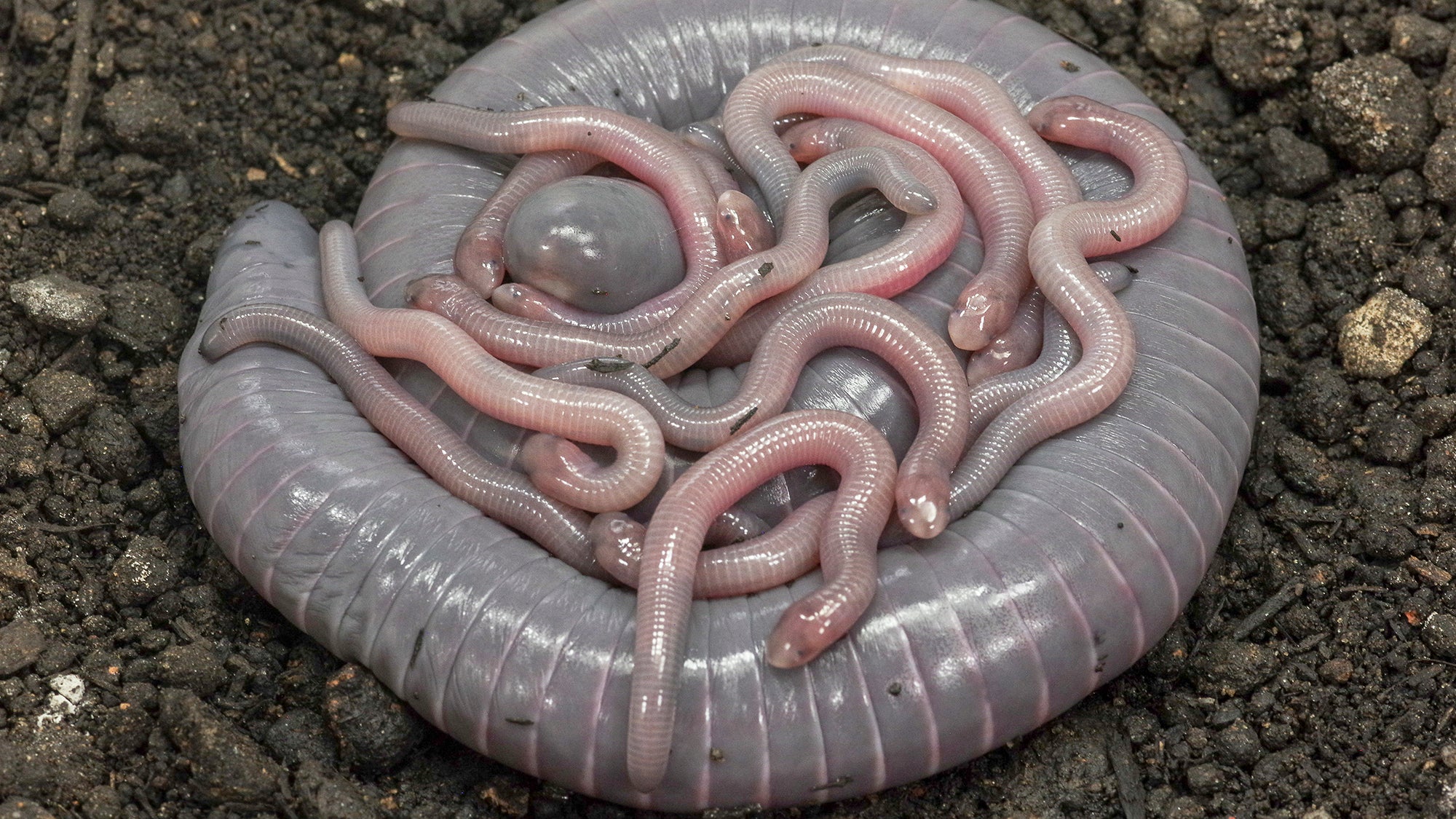

Caecilians, the little-known legless amphibians, have a unique way of feeding their offspring by secreting a thick, transparent liquid. This fascinating behavior sheds light on the diverse strategies that animals have evolved to nurture their young. Let’s delve into the world of caecilians and explore the intriguing phenomenon of their “milk” secretion.
The Hidden World of Caecilians
Most people are unfamiliar with caecilians, a group of amphibians that resemble earthworms or snakes due to their long, slender bodies. These intriguing creatures belong to the order Gymnophiona and are found in tropical regions around the world. Despite their obscure nature, caecilians play an important role in ecosystems as predators and soil engineers.
Feeding Behavior of Caecilians
One of the most unique aspects of caecilians is their reproductive strategy, which involves the production of a special liquid substance to nourish their young. This secretion, often referred to as “milk,” is synthesized by the mother caecilian and is rich in nutrients, enabling the offspring to thrive during their early stages of development.
Unlike conventional forms of parental care seen in mammals and birds, where milk is delivered through mammary glands, caecilians produce this nourishing liquid from glands located on their skin. The young caecilians instinctively seek out their mother’s glands and consume the milk directly from her skin, a behavior that highlights the remarkable adaptations that have evolved in these amphibians.
Evolutionary Significance of Amphibian Milk
The evolution of milk secretion in caecilians raises intriguing questions about the origins and diversity of parental care strategies in the animal kingdom. By studying the biochemistry and ecological context of caecilian milk production, researchers gain valuable insights into the evolutionary pressures that have shaped this unique reproductive behavior.
In conclusion, caecilians exemplify the remarkable diversity of life on Earth, showcasing the ingenuity and adaptability of organisms in caring for their young. The secretion of “milk” by these legless amphibians serves as a testament to the complex and fascinating ways in which nature has sculpted the behaviors of different species. As we continue to unravel the mysteries of caecilians and their reproductive biology, we gain a deeper appreciation for the interconnectedness and diversity of life on our planet.The Surprising Discovery of Amphibian Milk
In the realm of alternative milk options, aside from the usual cow’s milk, there are now varieties like oat milk, goat’s milk, and even amphibian milk. A team of Brazilian biologists recently uncovered the fascinating phenomenon of legless, subterranean amphibian mothers producing a milk-like substance for their young, rich in fats and carbohydrates. This groundbreaking research, published in the esteemed journal Science on March 7, sheds light on the remarkable discovery of egg-laying amphibians providing “milk” to their offspring, showcasing previously unknown physiological functions and potential intricate communication within this lesser-known species.
A Unique Non-Dairy Revelation
Traditionally, milk has been synonymous with mammals, as evidenced by the Latin origin of the word ‘mammal’ from “mamma,” meaning “breast,” in reference to their milk-producing mammary glands. However, mammals are not the sole group of animals that offer specialized secretions for nourishing their young. Birds such as pigeons, penguins, and flamingos produce “crop milk,” a viscous substance generated by both male and female bird parents within their digestive tracts. Additionally, certain arachnids and insects like spiders and cockroaches also produce milk to feed their offspring. Enter the caecilians, wormlike amphibians closely related to frogs, toads, and salamanders, predominantly inhabiting tropical regions.
Discovering Ringed Caecilians
Among approximately 220 identified caecilian species worldwide, ringed caecilians, specifically Siphonops annulatus, have been added to the roster of milk-producing creatures. These peculiar, nearly sightless organisms reside covertly beneath the soil and leaf litter of South American forests and grasslands. Due to their elusive nature, these creatures are among the most enigmatic vertebrates. Carlos Jared, the senior author of the study and an integrative biologist at the Butantan Institute, notes the challenges in studying these creatures due to the inaccessibility of their habitats.
The Melodious Melodies of Midnight Birds & How They Impact Human Lives
Exploring the Enigmatic World of Subterranean Amphibian Mothers
Delving into the lives of the secretive ringed caecilians provides a glimpse into the world of hidden wonders beneath our feet. Despite their obscure nature, these remarkable creatures contribute invaluable insights into the diverse array of animal behaviors and adaptations. The discovery of amphibian milk challenges conventional beliefs about milk production solely among mammals, underscoring the remarkable diversity and complexity of life forms on our planet. Regardless of their cryptic existence, caecilians play a vital role in enriching our understanding of the natural world and the intriguing mechanisms that govern it.Exploring the Fascinating World of Caecilians in Brazil
The world of caecilians, especially the ringed caecilians like the Siphonops annulatus, is a fascinating and mysterious one. According to Jared, a researcher at the Atlântica Institute in São Paulo, Brazil, studying these creatures can be challenging but ultimately rewarding. He describes caecilians as a “surprise box” that constantly reveals unexpected biological wonders.
After years of meticulous research both in their natural habitat and in controlled environments, Jared and his team have made some astounding discoveries about the S. annulatus. One of the recent findings is that these amphibians provide their young with a sticky, clear liquid that Jared compares to the consistency of honey. This nutritious milk is secreted from their vents, which serve as multipurpose openings for waste disposal, egg laying, and milk provision. In essence, these worm-like vertebrates nourish their offspring with milk from their rear ends.
Marvalee Wake, an integrative biologist at the University of California, describes this as an exciting revelation that showcases incredible reproductive adaptations. This new knowledge sheds light on the extraordinary ways in which caecilians care for their young, offering a unique perspective on the marvels of nature.