

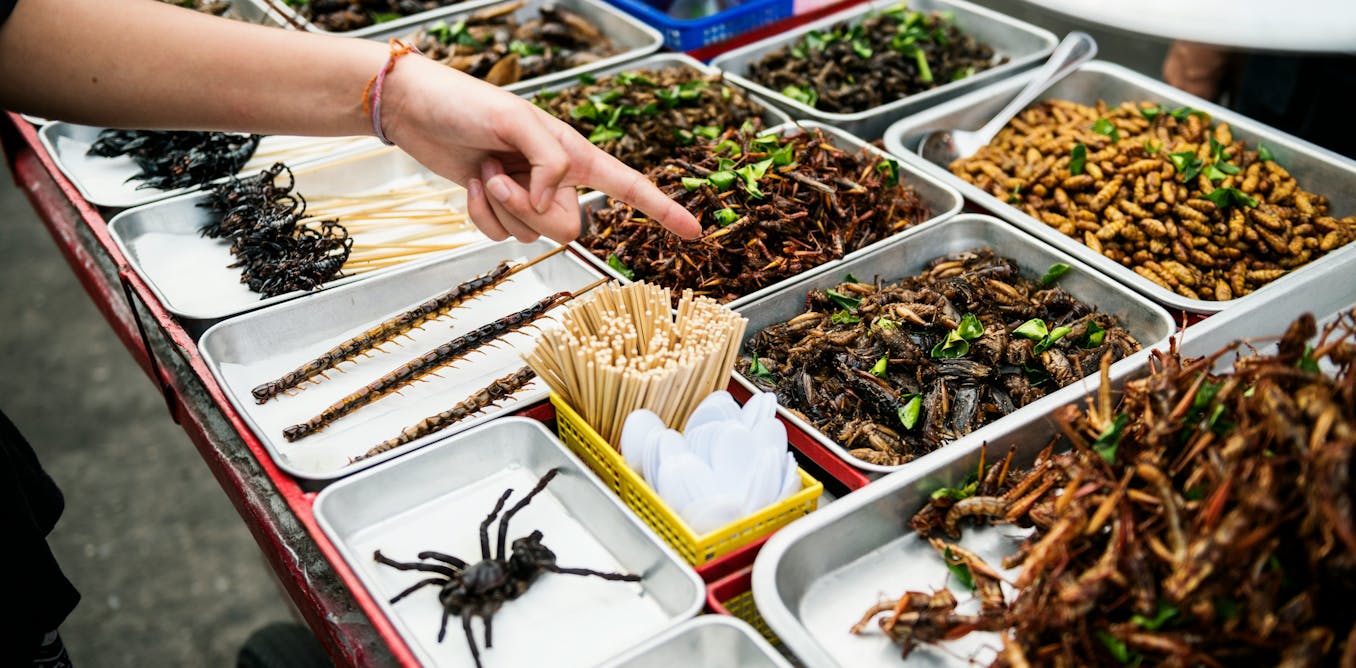

Faced with exploding global demand for protein and the growing environmental impact of animal farming, insects are emerging as an attractive alternative: they are rich in nutrients, resource-efficient and have already been tested by researchers, businesses and chefs.
But behind all the hype, one question remains: is eating insects really a sustainable and safe solution for feeding the planet?
Today, global meat production is putting increasing pressure on natural resources. It requires large areas of agricultural land, generates massive greenhouse gas emissions and contributes to deforestation. In fact, meat production accounts for nearly 12 per cent of global greenhouse gas emissions, according to the Food and Agriculture Organization.
It occupies around 80 per cent of agricultural land and consumes significant amounts of water and food to feed livestock.
Yet protein remains essential to human health, which means that more sustainable alternative sources must be found.
In this context, insects appear to be a promising avenue for diversifying protein sources. Raising insects requires up to 12 times less food and 2,000 times less water than beef. In addition, most of their body mass is edible: nearly 80 per cent for a cricket, compared to only 40 per cent for a cow. This efficiency makes them a promising option for reducing our ecological footprint without compromising our nutritional needs.
Read more:
2025 was the year protein ‘jumped the shark’
An interesting nutritional profile
As far as nutrition goes, insects contain between 35 per cent and 70 per cent protein, depending on the species, as well as essential fatty acids, iron, zinc and B vitamins. Some even consider them to be a credible alternative to meat, particularly for combating malnutrition or optimizing nutritional intake.
However, not all species are equal. Mealworms, for example, offer a protein quality similar to legumes, but remain slightly inferior to soy or beef. Diet and breeding conditions also alter their protein content and especially their lipid content, particularly omega-3 and omega-6 fatty acids and micronutrients. In short, the nutritional composition of insects varies considerably from one species to another and from one farming method to another.
Caution is also required: some insects contain anti-nutritional substances, such as thiaminase, which can interfere with the absorption of vitamin B1. So their regular consumption requires rigorous control of the processing and the quality of the products.
Health risks that should not be ignored
Although insects have been consumed for thousands of years in several cultures — from Mexico to Congo, Thailand and Japan — their integration into larger-scale food systems is relatively recent. This raises questions about the safety and regulation of these products.
Microbiological risks are a major concern. Like any food of animal origin, insects can carry pathogenic bacteria such as Salmonella spp. or E. coli.
Nonetheless, in a report by the Canadian Food Inspection Agency that analyzed 51 samples of edible insects sold in the country,