

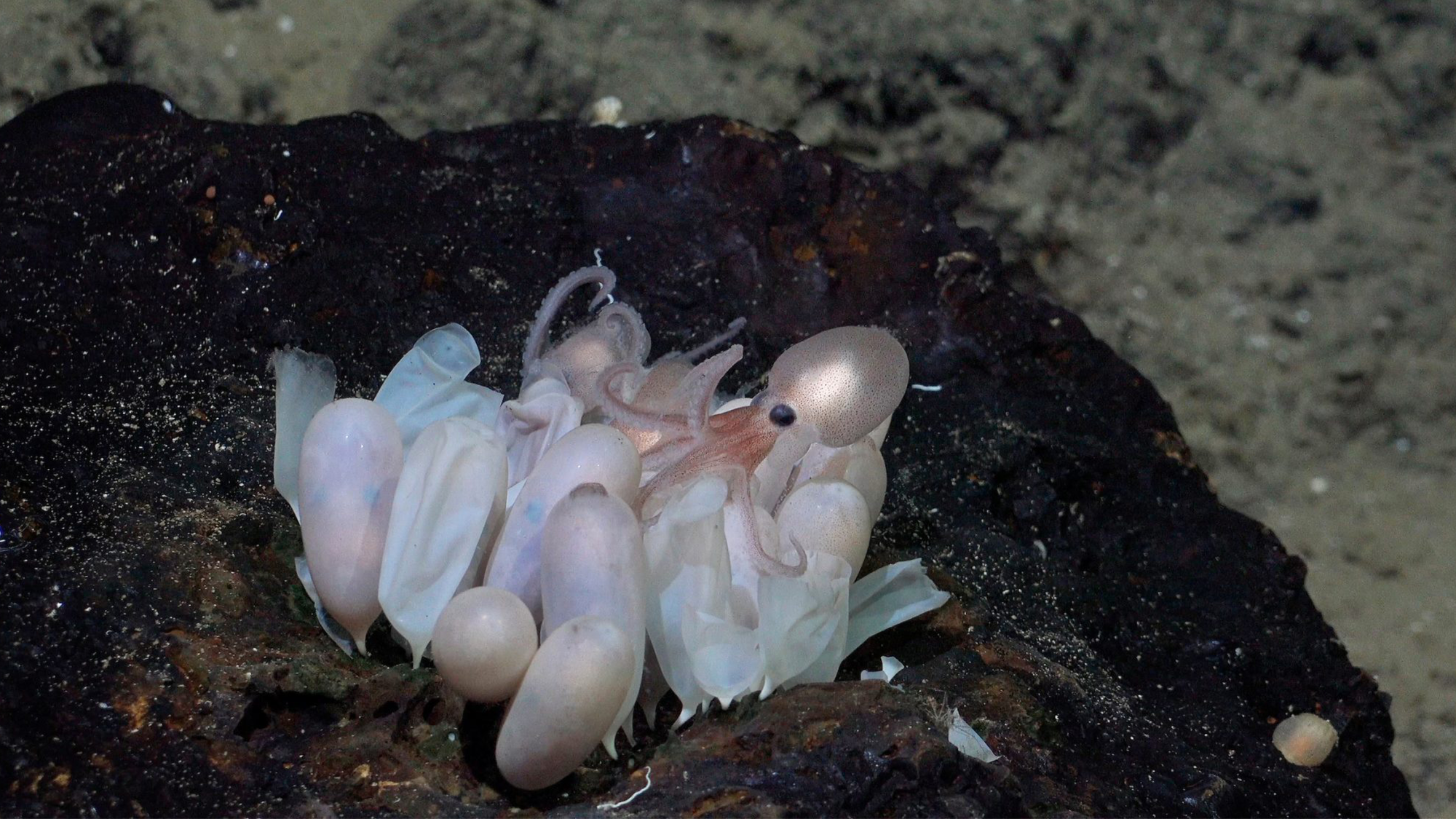

The cephalopods were uncovered near the region’s hydrothermal vents under 1.5 miles of ocean water.
By
|
Published Jan 16, 2024 2:30 PM EST
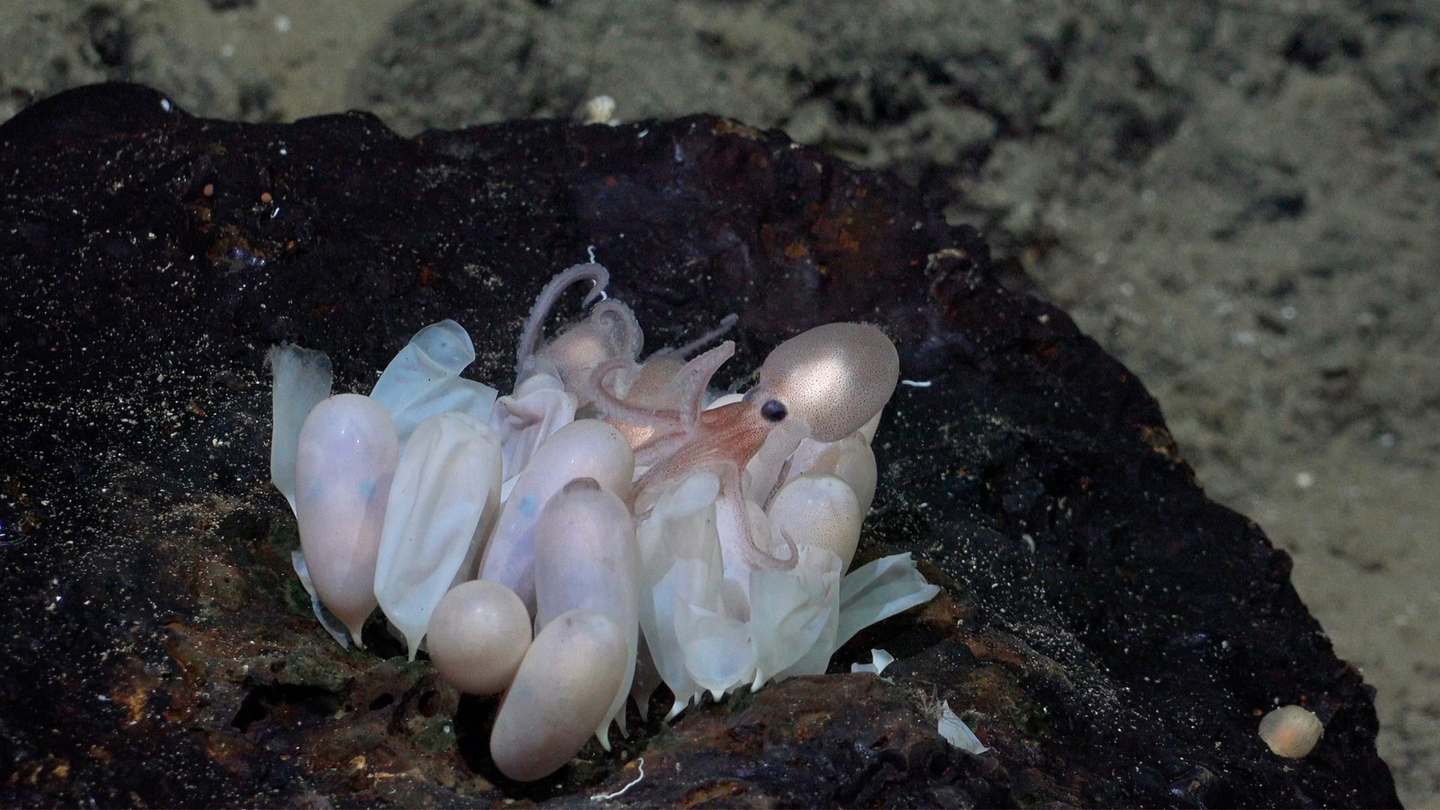
An octopus hatchling emerges from a group of eggs at a new octopus nursery. This nursery was first discovered in June 2023 at Tengosed Seamount off Costa Rica. Schmidt Ocean Institute
SHARE
Under the Pacific coast of Costa Rica, scientists have discovered at least four new octopus species. These new species were spotted around the region’s hydrothermal vents in an area about 100 square miles.
[Related: Female octopuses will chuck seashells at males who irk them.]
An international team of researchers found the new cephalopods during two expeditions of the seamounts last year aboard the R/V Falkor. In June 2023, two octopus nurseries, one skate nursery, and two low-temperature hydrothermal springs were discovered by researchers using a remotely operated vehicle named SuBasitan. Scientists went back to the nurseries in December and confirmed that the octopuses appear to be active year-round. They also spotted several other new octopus species away from the hydrothermal springs in the area roughly 10 to 30 nautical miles apart.
While the four new species haven’t been formally described, one has been named the Dorado octopus. It was found on a rock unofficially called El Dorado hill. It is distantly related to a species of pearly octopus that was found at Davidson Seamount in California in 2018. The Dorado octopus is also a type of Muusoctopus, a genus that has possibly evolved to gather to brood their eggs in warmer water near the vents. They were found about 1.5 miles below the surface of the ocean.
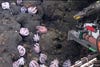 multiple years), she does not eat and dies around the same time her eggs hatch. This group was observed near a small outcrop of rock unofficially called El Dorado Hill off the coast of Costa Rica. ” width=”920″ height=”613″/>Brooding mother octopuses often curl themselves up with tentacles and suckers facing out. Researchers believe this to be a defensive position, warning predators off. When a female octopus broods (which can be a timespan of multiple years), she does not eat and dies around the same time her eggs hatch. This group was observed near a small outcrop of rock unofficially called El Dorado Hill off the coast of Costa Rica. CREDIT: Schmidt Ocean Institute.
The species are currently being described by Janet Voight, associate curator of invertebrate zoology from the Field Museum of Natural History, and Fiorella Vasquez from the Zoological Museum at the University of Costa Rica.
“Through hard work, our team discovered new hydrothermal springs offshore Costa Rica and confirmed that they house nurseries of deep-sea octopus and unique biodiversity,” oceanographer Beth Orcutt of the Bigelow Laboratory for Ocean Sciences in Maine said in a statement.