


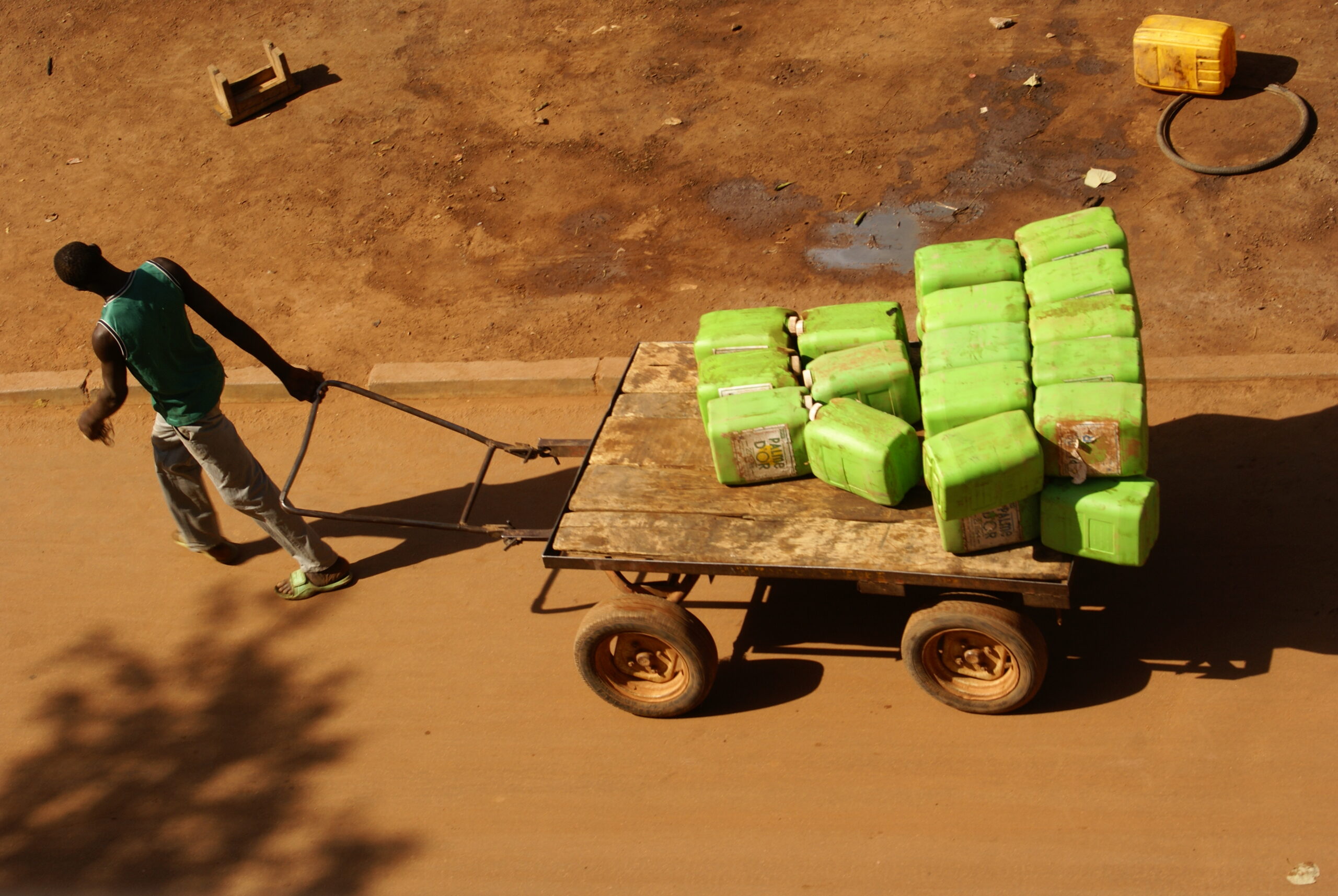
 Ouagadougou, Burkina Faso. Image by
Guillaume Colin & Pauline Penot.
At the end of March and the beginning of April 2024 a region across the Sahel and West Africa experienced extreme heat, with maximum temperatures in the Sahel reaching more than 45°C and minimum temperatures of 32°C in Burkina Faso (Burkina Faso Meteorological Agency). Kayes in Mali recorded 48.5°C on 3 April.
Extreme temperatures were reported across the Sahel, including in Senegal, Guinea, Mali, Burkina Faso, Niger, Nigeria and Chad. In many of these countries power cuts occurred during the heat episode, making it especially difficult for the population to cope with the extreme temperatures.
Heatwaves are arguably the deadliest type of extreme weather event and while the death toll is often underreported and not known until months after the event, a surge in hospital admissions and deaths were reported from the Gabriel Touré hospital in Bamako, Mali between 1-4 April (Bahati, 2024).
The hospital recorded 102 deaths over the four-day period, which is significantly more than expected – in April 2023, the hospital recorded 130 deaths over the entire month (JolibaFM, 2024). While statistics for the cause of death have not been reported, around half were over the age of 60, and the hospital reports that heat likely played a role in many of the deaths. Furthermore, up to 44 bodies were buried in one cemetery in Bamako on Friday 5 April after the weekly service (DW 2024).
Scientists from Mali, Burkina Faso, Mozambique, the Netherlands, Sweden, the United States and the United Kingdom collaborated to assess to what extent human-induced climate change altered the likelihood and intensity of the extreme heat across the Sahel. Our analysis focuses in detail on the countries that had the highest temperatures, especially also over night and the large reported death toll: The southern part of Mali and Burkina Faso (fig. 1a). Here we look at the 5-day maximum and minimum temperatures over the March to May season and in April respectively. In addition we analyse the 5-day maximum temperatures in March to May over a larger
region (fig. 1b; 10 to 17°N, 16W to 20°E) encompassing the most affected parts of Senegal, Guinea, Mali, Burkina Faso, Niger, Nigeria and Chad.

 Figure 1: 5 day average anomaly of daily maximum temperature for (a) the period of 31st of March to 4th of April 2024 and (b) the period of 30th of March to 3rd of April 2024. The black outline in a) and box in b) show the study regions.
Main Findings
● While Burkina Faso and Mali are both countries with populations that are acclimated to high temperatures, the length and severity of this heatwave made it difficult for people to cope, as evidenced by the reported increased hospitalisations and deaths. Heatwaves are amongst the deadliest natural hazards with thousands of people dying from heat-related causes each year
and many more suffering other severe health and livelihood consequences.