


Honest, paywall-free news is rare. Please support our boldly independent journalism with a donation of any size.
It took more than 12 hours for Isabella to travel across her native Mexico from the coastal community she called home to the consulate in Monterrey, an industrial epicenter in the northeastern state of Nuevo León. Like millions of Mexican workers who came before her, Isabella’s consulate visit in 2020 was the final hurdle before the U.S. government granted what felt like a small miracle: a coveted H-2A visa that allows workers, the vast majority of whom are from Mexico, to traverse the border for lawful employment in the U.S. as seasonal agricultural workers. Prior to President Donald Trump’s second term, American employers could request workers from 86 eligible countries as part of the H-2A Temporary Agricultural Program. However, from 2018 to 2023, 92% of workers were from Mexico, where more H-2A visas are processed in Monterrey than anywhere else in the world.
“I thought, I’ll migrate too, for the American dream and to have something better,” explained Isabella, who is using a pseudonym for fear of retribution.
Isabella understood that she didn’t come from the kind of life circumstances where opportunities would simply fall into her lap; she had to make things happen for herself. In Mexico, an estimated 35.9% of women live in “labor poverty,” meaning they earn too little to cover basic food needs. Women in Mexico are also chronically underemployed, with just 45.4% of women considered “economically active” in the labor market, Mexico Business News reported. These conditions could worsen due to Trump’s tariffs, which are expected to jeopardize over 4.1 million jobs in Mexico, hitting manufacturing, agriculture, and mining the hardest.
Don’t miss a beat
Get the latest news and thought-provoking analysis from Truthout.
While the majority of new workers in the H-2A program are recruited — often through illegal, costly recruitment practices that put workers thousands of dollars in debt before they even set foot in the U.S. — Isabella had to seek out a recruiter in her community who she heard successfully got people jobs with American companies.
There was something else that made Isabella a major outlier in the H-2A program: her gender.
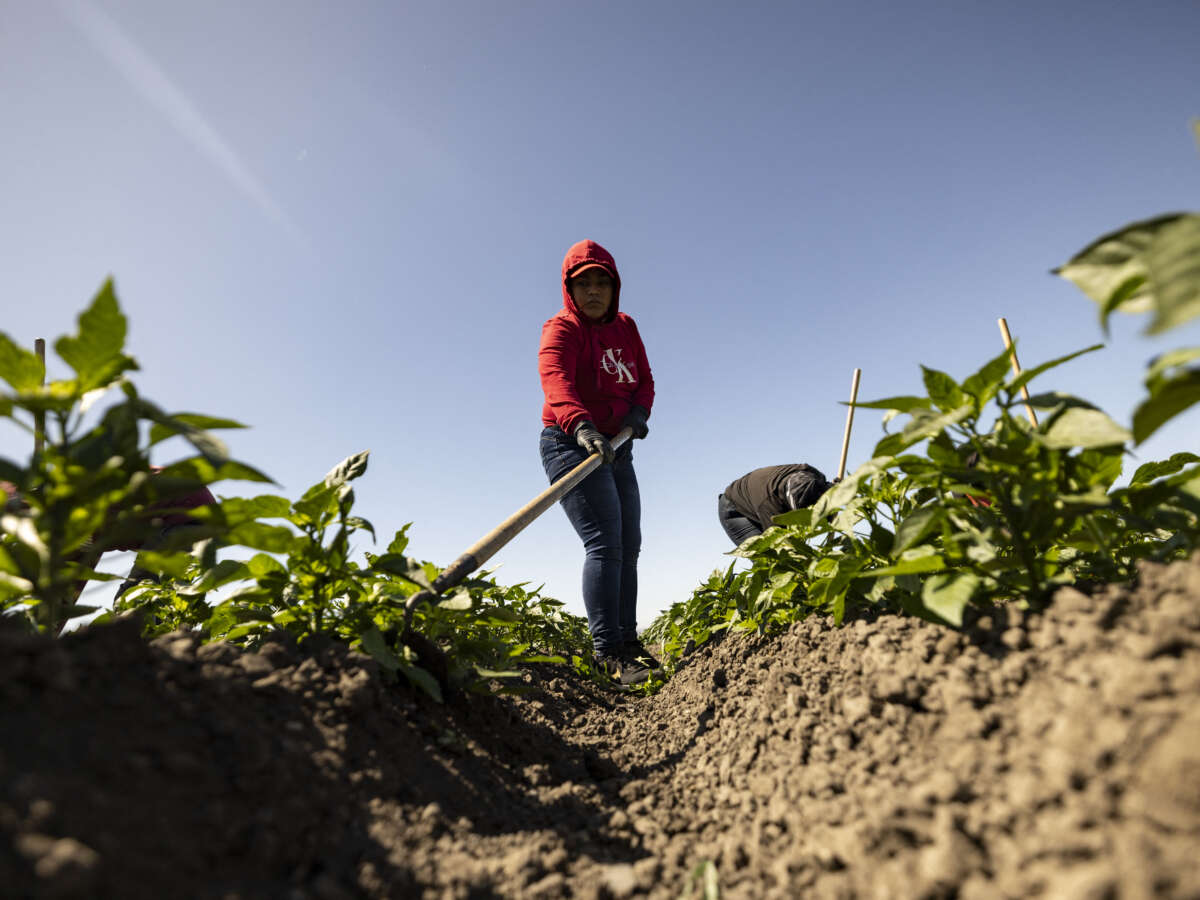
Between 2018 and 2023, only 3% of H-2A workers were women, according to a report by the U.S. Government Accountability Office. Just 41,550 women were in the program, compared to more than 1.4 million men. More broadly, women represent 28% of the nation’s farmworkers, making them a minority on many American farms. Most are immigrants from Latin America, and about 40% are undocumented.
Before working in the U.S., Isabella told Prism that she knew almost nothing about the H-2A program or the discrimination and gender-based violence that women can experience if they’re granted the visa.
“At that time, I didn’t understand that there were different types of visas,” Isabella told with the assistance of an interpreter.