


Featured, Gender, Gender Identity, Global, Headlines, Human Rights, IPS UN: Inside the Glasshouse, TerraViva United Nations
Opinion
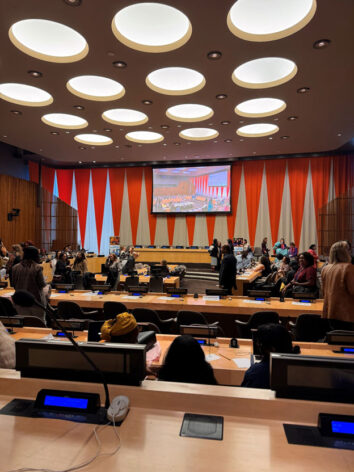
Opening of the Commission on the Status of Women (CSW70)
Shaped by ongoing dialogue, the CSW70 highlighted progress and diverse perspectives on gender and justice.
SAO PAULO, Brazil, Mar 23 2026 (IPS) – The 70th session of the Commission on the Status of Women (CSW70) (March 9-19), held at the United Nations headquarters, brought together governments, decision makers, civil society, and international organizations to address a central issue: access to justice for women and girls.
Taking place in a complex global context, the session reflected both the continued relevance of multilateral cooperation and the evolving nature of discussions on gender equality. As noted in UN remarks during the session, “this year’s theme cuts to the heart of the struggle for equality: access to justice,” giving emphasis on the importance of strengthening legal systems and ensuring that rights are effectively realized.
Sustaining momentum on Gender Equality
One of the key outcomes of CSW70 was the adoption of the Agreed Conclusions, which reaffirm the international community’s commitment to advancing gender equality and improving access to justice worldwide.
While the conclusions were adopted through a recorded vote (an approach less common in CSW processes) the result demonstrated broad support among member states for maintaining and advancing existing frameworks.
Observers noted that the outcome reflects a continued global commitment to the principles first established at the Fourth World Conference on Women and articulated in the Beijing Declaration and Platform for Action.
Civil society organizations also welcomed the outcome, highlighting that the adoption of the conclusions signals that cooperation remains possible, even in a changing geopolitical landscape.
Focusing on access to justice
Discussions throughout the session emphasized that access to justice extends beyond legal frameworks. It includes the ability of women and girls to navigate institutions, obtain remedies, and be protected under the law.
Globally, women have achieved significant legal advancements over the past decades, yet disparities persist in many regions.
As emphasized by UN officials, “no country in the world has achieved full legal equality,” reinforcing the importance of continued efforts at national and international levels.
This shared recognition helped anchor discussions in practical solutions, including strengthening judicial systems, expanding legal aid, and addressing barriers faced by marginalized groups.
Evolving discussions and diverse perspectives
CSW70 also reflected the diversity of perspectives among Member States on how best to advance gender equality.
A number of proposals were introduced during negotiations addressing definitions, policy language, and implementation approaches. These included discussions on how to frame gender, how to address sexual and reproductive health and rights, and how to reflect different national contexts in global agreements.
While not all proposals were incorporated into the final text,