

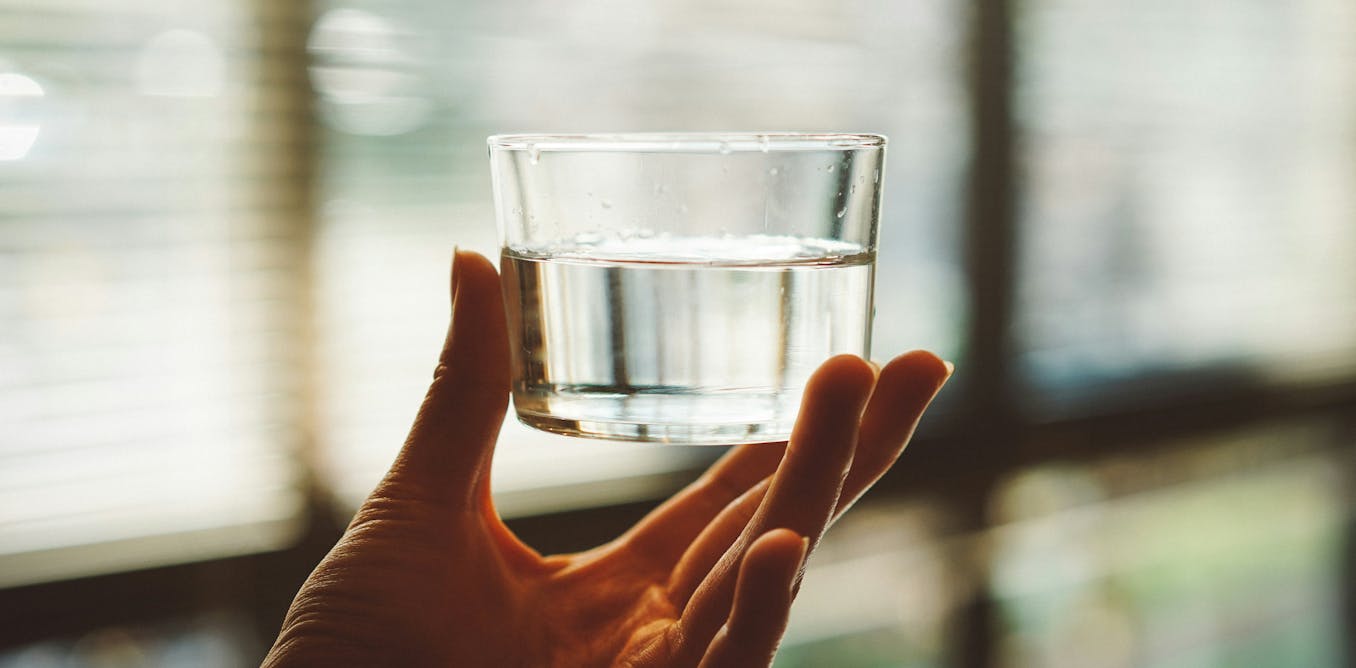

When you splurge on a cocktail in a bar, the drink often comes with a slab of aesthetically pleasing, perfectly clear ice. The stuff looks much fancier than the slightly cloudy ice you get from your home freezer. How do they do this?
Clear ice is actually made from regular water – what’s different is the freezing process.
With a little help from science you can make clear ice at home, and it’s not even that tricky. However, there are quite a few hacks on the internet that won’t work. Let’s dive into the physics and chemistry involved.
Why ice goes cloudy
Homemade ice is often cloudy because it has a myriad of tiny bubbles and other impurities. In a typical ice cube tray, as freezing begins and ice starts to form inward from all directions, it traps whatever is floating in the water: mostly air bubbles, dissolved minerals and gases.
These get pushed toward the centre of the ice as freezing progresses and end up caught in the middle of the cube with nowhere else to go.
That’s why when making ice the usual way – just pouring water into a vessel and putting in the freezer – it will always end up looking somewhat cloudy. Light scatters as it hits the finished ice cube, colliding with the concentrated core of trapped gases and minerals. This creates the cloudy appearance.
The point of clear ice
As well as looking nice, clear ice is denser and melts slower because it doesn’t have those bubbles and impurities. This also means that it dilutes drinks more slowly than regular, cloudy ice.
Because it doesn’t have impurities, the clear ice should also be free from any inadvertent flavours that could contaminate your drink.
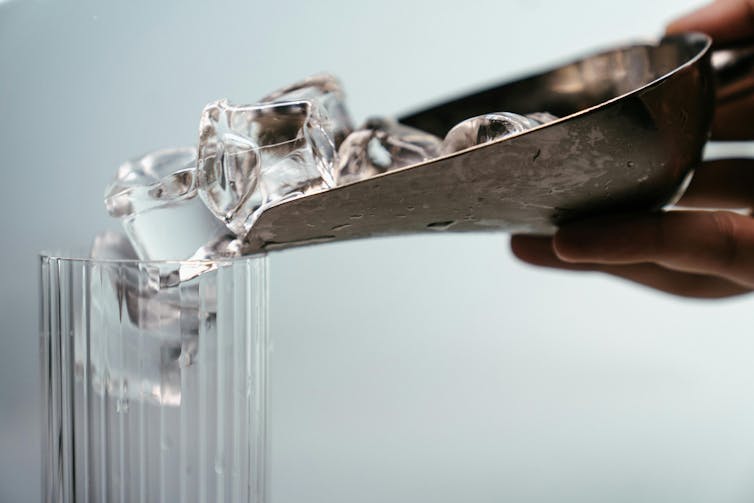
It’s possible to make clear ice at home, and you don’t need fancy equipment.
Cottonbro Studio/Pexels
Additionally, because it’s less likely to crumble, clear ice can be easily cut and formed into different shapes to further dress up your cocktail.
If you’ve tried looking up how to make clear ice before, you’ve likely seen several suggestions. These include using distilled, boiled or filtered water, and a process called directional freezing. Here’s the science on what works and what doesn’t.
Myths about clear ice that don’t work
You might think that to get clear ice, you simply need to start out with really clean water. However, a recent study found this isn’t the case.
Using boiling water
Starting out with boiling water does mean the water will have less dissolved gases in it, but boiling doesn’t remove all impurities. It also doesn’t control the freezing process, so the ice will still become cloudy.
Using distilled water
While distilling water removes more impurities that boiling, distilled water still freezes from the outside in, concentrating any remaining impurities or air bubbles in the centre,