

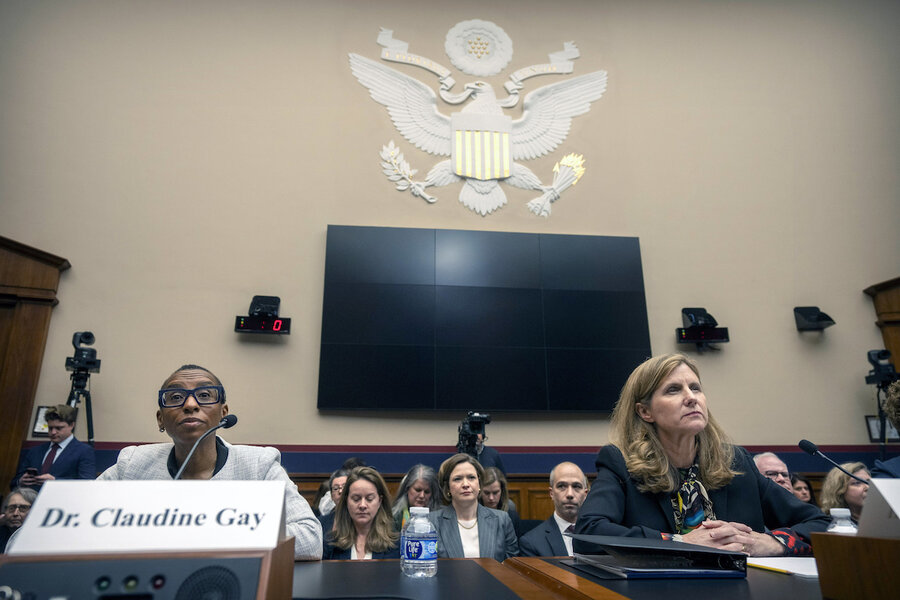

Last week’s congressional hearing on antisemitism made headlines for another reason: the university presidents called to testify were all relatively new women in leadership roles. The leaders of the University of Pennsylvania, Harvard, and the Massachusetts Institute of Technology are part of a record number of women leading Ivy League schools, representing a changing face of leadership at top-tier universities.
Now, Penn’s president, Liz Magill, has resigned following backlash to comments she made that did not strongly enough condemn hate against Jewish students. Harvard’s president, Claudine Gay, has also faced calls to step down from donors and lawmakers.
Amid protests and complaints of antisemitism, the women were invited to testify as the public faces of universities embroiled in unrest. The Republican-led House Committee on Education and the Workforce selected the three presidents due to their schools “being at the center of the rise in antisemitic protests,” according to a committee spokesperson.
The presidents came under scrutiny for their responses to questioning from Congresswoman Elise Stefanik, who asked whether “calling for the genocide of Jews” would violate school rules. Ms. Magill and Dr. Gay gave carefully worded responses, sparking more controversy.
The women were also at the center of further controversy when billionaire Bill Ackman, a Harvard alumnus, suggested that Dr. Gay was hired to fulfill diversity and equity goals, setting back inclusion efforts, according to civil rights activist Rev. Al Sharpton.
Despite the controversy, the rise of women in Ivy League leadership positions is evident, with women now leading six of the eight Ivy League universities. While this shift is a positive step, men still significantly outnumber women in college presidencies, and women of color represent just 1 in 10 presidents, according to a survey by the American Council on Education.