


Judit Szemán has grown strawberries, tomatoes and cucumbers on her small, organic farm just outside Hungary’s second-biggest city, Debrecen, for many years. She never imagined living anywhere else.
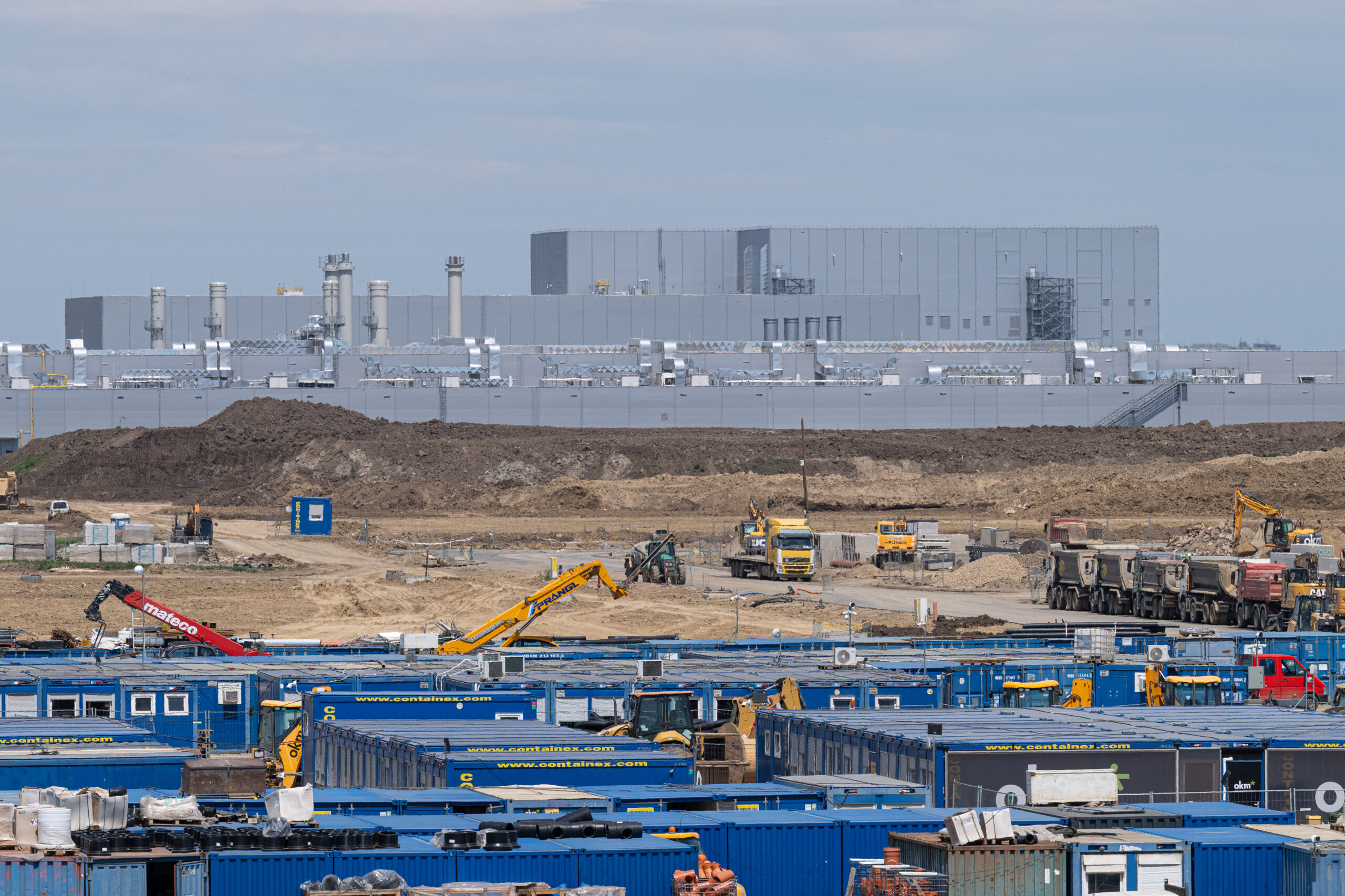
Then, two years ago, Chinese electric vehicle battery giant CATL started building a massive factory about a kilometre from her polytunnels – the result of Prime Minister Viktor Orbán’s push to make Hungary the EV battery hub of Europe by courting investment from major producers, mainly Chinese and Korean companies.
For Szemán, it was a devastating blow.
“This is our home – we had planned to live here all our lives,” she told Climate Home News, standing among her vegetable patches on land she now expects to sell if an effort to stop the battery plant fails.
She and other local residents have filed a lawsuit against the county government office of Hajdú-Bihar Vármegye, disputing the decision to grant an environmental permit for the CATL factory. They argue that the plant poses a risk of pollution and should not be allowed to operate so close to their homes. The local authority refutes these claims.
Mining for transition minerals can be responsible with joint push, experts say
In recent years, billions of dollars in investment have poured into Hungary with the promise to create thousands of jobs and support Europe’s green transition, but stagnating EV demand and strong environmental opposition to new “gigafactories” have dogged Orbán’s showcase economic strategy.
Many battery producers in Europe are delaying or shelving plans to expand due to uncertainties about profit levels going forward as battery prices fall, according to the International Energy Agency – and the downturn hasn’t spared manufacturers in Hungary.
Meanwhile, weakening of the country’s environmental regulatory powers has left protestors like Szemán worried that authorities are unable to prevent pollution or hold those that cause it accountable. Activists argue that decision-makers have prioritised battery investments at the expense of environmental protection.

Judit Szemán on her farm overlooking CATL’s EV battery factory outside the village of Mikepércs, Hungary (Photo: Norbert Farkas)

The CATL factory appears behind trees on Judit Szemán’s farm (Photo: Norbert Farkas)
As Europe races to boost its production of key green-transition minerals and EV batteries instead of relying so heavily on imports from China, the emergence of a large-scale battery industry in Hungary has turned into a political flashpoint.
Local officials from the ruling Fidesz party have slammed campaigners opposing battery factories as political agitators funded by foreign agents while protesters consider the industry’s proponents to be supporters of Orban’s increasingly authoritarian government.
Gigafactory takes shape
Surrounded by fields on the outskirts of Debrecen, the CATL lithium-ion battery factory is huge, stretching across more than 220 hectares – an area about the size of 300 football fields. CATL – short for Contemporary Amperex Technology Co Ltd – is the world’s largest manufacturer of EV batteries.
The $7.6-billion battery plant represents Hungary’s largest-ever foreign investment and is expected to become one of Europe’s top EV battery manufacturing facilities,