

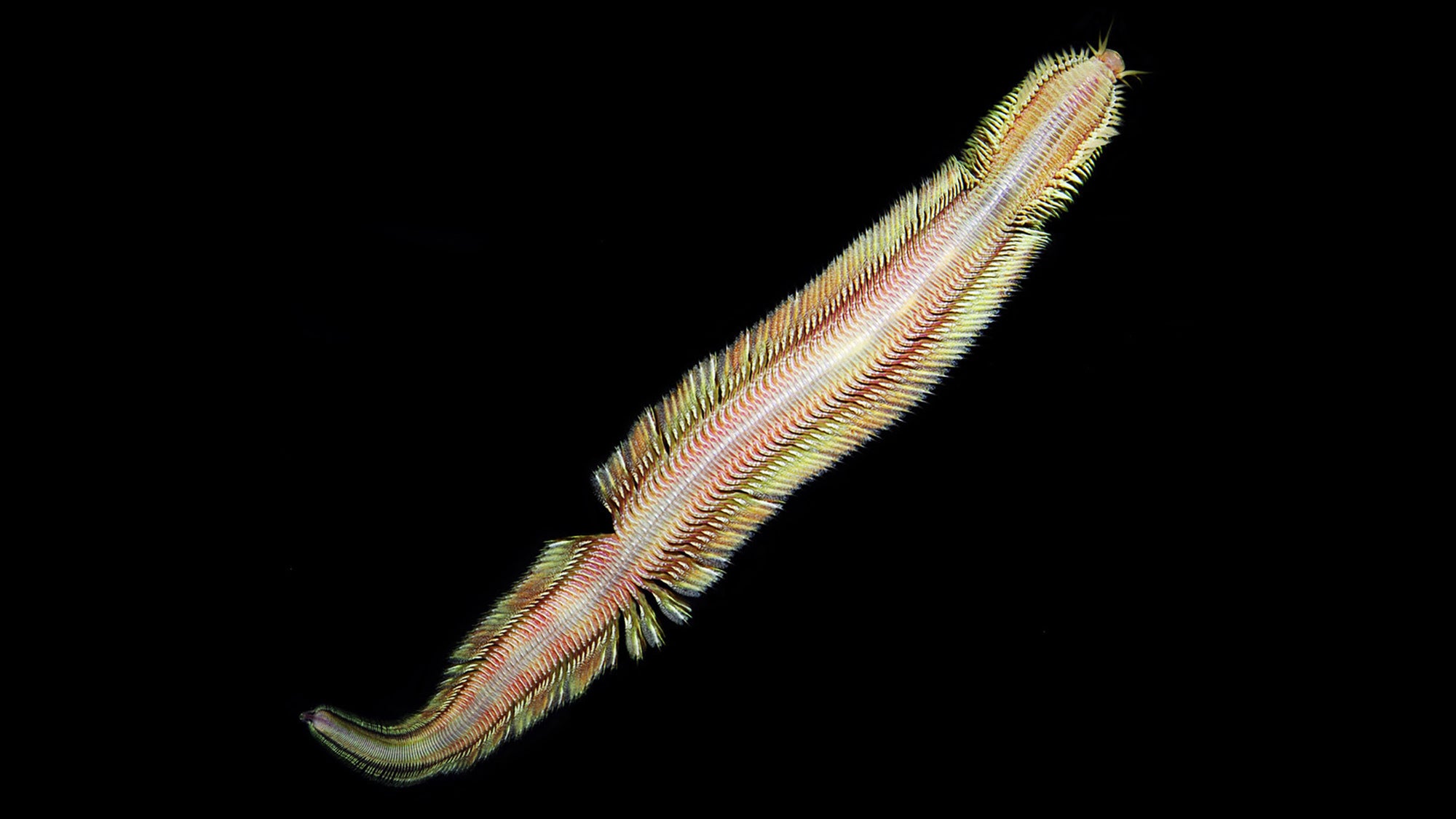

Deep-Sea Discovery: Exploring the Enigmatic World of Pectinereis strickrotti
Venturing into the depths of the ocean, scientists have unearthed a new addition to the mysterious realm of deep-sea worms. Discovered approximately 30 miles off Costa Rica’s Pacific coast in an underwater methane seep, Pectinereis strickrotti has captivated marine biologists. This novel species, detailed in a recent publication in the journal PLOS ONE, showcases the remarkable resilience and adaptability of deep-sea creatures.
Delving into the attributes of Pectinereis strickrotti, researchers have unveiled intriguing aspects of its anatomy and behavior. Measuring around four inches in length, these blind worms navigate their world 3,280 feet below the ocean’s surface. Equipped with feathery parapodia that aid in their undulating movements, these creatures rely on senses like smell and touch to navigate the pitch-black abyss they call home.
Further observation reveals Pectinereis strickrotti’s impressive feeding mechanism, characterized by robust, pincer-shaped jaws that extend outward for sustenance. While the exact dietary preferences of these deep-sea dwellers remain a mystery, speculations suggest a diet of bacteria and other worms. When exposed to light, the worms exhibit a striking red hue, possibly due to their blood composition.
A unique inhabitant of methane seeps, Pectinereis strickrotti thrives in environments where the potent greenhouse gas escapes from rocks and sediments in gaseous form. Distinct from hydrothermal vents, methane seeps boast ecosystems fueled by chemical energy rather than sunlight. Microbes residing in these seeps convert methane into vital sustenance, forming the foundation of a complex food web that supports various organisms, including crabs, mussels, and the enigmatic Pectinereis strickrotti.
Belonging to the ragworm family, Pectinereis strickrotti stands out among its relatives due to its deep-sea habitat and unique anatomical features. Unlike its shallow-water counterparts, this species dwells in the depths, adorned with gills on its parapodia for oxygen absorption. Additionally, male Pectinereis strickrotti sport prominent tail spines, a feature believed to play a crucial role in reproduction.
Unveiling the mysteries of Pectinereis strickrotti sheds light on the intricate ecosystems thriving in the depths of the ocean. Through ongoing research and exploration, scientists continue to unlock the secrets of these enigmatic deep-sea creatures, offering a glimpse into the extraordinary adaptations and behaviors that enable survival in the most extreme environments.