

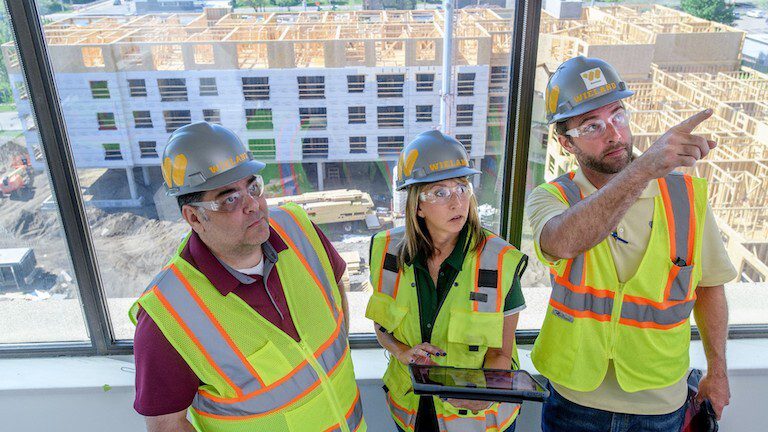

Get a unique perspective on the challenges and solutions that Wieland Corporation has found when it comes to using an ERP for construction management. Highly valuable lessons to take away from this case study.
Imagine working in the general contracting world, touching everything from banks to warehouses, manufacturing, and hotels. This is just everyday life for Wieland Corporation. Amanda Canfield has had 23 years of experience at Wieland and has gained an in-depth understanding of what the company needs.
Wieland decided to step up their game and move away from separate point solutions. What they really wanted was an all-in-one solution. “We wanted everyone to be in one spot,” said Canfield. This was the main concern that led them to explore an enterprise resource planning platform (ERP).
For a while, the ERP seemed to do the trick for the office and accounting teams. However, when they tried to incorporate it as a full project management system, it fell short in four key areas. The ERP primarily functioned as a desktop application, meant for use in the office with a mouse and keyboard. It was not adaptable for mobile usage or remote access—a big issue for their fast-moving projects. Licensing costs became a growing concern—charging per seat was costly for functions it failed to fulfill. They soon learned that an ERP isn’t built for the robust requirements of a project management system. Engage in the full article to learn more.