


Home Energy Transition Japanese trio reaches 98% methane slip cut on LNG-fueled vessels
October 8, 2025,
by
Sara Kosmajac
Japanese shipping giant Mitsui O.S.K. Lines (MOL), and compatriot Kanadevia Corporation and Yanmar Power Solutions, part of diesel engine and machinery manufacturer Yanmar Holdings, have accomplished a ‘tremendous’ methane slip reduction from vessels powered by liquefied natural gas (LNG) during recent onboard trials.
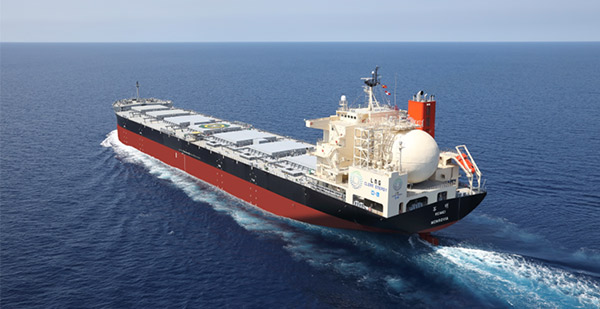
 Courtesy of MOL
As disclosed, the three partners have managed to achieve a 98% methane slip slash during an effort governed under the Green Innovation Fund Project called “Development of next-generation vessels”. The initiative was reportedly led by the New Energy and Industrial Technology Development Organization (NEDO).
Through this endeavor, MOL, Kanadevia and Yanmar Power Solutions will work to set up methane slip reduction technology at an early stage and actively contribute to reducing greenhouse gas emissions in the maritime sector, the maritime transport company has said.
According to representatives from MOL, the three partners have specifically been working on a project named “Development of methane slip reduction technology for LNG-fueled vessels through catalyst and engine improvements”, as a part of which full-scale demonstration trials began in May 2025.
The routes that the endeavor examined were primarily between Japan and Australia, MOL said.
Per MOL, the project—encompassing a six-year period from 2021 to 2026—initially aimed to reach a methane slip cut of 70% or more for LNG-powered ships. The goal is said to have been for the endeavor to become the ‘first’ in the world to socially implement methane slip reduction technology in the maritime industry.
Officials from the Japanese shipping player have noted that the project has so far verified a reduction of 93.8% (at 100% load) in land-based trials, which has allegedly been verified by classification society Nippon Kaiji Kyokai (Class NK).
As informed, based on these tests, the trio modified the land-based trial equipment for onboard application. Starting in May this year, they began demonstration pilots in sea areas, including between Japan and Australia, using the LNG-powered large coal carrier Reimei, which is operated by MOL. The company had welcomed the ship back in 2023.
During the onboard investigation, while engines were being operated under ‘real-world’ conditions (subject to changing environmental factors in the engine rooms and fluctuations in the load rate due to weather conditions), it was shown that the system could accomplish the 98% reduction rate at the practical operation range (75% load), MOL has shared.
The company added that, moving forward, onboard trials are to continue until the end of next year in order to inspect the overall system performance and catalyst durability, with the overarching target being a social implementation from 2027 onward.
The burning question of methane
While LNG has become an increasingly attractive, cleaner alternative to heavy fuel oil due to its lower carbon dioxide (CO2), sulfur oxide (SOx),