


Our cultural touchstone series looks at works that have had a lasting influence.
Kazuo Ishiguro’s Never Let Me Go was published 20 years ago. Since then, the Japanese-born English writer has been awarded the Nobel Prize in 2017 and knighted for services to literature in 2018.
Never Let Me Go has been translated into over 50 languages. It has been adapted into a film, two stage plays, and a ten-part Japanese television series. A critical and commercial success, the novel has been reissued in an anniversary edition with a fresh introduction from the author.
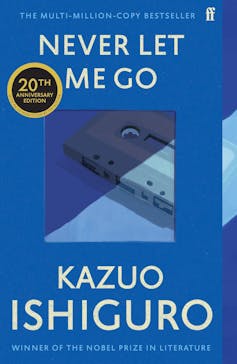
A spate of reappraisals has accompanied this anniversary: “An impossibly sad novel […] it made me cry several times […] sadness spilled off every page.” “No matter how many times I read it,” one critic wrote, “Never Let Me Go breaks my heart all over again.”
These brief excerpts are clear: the novel pulls us into a morass of sadness that never lets us go. “I’ve usually been praised for producing stuff that makes people cry,” Ishiguro has said. “They gave me a Nobel prize for it.”
Strange and familiar
I want to reconsider the emotional charge of Never Let Me Go.
The deluge of tears attested to by critics hinges on the relationship Ishiguro meticulously crafts between narrator and reader. This is initiated in the novel’s first lines. Ishiguro places us in an alternative 1990s England. His opening gambit will be familiar to novel readers:
My name is Kathy H. I’m thirty-one years old, and I’ve been a carer now for over eleven years. That sounds long enough, I know, but actually they want me to go on for another eight months […] My donors have always tended to do much better than expected.
Within a few pages, the narration slips into Kathy’s recollections of her idyllic 1970s youth at a boarding school called Hailsham. We are immersed in a childhood world of friendship and exclusion, jealousy and love. This is a recognisable world. Ishiguro’s first-person narration affords the reader vicarious access to Kathy’s interior tangle of emotion, desire and reflection, such that we can recognise something of ourselves in her.
Yet something is amiss in her narration. Flat and rather affectless, it is a decidedly less curious, less passionate and more tempered mode of narration than we might expect. The threadbare texture frays the narrative world. What are we to make of the opaque references to “carer”, “they” and “donors”?
This uncanny tension between the strange and the familiar simmers until a third of the way through the novel, when a “guardian” at Hailsham reveals the students’ futures:
Your lives are set out for you. You’ll become adults, then before you’re old, before you’re even middle-aged, you’ll start to donate your vital organs. That’s what each of you was created to do.
Good liberals
Kathy is a clone,