

Enhancing Efficiency of Mesoporous Perovskite Solar Cells through Defect Passivation
In the realm of solar energy research, a breakthrough has been made in boosting the efficiency of mesoporous perovskite solar cells. This advancement lies in the defect passivation at the titanium dioxide interface, which plays a crucial role in improving the performance of these solar cells.
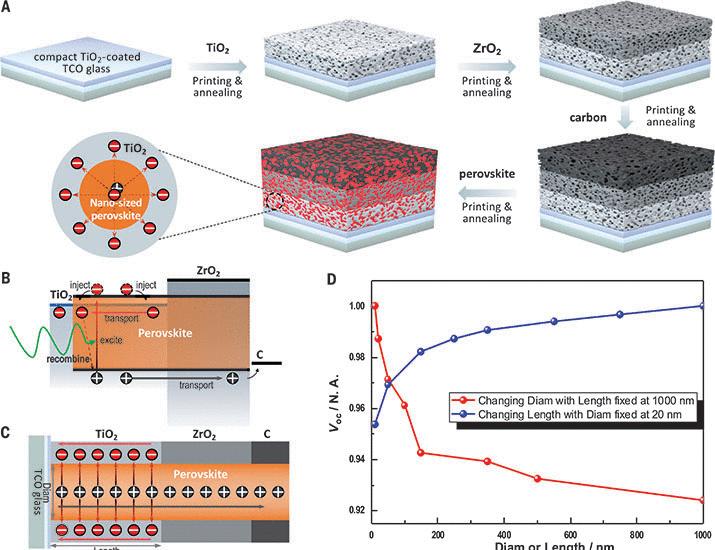
Mesoporous perovskite solar cells have shown great promise in harnessing solar energy due to their high efficiency and low cost. However, one of the challenges in maximizing their efficiency has been the presence of defects at the titanium dioxide interface, which can hinder the flow of charge carriers and reduce overall performance.
By passivating these defects, researchers have been able to significantly enhance the efficiency of mesoporous perovskite solar cells. This process involves treating the interface with certain materials that can effectively eliminate or reduce the impact of these defects, allowing for better charge transport and increased energy conversion.
The implications of this defect passivation are significant for the future of solar energy technology. By improving the efficiency of mesoporous perovskite solar cells, researchers are moving closer to achieving a cost-effective and sustainable source of renewable energy that can help address the global challenge of climate change.
Overall, the breakthrough in defect passivation at the titanium dioxide interface represents a major step forward in the field of solar energy research. With further advancements in this area, the potential for mesoporous perovskite solar cells to become a leading contender in the renewable energy landscape is increasingly promising.
To learn more about this exciting development, you can access the full article at the link provided.