

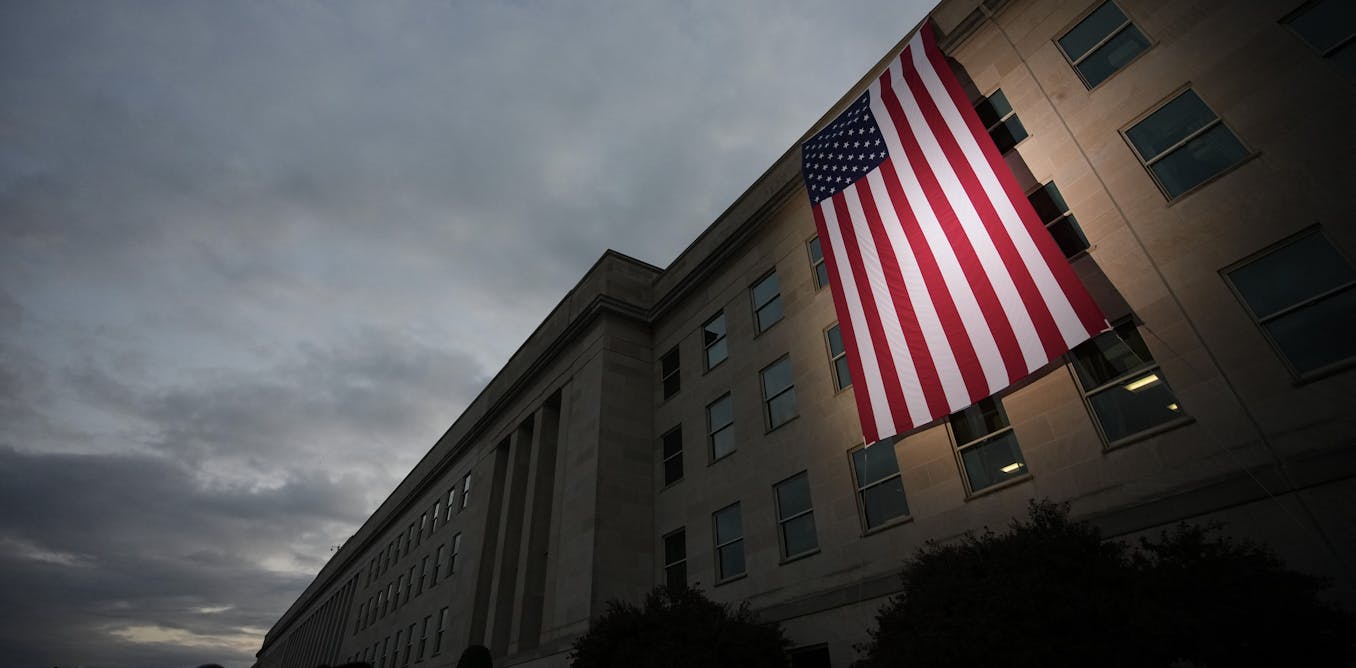

Throughout modern American history, reporters who cover the Pentagon have played an invaluable role shining a light on military actions when the government has not been forthright with the public.
For instance, reporters covering the Biden administration’s decision to withdraw from Afghanistan in 2021 revealed the chaos that ensued and repudiated official statements claiming the pullout was smooth. That included reporting on a drone strike that killed 10 civilians, not ISIS militants, as the government initially claimed.
But free press advocates warn that recent changes in a Pentagon policy threaten journalists’ ability to cover the Department of Defense. That’s because it could curb their rights to report information not authorized by the government for release.
An initial policy change announced on Sept. 20, 2025 – and later revised – forbade journalists from publishing anything that hadn’t been approved by government officials. It gave journalists 10 days to sign and agree to the restrictions. A refusal to sign could have resulted in a cancellation of their press credentials to enter the Pentagon.
As a First Amendment expert, I believe the Pentagon policy change represents an unprecedented development in the Trump administration’s offensive against the press and a historic departure from previous administrations’ policies.
Attacks on journalism, said once-imprisoned journalist Peter Greste, “are a national security issue, and we have to protect press freedom.” Greste spoke in early October 2025 at the Global Free Speech Summit in Nashville, Tennessee, adding that “anything that undermines press freedom undermines national security.”
Greste was jailed for more than a year in Egypt while working for Al Jazeera in 2013. In Nashville, he drew a direct connection between the public’s access to information under a free press and the stability and freedom that democracies enjoy.
Even President Donald Trump seemed critical of the policy initially, telling a reporter in September 2025 he didn’t think the Pentagon should be in charge of deciding what reporters can cover.
An attempt to control critical coverage
Under the initial Pentagon policy change, journalists covering the Defense Department were required to sign a contract saying that department information must be “approved for public release by an appropriate authorizing official before it is released, even if it is unclassified.”
Defense Secretary Pete Hegseth told Fox News on Oct. 5, “The Pentagon press corps can squeal all they want, we’re taking these things seriously. They can report, they just need to make sure they’re following rules.”
Media outlets decided they could not accept the policy change. They also mulled legal action.
The Pentagon revised its initial policy change on Oct. 6 and set an Oct. 14 deadline for journalists to comply. The revised policy says prior approval would not be required to report on the Defense Department, but it suggests that soliciting information from Pentagon sources “would not be considered protected activity under the 1st Amendment.” But journalists who don’t sign and follow the revised policy could be deemed “security risks” and lose their credentials to access the Pentagon.