


Private Lunar Lander Aims to Prepare Ground for Astronauts
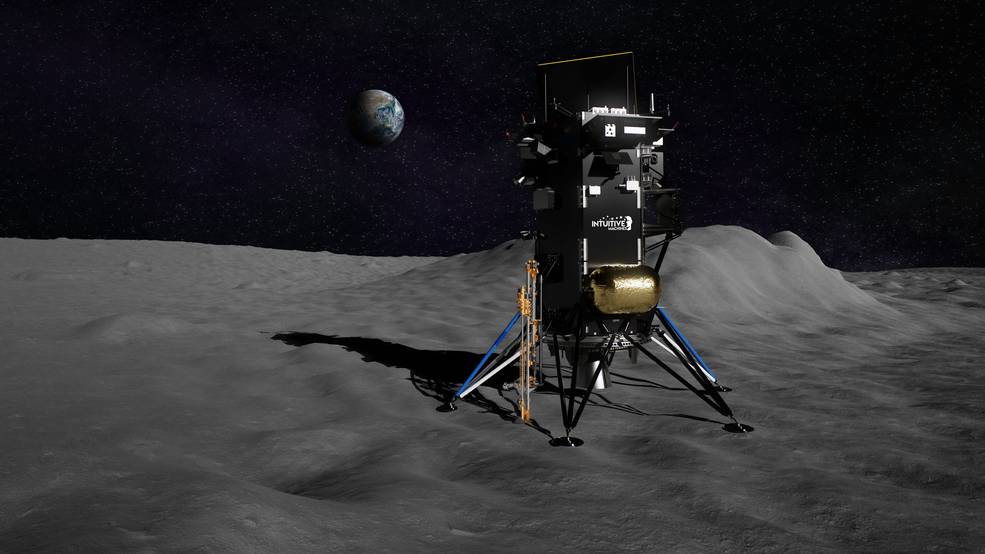
A groundbreaking robotic moon landing is on the horizon this month, with NASA’s preparations for future crewed missions at the forefront. Intuitive Machines is set to launch their Nova-C moon lander, known as Odysseus, after the legendary traveler from the Trojan War, on a mission that could shape the future of lunar exploration.
Launch and Mission Details
Scheduled to launch on February 14th from NASA’s Kennedy Space Center in Florida aboard a SpaceX Falcon 9 rocket, Odysseus is expected to touch down near the moon’s south pole on February 22nd. This mission, dubbed IM-1, will carry 12 payloads, half of which are commercial and the other half consisting of NASA science packages. The data collected from this mission will be instrumental in preparing for the upcoming Artemis program missions, where astronauts are set to land near the lunar south pole by 2026.
Importance of Private Lunar Missions
Intuitive Machines’ moon mission is part of a larger initiative involving low-cost private moon missions funded by NASA. These missions, organized under the Commercial Lunar Payloads Services (CLPS) program, offer a cost-effective way to test new technologies and procedures in lunar exploration. Despite the inherent risk associated with these missions, the potential benefits far outweigh the drawbacks, allowing NASA to prepare for Artemis efficiently and effectively.
The Value of Testing Technologies
One of the key advantages of private moon missions is the ability to test technologies at a faster pace than traditional planning would allow. Susan Lederer, CLPS project scientist at NASA’s Johnson Space Center, emphasized the importance of these missions in advancing lunar exploration capabilities. The diverse landing options offered by successful CLPS missions provide a wealth of opportunities for scientific research and exploration on the moon’s surface.
Challenges and Discoveries
IM-1 will provide crucial insights into communication challenges at the moon’s south pole, where maintaining contact with Earth is particularly difficult. The mission will also test the durability of equipment in the harsh lunar environment, including solar panels and scientific instruments. Even in the face of potential setbacks, the data obtained from missions like IM-1 will contribute to a greater understanding of lunar exploration and pave the way for future manned missions to the moon.
In conclusion, private lunar missions like the upcoming Nova-C lander launch represent a new era of space exploration, driven by innovation and collaboration. As NASA continues to push the boundaries of human exploration, these missions serve as stepping stones towards a future where humanity’s presence on the moon is not just a dream, but a reality.