

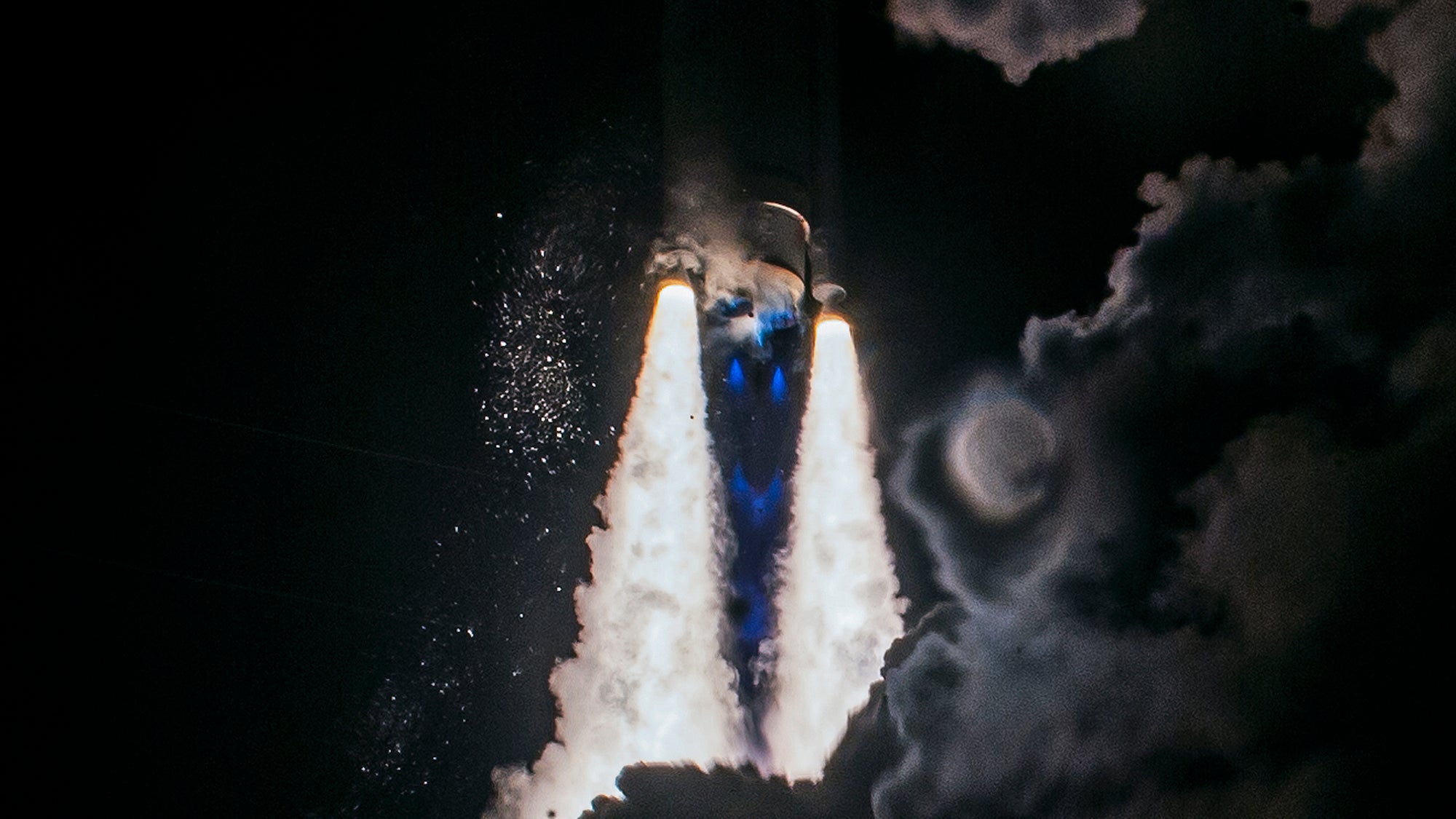

On January 8 at 2:18 a.m. local time, the United Launch Alliance’s (ULA) new Vulcan Centaur rocket successfully launched from Cape Canaveral Space Force Station in Florida. The rocket separated from the lander after about an hour and sent Peregrine Mission One into space.
Several hours after the launch, the company who built the Peregrine lander announced that it had experienced an “anomaly” that stopped Peregrine from pointing its solar panels stably at the sun. In a press release, Astrobotic stated that it has engineers working on this issue, but without the spacecraft’s ability to charge its battery, the plan to for a soft landing on the moon is in jeopardy.
At 1:03 p.m. EST Astrobotic issued an update saying that the mission will likely not go on as planned, as the lunar lander is experiencing a failure within its propulsion system.
The lunar lander was slated to attempt to make the first soft landing on the moon by the United States since 1972. Peregrine’s mission is to study the lunar surface ahead of future human missions to the moon.
The launch also began a new chapter in the age of private space exploration. The United Launch Alliance is a joint venture between Boeing and Lockheed Martin, with the Vulcan rocket designed to replace two older rockets and compete with SpaceX. The private company owned by Elon Musk sent close to 100 rockets into orbit in 2023 alone. The United States Space Force is also counting on the Vulcan Centaur rocket to launch spy satellites and other spacecraft that Space Force believes are in the interest of national security.
The Peregrine lander was built by Pittsburgh-based space robotics firm Astrobotic and aimed to become the first lunar lander constructed by a private company. This is also the first mission to fly under NASA’s Commercial Lunar Payload Services (CLPS) initiative, where NASA pays private companies to send scientific equipment to the moon.
“It’s a dream … For 16 years we’ve been pushing for this moment today,” said Astrobotic CEO John Thornton during a webcast of the launch according to CNN. “And along the way, we had a lot of hard challenges that we had to overcome and a lot of people doubted us along the way. But our team and the people that supported us believed in the mission, and they created this beautiful moment that we’re seeing today.”
Peregrine has a total of 20 payloads on board, five for NASA and 15 others. They include five small moon rovers and the first Latin American scientific instruments attempting to reach the lunar surface. If successful, the technology on board will measure properties including radiation levels, magnetic field, ice and water on the surface and subsurface, and a layer of gas called the exosphere. A better understanding of the exosphere and the moon’s surface is expected to help minimize risks when humans return to its surface,