


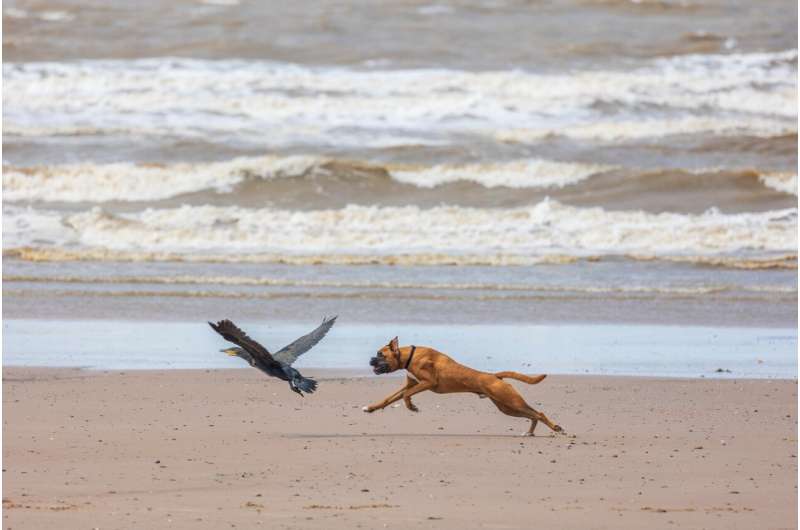
Credit: Unsplash/CC0 Public Domain
In Australia, dog ownership often goes hand-in-hand with a love for the great outdoors. Whether it’s walking on the beach, going camping, or having a barbecue in the park, we tend to keep our canine companions close as we soak up the sun.
But many of us forget a key fact about our dogs: they are predators. Even the fluffy little 5 kg ball that spends most of its time in your lap derives from an apex predator—and its predatory instincts can kick in at any time. And while many of our dogs don’t have the same hunting skills as their distant ancestors (who had to hunt for a living), wildlife doesn’t know that.
The impacts of domestic dogs on wildlife aren’t well studied, and likely vary depending on the environment. Nonetheless, there’s good evidence domestic dogs, when left unobserved, can have detrimental effects in the places they visit.
With that in mind, here are some things to consider next time you take your pup out for a bushwalk.
How dogs impact ecosystems
There are five main ways domestic dogs can negatively impact the natural environments they visit. These are:
- direct physical harm through predatory behavior
- disturbance through chasing and harassment
- increased exposure to diseases
- interbreeding, which can alter the gene pool of wild canid populations
- increased competition for resources
The good news is the last three points aren’t particularly relevant in Australia. For one thing, there’s little overlap between diseases common in domestic dogs and Australian wildlife. There’s also little resource overlap, except perhaps in some areas where feral or semi-feral dogs live alongside dingoes.
And regarding potential interbreeding, while it was once thought this could threaten the dingo gene pool, recent research suggests it’s not nearly as common as we thought.
As such, the main harms Aussie dog owners should focus on are physical harms through predatory behavior and disturbance to ecosystems.
Dogs can kill
We know dogs are capable of injuring and killing wildlife, but it’s difficult to determine how common this is, because many events go unreported. While smaller animals such as lizards, gliders and possums are at higher risk, larger species such as koalas can also fall prey to dogs.
One study that looked at wildlife coming into care at Queensland rehabilitation centers reported dog attacks as the cause in about 9% of cases. These cases often resulted in severe injury or death.
Dog owners should be especially wary of small, localized populations of vulnerable species. A study in Argentina’s Patagonia region details several cases of dogs decimating local penguin populations after gaining access to protected island areas during low tide.
Not to mention, dog attacks on wildlife can bring risk to dogs as well. Kangaroos can defend themselves with their powerful limbs.
» …
Read More