


- A report by U.K. investigative NGO Earthsight links supply chains of fashion giants H&M and Zara to large-scale illegal deforestation, land-grabbing, violence and corruption in Brazil.
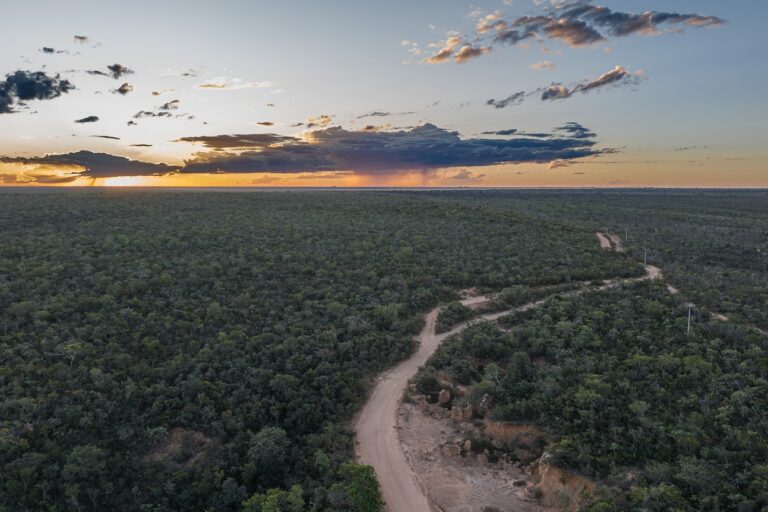
- The country’s Cerrado region, home to a third of Brazil’s species, has already lost half of its vegetation to large-scale agriculture and is under increasing pressure from a booming cotton industry.
- The two major producers linked to illicit activities, SLC Agrícola and Grupo Horita, deny the accusations, as does Abrapa, Brazil’s producer association, which also oversees cotton certification implementation in the country.
- Earthsight found that most of the tainted cotton it tracked had the Better Cotton label, raising the alarm over the practices and traceability of the certification system.
Clothing giants H&M and Zara have been linked to large-scale illegal deforestation, land-grabbing, violence and corruption in the Brazilian Cerrado, according to an investigation by Earthsight.
Using satellite images, court rulings, shipment records and by attending undercover global trade shows, the U.K. NGO tracked nearly a million tons of tainted cotton going from companies in western Bahia, in the Cerrado, in supply chains serving H&M and Inditex, Zara’s holding company. The two companies in focus, SLC Agrícola and Grupo Horita (Horita Group), have a long history of illegal deforestation and environmental abuse.
The report also deplores the lack of supply chain traceability provided by Better Cotton (BC), a certification system that aims to ensure sustainability in cotton farming, widely used by H&M and Zara. Yet investigators found that the cotton linked to illicit activities in the Cerrado carried the BC label.
Unlike the Brazilian Amazon, where deforestation has been decreasing, the Cerrado has seen forest loss in 2023 jumping by 43% year on year; the savanna biome hosts a third of Brazil’s biodiversity and 5% of the world’s species, yet it has lost more than half of its native vegetation to large-scale agriculture.
 © MapBiomas / Thomas Bauer / Earthsight 2023
Brazil’s booming cotton industry is putting more pressure on the region, as the country, which grows almost all of its cotton in the Cerrado, is predicted to become the world’s top cotton supplier by 2030.
“If you read Zara and H&M’s sustainability policies and human rights policies, they don’t deny that they have a responsibility over their supply chains,” Rubens Carvalho, Earthsight deputy director and report co-author, told Mongabay. “The problem is that they aren’t putting these policies into practice by properly checking and monitoring the supply chains.”
Tracing the source
Between 2014 and 2023, SLC and Horita Group exported at least 816,000 tons of cotton from Bahia to foreign markets, although the total amount could be almost double, additional sources say. The two companies also supply eight Asian clothing factories that provide millions of finished cotton garments to H&M and Zara, the report shows.
Horita Group and SLC’s business have long wreaked havoc on the Cerrado and its communities,