

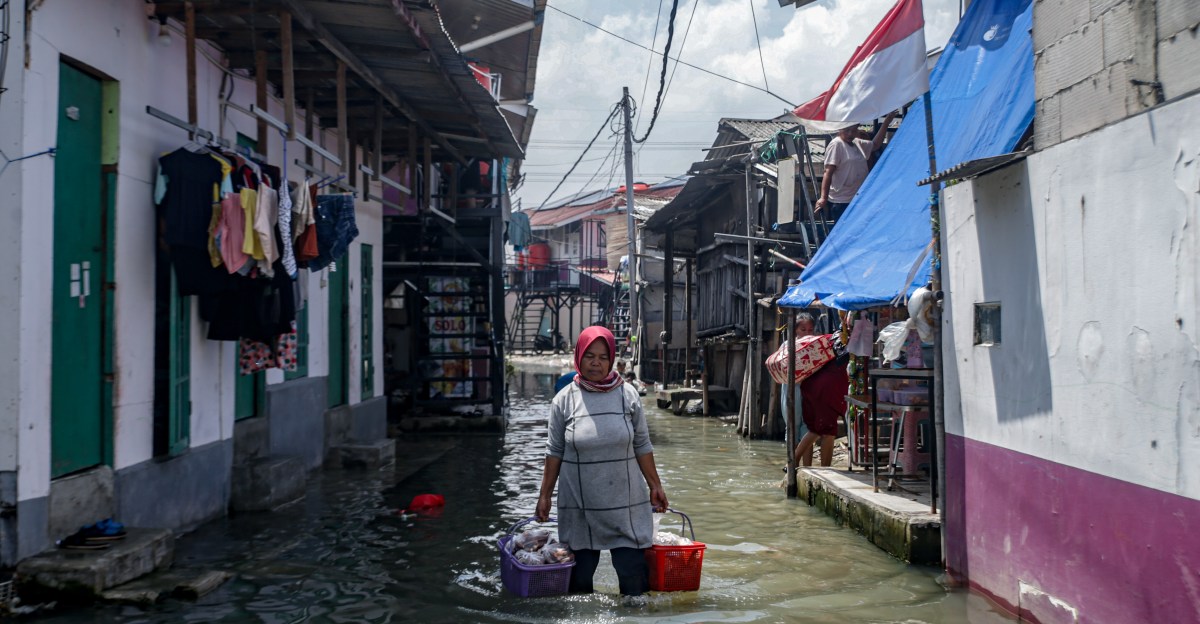

Humans are a coastal species. More than one in ten people in the world live within three miles of the shore, and about 40 percent of us live within an hour’s drive of the ocean. These shoreline regions generate a massive force in the global economy — in the US alone, coastal counties account for one-third of GDP.
But the same oceans that draw so many people near them pose a threat when the water rises and pours inland during tidal floods or storm surges. Water is often the deadliest, most destructive, and costliest element of many natural disasters. And with coastal populations growing, the economic toll of disasters in coastal areas is increasing, especially as sea levels rise due to climate change. Already, global average sea levels have increased around 9 inches since 1880, one of the most tangible impacts of a warming world as ice sheets melt and the ocean expands. Sea levels are rising in some places faster than others, particularly as land subsides.
So it’s alarming then that in many of the most populated parts of the world, we’ve been significantly underestimating the level of the sea, a basic, consequential fact of life on the coast.
That’s the conclusion of a new study published today in the journal Nature. On average, conventional estimates of the height of the ocean are about one foot too low, though in some parts of the world, the error is more than three feet. These apparent errors aren’t just a scientific question — sea level estimates are used to create hazard maps that govern where people live, where protective barriers get built, and whether insurance companies will offer protection for your home. The fact that we have this wrong means some of our infrastructure may already be facing more threats from the ocean than we were expecting.
Add to this miscalculation the fact that further warming is now locked in thanks to the greenhouse gases we’ve already emitted, which will inexorably lead to rising seas, and we’re looking at a scenario where tens of millions more people face threats to their lives and livelihoods in the coming decades. By 2100, global average sea levels are projected to rise additionally on average between 9 inches and more than 3 feet, largely depending on how quickly we reduce carbon emissions. That’s on top of the underestimated sea levels outlined in the study. The result is that many people may not know how vulnerable they are today, and how much more danger they face in the future.
How so many scientists miscalculated the height of the sea
It may seem bizarre that so many researchers could be wrong for so long about something so fundamental, but measuring global sea levels is surprisingly complicated. You can’t just stick a ruler in the ocean. The water is constantly moving with the waves as well as rising and falling with the tides.