


We Need You in Our Corner!
The story you’re about to read is available to you for free. No paywall, no subscription fee, no ads. But it wasn’t free to produce.
Our nonprofit newsroom delivers the most comprehensive, eye-opening and influential climate coverage in the nation, and more of it than anyone else. We call power holders to account for their actions, put facts front and center and stand up to disinformation. We need your help right now to keep our work and momentum going in 2026.
If you don’t already, please support our work with a donation now. Thank you for being in our corner.
For the first time, global governments have agreed to widespread international trade bans and restrictions for sharks and rays being driven to extinction.
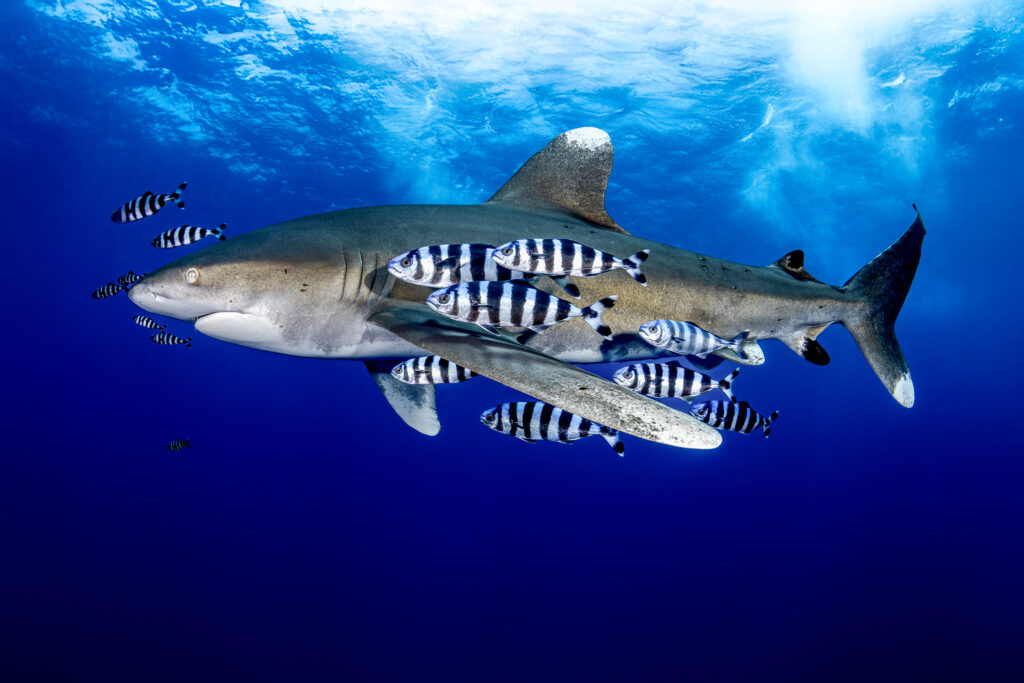
Last week, more than 70 shark and ray species, including oceanic whitetip sharks, whale sharks and manta rays, received new safeguards under the Convention on International Trade in Endangered Species of Wild Fauna and Flora. The convention, known as CITES, is a United Nations treaty that requires countries to regulate or prohibit international trade in species whose survival is threatened.
Sharks and rays are closely related species that play similar roles as apex predators in the ocean, helping to maintain healthy marine ecosystems. They have been caught and traded for decades, contributing to a global market worth nearly $1 billion annually, according to Luke Warwick, director of shark and ray conservation at Wildlife Conservation Society (WCS), an international nonprofit dedicated to preserving animals and their habitats.
The sweeping conservation measures were adopted as the treaty’s 20th Conference of the Parties (COP20) concluded in Samarkand, Uzbekistan, signaling a landmark global commitment to stop or regulate the demand for shark meat, fins, and other products derived from the animals.
“These new protections are a powerful step toward ensuring these species have a real chance at recovery,” said Diego Cardeñosa, an assistant professor at Florida International University and lead scientist at the school’s Predator Ecology and Conservation Lab, which is developing new technologies to combat the illegal trade of sharks.
More than a third of shark and ray species are now threatened with extinction. Pelagic shark populations that live in the open ocean have declined by more than 70 percent over the last 50 years. Reef sharks have all but vanished from one in five coral reefs worldwide. “We’re in the middle of an extinction crisis for the species and it’s kind of a silent crisis,” said Warwick. “It’s only in the last decade or so we’ve really, really started to notice that this is happening, and the major driver of it is actually overfishing.”
Unlike tuna and other commercially valuable fish that have been tightly regulated for decades, sharks have long lacked comparable controls on their trade and have often been treated as if they were another fast-reproducing seafood commodity.
“People treat sharks and rays,