


Exciting Success: NASA and SpaceX Launch Crew-8 Mission to ISS
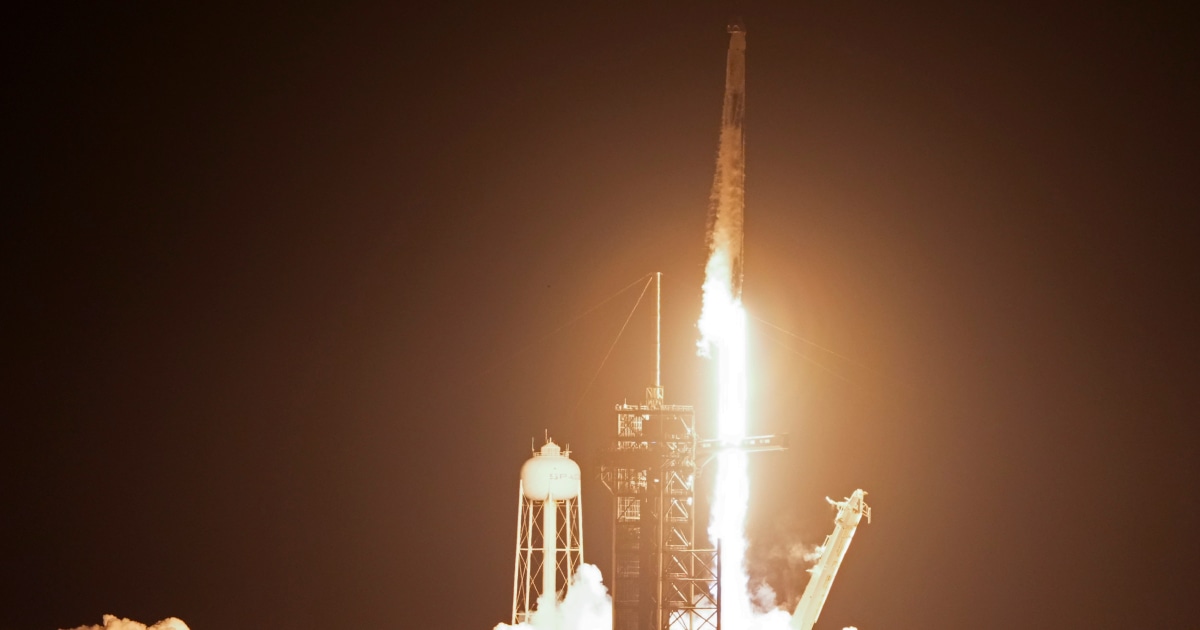
On a historic Sunday, NASA and SpaceX made history once more by successfully launching their joint Crew-8 mission to the International Space Station from the NASA Kennedy Space Center in Florida. This mission marked the eighth crew rotation to the ISS within NASA’s Commercial Crew Program, showcasing the ongoing collaboration between the two entities in advancing space exploration.
The launch, which had faced two previous weather-related delays, finally took place as engineers determined that a minor crack on the hatch seal would not hinder the mission’s progress. The liftoff occurred at 10:53 p.m., with the mission crew members celebrating as the first-stage booster separated, propelling the Dragon spacecraft towards space shortly before 11 p.m.
The crew onboard the Dragon spacecraft consists of NASA astronauts Commander Matthew Dominick, Pilot Michael Barratt, and Mission Specialist Jeanette Epps, along with Russian Roscosmos cosmonaut Alexander Grebenkin, who also serves as a mission specialist. While it is the first mission to the ISS for all crew members except Barratt, who is embarking on his third visit.
Utilizing the Falcon 9 rocket, described by SpaceX as a “reusable, two-stage rocket,” the Dragon spacecraft is making history as the first of its kind in reusability. Upon detachment from Dragon, the Falcon 9 rocket is set to land at the Cape Canaveral Space Force Station, marking another milestone in SpaceX’s achievements in space exploration.
The crew will stay onboard the ISS for a duration of six months, where they will conduct over 200 scientific experiments as part of a long-term mission to prepare for extended stays in space. Among these experiments include the study of stem cells in space to explore their impact on degenerative diseases and analyzing the effects of microgravity and ultraviolet radiation on plants, as well as testing pressure cuffs on legs to address health issues related to fluid shifts in astronauts in space.
Additionally, the Crew-8 mission incorporates the investigation of spirulina, a type of microalgae commonly used in smoothies on Earth, to determine its potential in removing CO₂ from the air and providing sustenance and oxygen for astronauts. These experiments highlight the crew’s dedication to advancing scientific knowledge and addressing challenges faced during extended space missions.
With a packed schedule of over 200 scientific experiments, Crew-8’s mission on the ISS promises to contribute valuable insights to the future of space exploration and the well-being of astronauts in space. As the year progresses, SpaceX continues to make strides in space exploration, with nearly 100 launches undertaken within the past year alone.